



Editor & Publisher: Rabb Majumder
House # 05 (2nd Floor, 2-C), Road# 04, Banani DOHS, Dhaka - 1206
Phone: +8801715822782
Phone (Advertisement): +8801712863234
Email: rabb.h.majumder@gmail.com, info@securityworldbd.com

IRAN-US STANDOFF AND MY TAKE
Lt. General Md Mahfuzur Rahman (Retd.)
18:59, 10 March, 2026

Lt Gen (Retd) Mohammad Mahfuzur Rahman, PhD
is a former Principal Staff Officer, Armed Forces Division. Founder & Chairman, Osmani Center for Peace and Security Studies

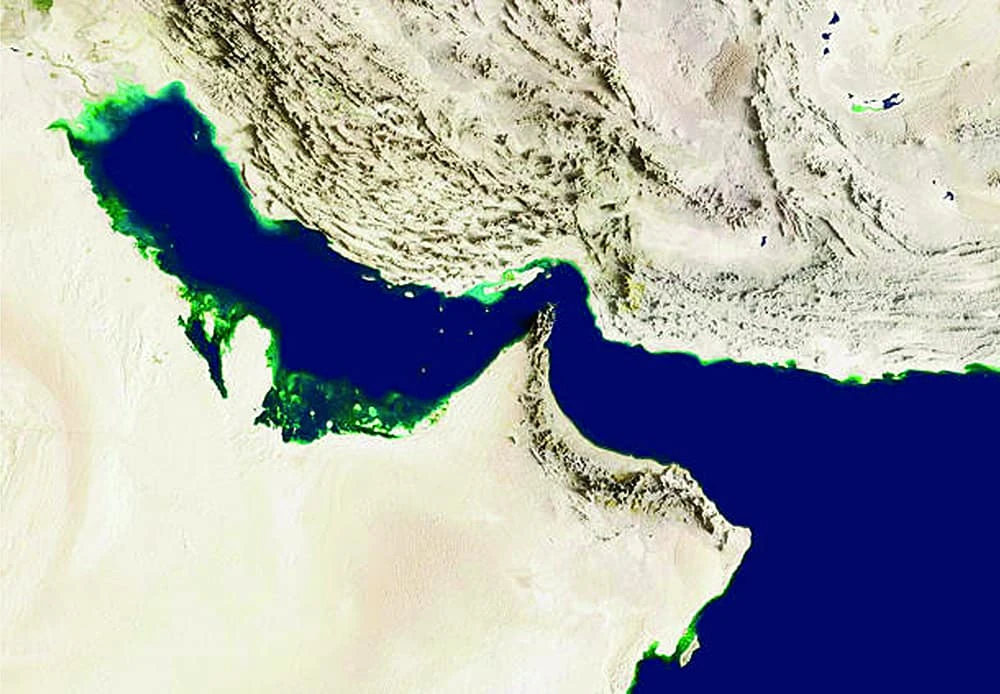
Let us look at the geography of Iran, its strengths, and weaknesses. It is a country of 93 million people with 97%. literacy rate. They are culturally very rich. It’s hilly and sparsely populated, thrice the size of France, and has the second-largest gas and fourth-largest oil reserve in the world. Basic democracy specially the local government institutions, is quite strong. This is a Persian civilization that is 2500 years old. Civilization always traces back to history and draws strength from social experience. The Persians are one of the finest negotiators in the world. Iran is located at the top of the Arabian Sea and commands the Straits of Hormuz, through which around 22% of world energy passes. It is said, ‘If the world were an egg, then Hormuz is the yoke’.
However, there are fault lines in Iran that are limitations and being exploited by others. The major fault line is their fragile economy. Despite being resource reach country, continuous economic sanctions since 1979 by the US-led West have crippled its economy. They have been forced to sell energy at a discounted price to their allies. Their currency has been seriously devalued. The cost of living is enormous, and economic lives have been devastated, creating huge discontent in society.
In addition, there is the Shia and Sunni issue and ethnic tension between the majority Shia Iranians and the Sunni Baluch, Azeri, and Kurds. West and Israel have invested immense time and resources to wedge further. Furthermore, the Cyber Infrastructure is susceptible to attack by the West, as it happened with the Stuxnet virus attack on the Iranian nuclear facility in 2010. On the other hand, the regime in power has been ruling Iran since the 1979 Revolution, and its theocratic conservative stance and regimented rule have alienated liberal and moderate schools.
How the West, mainly the US and Israel, views Iran: Iran is considered as ‘Axis of Evil’ (President George W. Bush in Union Address 2002). It is a hindrance to their Middle East peace process, in other words, an obstacle to their dominance. Iran is also considered as terrorism sponsor in the Middle East, considering Iran’s support to Houthis in Yemen, Hezbollah in Lebanon, Hamas in Gaza, and Shia forces in Syria and Iraq.
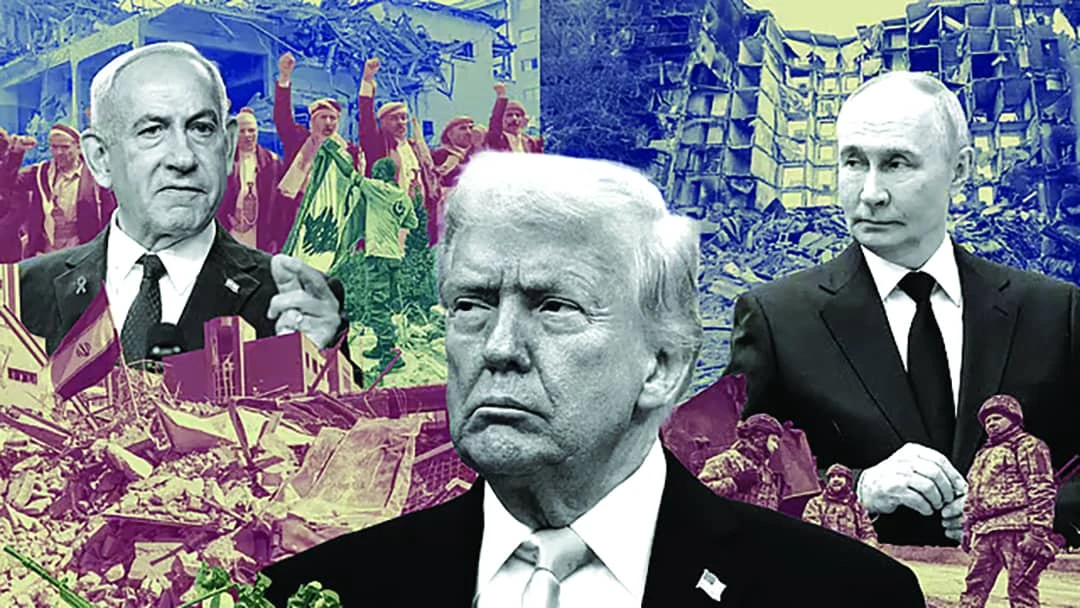
What are Israel’s and the US’s goals? Let this be very clear: the US ‘Middle East Policy’ is dictated by Israel’s ‘Neighborhood Policy’; This is also important to understand that the US is a plutocracy and the wealthy Israeli lobby has immense control over the US Government’s decision-making. Together, they want to dismantle Iran because it is the only axis of resistance to the ‘greater Israel’ dream that includes the whole of Palestine, parts of Egypt, Iraq, Lebanon, Syria, and KSA (map shown by Israeli Prime Minister Netanyahu at the UN General Assembly in 2023). To realize this dream, it is important to destabilize and fragment the neighborhood into a bunch of weak and failed countries (such as Syria, where Israel has occupied a huge chunk of land during the civil war in Syria in the name of enlarging its security zone). In 2007, this plan was substantiated by an interview with General Wellesley Clark, ex-presidential candidate that the Pentagon had planned to take down seven countries in five years in 2001, starting with Iraq, Syria, Lebanon, Libya, Somalia, Sudan, and finishing with Iran. Netanyahu was pushing the USA for a long time to take Iran apart, mainly for:
a. Regional ambition, to become the uncontested power of the Middle East to realize the greater Israel dream, but Iran is the only hurdle.
b. Attrition and security anxiety caused to Israel by Iranian proxies. Deconstruction of Iran would eradicate such anxiety.
e. Israel is an immigrant country; its natural population growth is marginal. If the threat of nuclear Iran exists, then it would not be a lucrative immigration destination for Jews, and even people would migrate from Israel. That would create a demographic challenge to the already apartheid state. Finally, the US has been brought in for a regime change in Iran, and install a puppet government, destroy nuclear facilities by eliminating the axis of resistance in the Middle East. So what we could see unfolding from this standoff:
Decapitation operation by air attacks in Iran.
(ii) Destruction of infrastructure, resources, including nuclear facilities.
Naval blockade leading to a complete economic collapse.
What could Iran do? Iran would not initiate a military engagement. Despite being attacked by the US, Iran will have the capacity to make the Strait of Hormuz difficult to use for energy transportation, thus the world would face serious economic challenges, including the USA and its Middle Eastern partners. There is a possibility that Iran could incapacitate a few US naval vessels and attack US bases within range in the region, including attacking Israel. Even influencing proxies to engage in harassing activities.
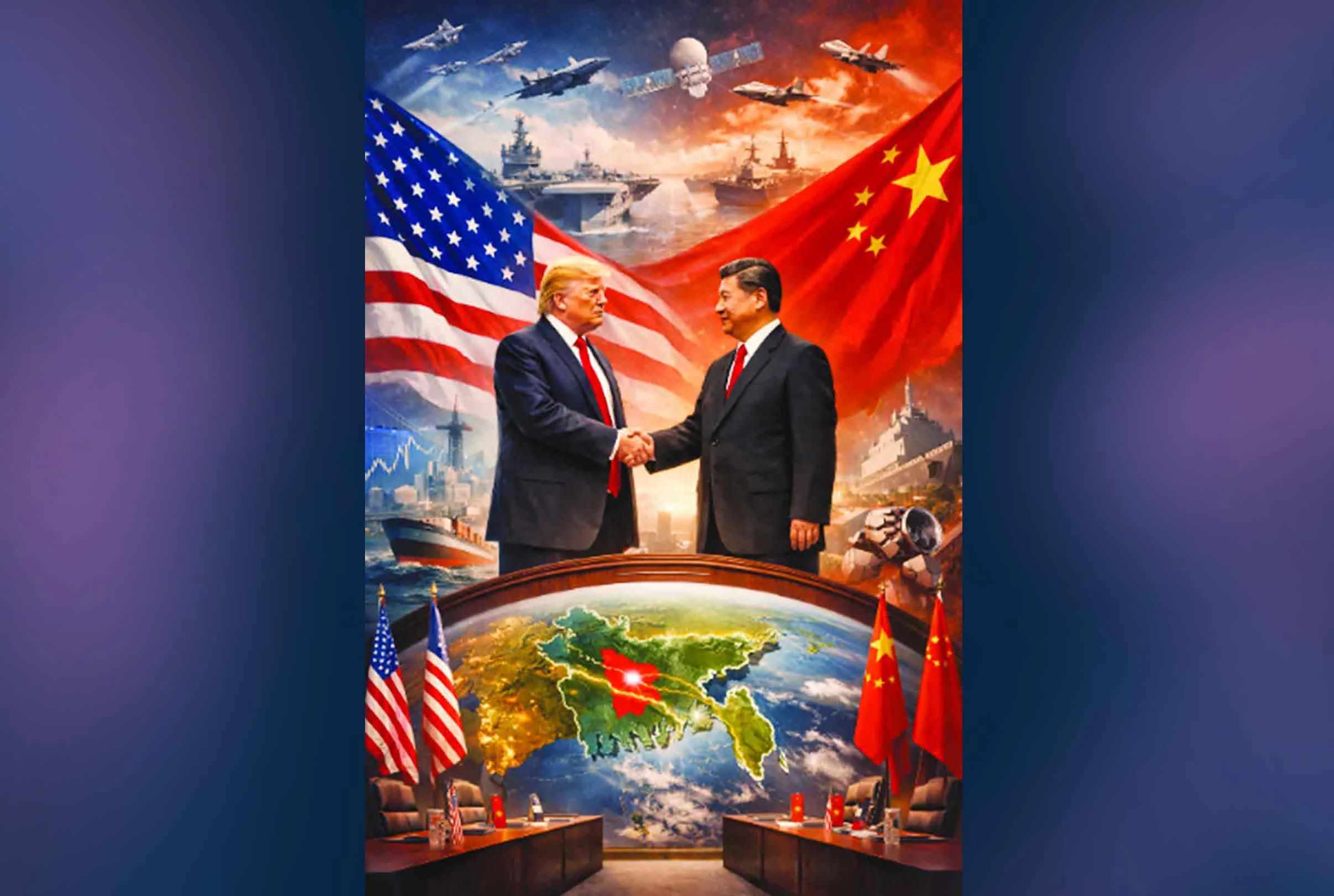
My Take: Israeli Prime Minister Benjamin Netanyahu has received 58 standing ovations at the US congress even after committing genocide in Gaza, bombing seven countries in the region, and having an arrest warrant issued by the International Criminal Court for committing crimes against humanity. In the 12 Day War, Israel attacked Iran on 13 June 2025 while the US was negotiating a deal with Iran, and a high-level meeting was scheduled for 15 June 2025. As the White House is dominated by the Israeli lobby later, the US joined Israel in the war. After Israel suffered Iran’s wrath and the US base in Qatar came under attack, the US negotiated a ceasefire for two reasons: primarily, the air defense system of Israel was becoming overwhelmed, ‘Iron Dome’ was compromised, and they were running short of those expensive interceptors. An increasing number of Iran’s missiles were hitting Israel’s high-value infrastructure. This caused a large number of Israelis to panic and start leaving the country due to insecurity. These caused internal political backlash for Netanyahu. Furthermore, the USA was not ready to take on the conflict and continue, as Donald Trump was aspiring for a Nobel Peace Prize.
We are living at a time when the leading power of the world has become unhinged under President Donald Trump. The fear of being relegated from its position has turned it more authoritative and militaristic, ignoring diplomatic and peaceful approaches. The US-led West is suffering from moral bankruptcy. The rule-based or value-based international system, which they advocated and followed to keep the international norms and international stability, has deteriorated of itself. International institutions have been ignored, bypassed, and bullied by them, such as the ICJ, ICC, WTO, and the UN. The world has witnessed their double standard, hypocrisy, and even their mainstream media became accomplice to this degradation. Russia’s military invasion of Ukraine and occupation of Donbas, where the international community is powerless. Israel’s genocide in Gaza was supported by the West, including the military strike of six countries in 72 hours in September 2025. US attack on Iran in June 2025. Regime change operation in Venezuela, and threatening to take over Greenland. The West lost its moral high ground and ethical legitimacy. These behaviors have created a trust deficit and uncertainty in the world. However, Iran is not Venezuela, and Ayatollah is not Maduro. In case of any kinetic move, both the US and Iran will be losers, though Iran to a greater degree. Furthermore, merely losing a naval asset and a few men will be politically suicidal for Trump when the ‘Midterm Election’ is around the corner. This could seriously undermine the US military’s prestige and the end of Trump’s political career. I presume Trump would refrain from such misadventure, and Iran would be happy to sit in a negotiating table. In negotiating table, historically Persians have always struck better deals for themselves.
Recently, Mossad and CIA-backed public unrest started on 28 Dec 2025 in Iranian cities were apparent (Mike Pompeo, in his interview with Fox News, alluded to covert foreign involvement). However, unrest and disorders flared due to the fault lines mentioned earlier, but were brought under control by the regime on the 8th of January 2026. Trump’s plan to attack on 14 January was delayed for two reasons: firstly, the civil unrest lost momentum, and pro regime rally took over (possibly once the public realized the involvement of Mossad and CIA behind the unrest). Then, Middle Eastern partners, Israel, and the US Military advised that an attack on Iran would not bring regime change under the prevailing circumstances; moreover, Iran’s retaliation could have a regional dimension and is likely to cause unacceptable loss, especially to Tel Aviv.
This time, it is the US fighting Israel’s war, which Netanyahu always wanted, where Israel would be sitting on the sidelines and complain to the world if Iran targets Israel, and play the victim card. Trump could carry out hot grey zone warfare and even a limited military adventure to stand on his ego with the objectives of limiting Iran’s long-range missile capability, stopping Iran’s nuclear ambition, and withdrawing support to its proxies in the Middle East.
In such a scenario, Russia would express serious concerns, and China, in addition to condemning the US aggression, would provide moral and material support to Iran. India would advocate to resolve the issue diplomatically, and finally ineffective UN could issue a few statements.
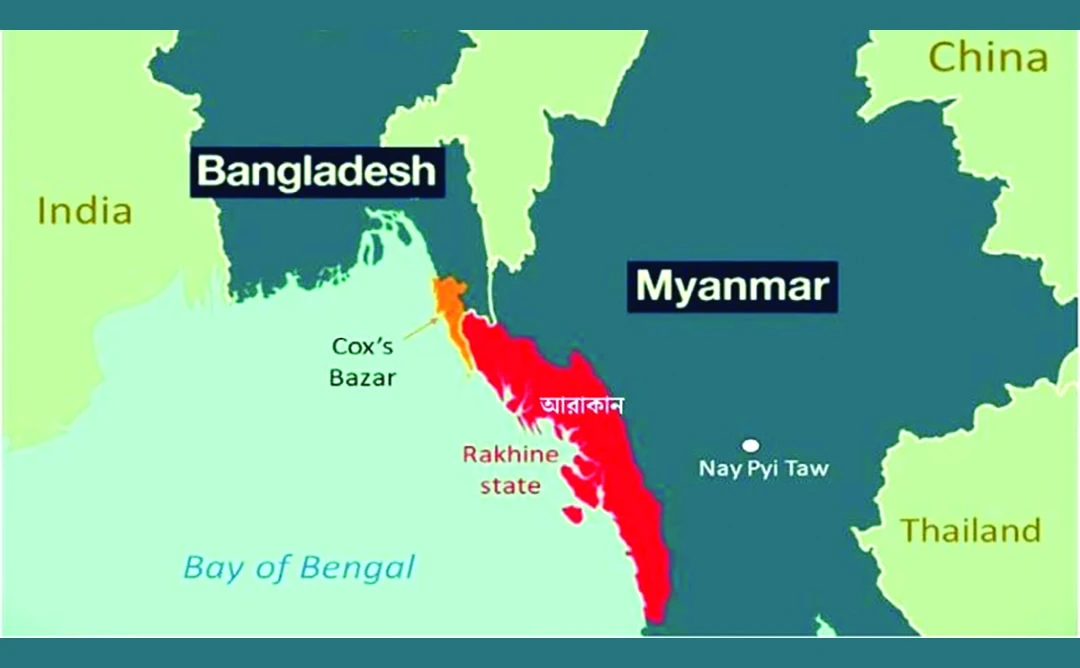
What are the implications for Bangladesh? In our neighborhood, Myanmar, despite committing genocide on Rohingyas and unleashing brutal repression on its population, the junta is being empowered, supported by leading and regional powers, where the global governance institution, like the UN, is an observer.
As a student of Structural Realism, my understanding is that the international system is anarchic, there is no higher authority above the states that can rescue if states are in trouble. Every state is responsible for its own security. Others cannot be trusted for sovereignty and territorial integrity. In this arrangement, Bangladesh, being a small and weak country, cannot ensure that others will not take advantage of its weaknesses. Myanmar Junta burdened Bangladesh with over a million Rohingyas in 2017, and now a non-state actor Arakan Army, in our Southeastern border is expelling Rohingyas in bits and pieces, abducting our fishermen, firing on the borders. Nonetheless, Bangladesh’s complaints, protests, and diplomatic etiquette remain redundant.
Meanwhile, after the July 2024 Revolution, regional power India is upset with Dhaka. They have considered it as a political defiance and an intelligence humiliation. As a consequence, they have unleashed grey zone activities: economic coercion, information warfare, exploiting fault lines, etc. Regional powers have their egos and red lines; being careless could turn out to be expensive and unpalatable for Bangladesh. In this current ongoing absence of rule based international system, no one else would be there to rescue Dhaka in case of any eventuality.
I would recommend that Dhaka be mindful of the red lines of regional powers, spend time and resources to mend its fault lines, and develop diplomatic leverage and acumen. In addition, developing credible deterrence could be a safety net for Bangladesh.
আরও পড়ুন -