










Editor & Publisher: Rabb Majumder
House # 05 (2nd Floor, 2-C), Road# 04, Banani DOHS, Dhaka - 1206
Phone: +8801715822782
Phone (Advertisement): +8801712863234
Email: rabb.h.majumder@gmail.com, info@securityworldbd.com

Personal reflections: The inclusion of students with disabilities in Bangladeshi universities
18:32, 10 March, 2026

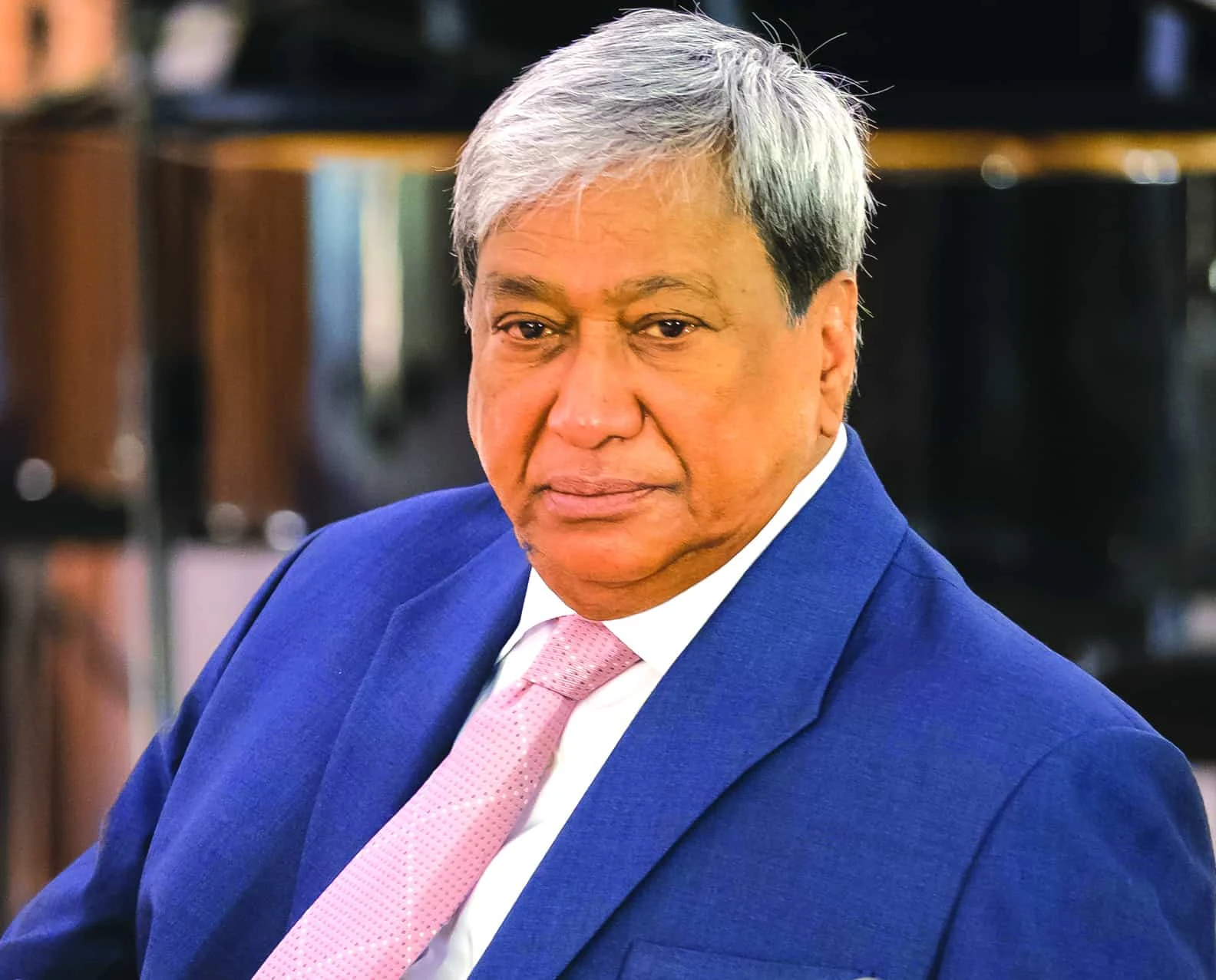
Dr Dave Dowland
is a University Registrar of BRAC University and previously Registrar and Chief Operating Officer of Asian University for Women. He previously served successively in senior positions in the UK higher education sector. In 2019, he was awarded an Honorary Fellowship of Trinity Laban Conservatoire of Music and Dance – a leading UK based performing arts institution - in recognition of his outstanding service as Registrar and for leading the successful application to Her Majesty’s Privy Council for taught degree awarding powers. He is a graduate of King’s College London and Oxford University. He has interests in student support, staff development and corporate and academic governance.
A couple of years ago, I was travelling around Bangladesh with a grassroots disability group, Team Inclusion, which, at that time, was working with Monash University, Australia, on a project about the lived experiences of people with profound hearing impairments. Visiting Barishal, we met several dozen young people with disabilities, who spoke of their passionate desire to go to university. They raised a standing challenge, to open educational opportunities to students with disabilities.
People with disabilities often say that they don’t want to be treated as special but to live full lives, with opportunities for the fulfilment of their talents. It is difficult to assess how many students with disabilities reach higher education. One source suggested no more than 2.72% of the student population with disabilities had entered tertiary education (Labour Force Survey; Bangladesh Bureau of Statistics 2022). We may suspect that no-one really knows, with sector-wide challenges in the tracking of student data about students and a need for definition that recognizes the wide range of disabilities – both visible and invisible. The barriers to the full participation of people with disabilities in higher education are impoverishing to the tertiary education sector and a profound frustration of talent for Bangladesh.
The experiences of many of those going to university are often less than satisfactory. There is a recent, constructive and frank study of disability inclusion in one of the major public universities in Bangladesh. (Making the ‘invisible’ visible: inclusive higher education policies for students with disabilities in Bangladesh: Shehreen Amin Bhuiyan, Md Abu Sayem: Bangladesh Journal of Public Administration Vol 32 (2), 2025; 5-28) There are accounts of students with disabilities having to cope with the stress of running around, trying to satisfy the bureaucracy, becoming stuck with inadequate lifts and other access points. One student recalled that the lack of accessible washrooms had prompted him to limit his fluid intake during the day, causing him to become ill. A student with hand mobility issues claimed that he was given no extra time in examinations. A blind applicant was allegedly told by administrators ‘you don’t look blind.’ Students described their experience as ‘frenetic…. and taxing’ – a long way from an environment of reasonable and anticipatory adjustments made in partnership with students.
That study confirms a more general, national picture of infrastructure, digital access, financial aid, and other support systems in need of improvement. (Complications Faced by Disabled Students at Higher Education Institutions in Bangladesh: Observations from non-disabled students: Mamun H A R Rahma, Md M Al-Amin, M Erfan, Md M U Rahman and Akter R 2024: Open Journal of Social Sciences, 2024, p413-439) The situation is, however, mitigated by the personal goodwill of many students and university personnel towards those with disabilities. There are some, encouraging indications of progress through technological advance and initiatives to facilitate more inclusive learning, teaching and support, although these do not amount to a concerted drive for disability inclusion.
Turning to BRAC University, we too have a long way to go. There were some early innovations in the first years of BRAC University. The Centre for Computational Linguistics produced an early version of Bangla text to speech technology, working with the major news outlet, Prothom Alo. There were examples of good practice with the university training graphic design students on the fundamental elements of colour blindness, adjustments to help students with mental health issues, such as severe obsessive-compulsive disorders, and some improvements to building accessibility.
We too, had challenges with our former, less than fully accessible campus. Happily, we have since moved to a new, fresh, green, smart campus, explicitly designed as universally accessible and recognized with this year’s RIBA Asia Pacific Award for Sustainability and Resilience. Links: https://www.riba.org/explore/awards/international-awards/asia-pacific-awards/brac-university/.
The campus is a transformation in our physical capacity to address the needs of people with disabilities. After arriving there, we invited a diverse group of people with disabilities and disability specialists to visit our new campus and test how far those principles of universal accessibility had been fulfilled, to note good practice and issues for improvement. We have also made improvements to the facilities on our residential campus, where undergraduate students go for immersive, experiential learning in their third semester. Links: https://www.bracu.ac.bd/student-life/residential-semester. Our faculty and students are working, alongside people with disabilities, on innovations using new technology.
We are, however, in the early stages of a journey toward disability inclusion. We want to recognize the wide range of disabilities both hidden and visible. We aim to enable students, with and without disabilities, to live, learn and enjoy activities together, both in and outside the classroom. We are keen to work with students systematically in the journey from admission to graduation, making anticipatory adjustments, with opportunities for full participation in our university community.
Just to give one example of an attempt to break barriers with the harder cases: recently we have been accommodating some students with profound hearing impairments. It has been a challenge, with the students previously dependent on sign language and discouraged by earlier educational experiences. A working group, in consultation with the students and their families, planned adjustments to admissions arrangements, personal, academic and financial support, adjustments to teaching while maintaining academic standards, with other students acting as buddies, and a specific coordinator. We offered the students an opportunity to try classes at no financial cost so we could work with them and their families to prepare effective support for the start of formal studies the following semester.
Advances in technology are helping us to accommodate these students. There are, for example, fast emerging technologies to help with the conversion of speech to a format that a student can pick up. Beyond Bangladesh, students from India, Qatar and other countries in the United Nations Academic Impact Millennium Campus Network Fellowship scheme (MCN) have been introducing new technologies to support students with disabilities, showing sensitivity to local needs in their communities. The MCN is a vast, worldwide network of hundreds of thousands of young people, working on the UN Sustainable Development Goals. (I have an interest as co-chair of the MCN Civic Learning Council, which was launched at the United Nations in New York in July 2025)
1. Project SpeechTrack (video here) by Hafsa Ahmed, Class of 2025 Fellow from Qatar University, Qatar
2. Project SignSpeak Tamil (video here) by group of Fellows, Class of 2024: Anudeep Balguri, Sanjay Krishna Rajmohan Menon, Yeshwanth Balaji A P and Harith Sai Saraf from Amrita Vishwa Vidyapeetham, India, Sri
3. Project Indri.yeah (video here) by Prerit Rathee, Class of 2023 Fellow from Plaksha University, India
There is already a well-established framework of law and policy on disability on Bangladesh, including safeguards in the Constitution and the Disabilities Act 2013, as well as international frameworks, such as the United Nations Convention on the Rights of Persons with Disabilities. There are formal provisions for students with disabilities to have access to higher education institutions and quote arrangements for some institutions. Implementation, however, often falls short of the principles and the underlying aspirations of policy and law.
The assertion of regulatory requirements will not be enough to achieve a decisive change. There are various obstacles to fuller student inclusion in the universities including inadequate financial support and all too rigid bureaucracy. There are lingering attitudinal issues, including an apparent, remaining suspicion that people with disabilities are, to some extent, not capable of benefiting from higher education. We find, however, that our students with disabilities often show much higher than average levels of motivation as well as substantial talent.
Addressing the needs of students with disabilities is a vital prompt to us in the Bangladesh higher education sector, to become more sensitive to the diversity of needs of our entire student population – with or without disabilities. That does not mean treating students as if they were just customers; we have to strive for high academic standards, broad and deep education. It involves, rather, aligning university policies, procedures and practices to the interests of students, working with students as partners, with active learning and teaching and a creative approach to Student Life, helping students to prepare for fulfilling and responsible lives, for effective careers and service to society.
It means redesigning university administrative processes. There is scope, nationally, for a far more effective approach to support for all students at each stage of the educational journey. There is potential for the more intensive use of data to monitor and intervene in support of student retention, progression and achievement. At BRAC University, we have created a Student Information Centre, which is being developed as a single point of contact and as a focus of approachable help and support, with an underlying campaign to streamline processes. We are also investing in professional development for learning and teaching with help from international, collaborative partners, with opportunities to reflect on inclusive approaches to learning and teaching.
There is a vast body of international good practice in student engagement, modern approaches to teaching and learning, curriculum design, academic administration, student services, student retention, progression and achievement and the configuration of accommodation and facilities. (previously discussed at Link: https://www.bracu.ac.bd/news/be-arrow-not-target-reforming-higher-education-bangladesh-dr-dave-dowland).
Universities can play a role, beyond their campus gates, as advocates for the inclusion of people with disabilities across society. We have been working, at BRAC University, with the Bangladesh Women Judges Association and Sabina Khan, a London based Bangladeshi judge and founder of WIGS – the Women in Gowns project (link: https://thewigsproject.com/ng. We are engaged in professional development and action planning to promote access for people with disabilities to the law and more inclusive attitudes from professionals. We appreciate collaboration with some other universities in these initiatives.
We are keen to build partnerships with other educational institutions to help students from the earliest days of their education: a consistent and integrated drive to embed principles of Universal Design for learning and inclusion across all levels of education and skills training.
Colleagues and I would welcome opportunities to talk to disability specialists and the various expert organizations about how we can establish high quality sources of support for the diagnosis of disability conditions, responding creatively to resource constraints and effective, anticipatory support arrangements for students. There is much work to do on the recognition of specific learning disabilities and hidden disabilities. We would also be interested in collaboration on resources for the specialist coordination of disability support. The gain would be the release of the talents of considerable numbers of people to the benefit of themselves, Bangladesh and beyond.
[This is a revised version of a presentation given at the International Conference on Economic Inclusion for Persons with Disabilities. 18 January 2026: Hosted by BRAC Institute of Governance and Development (BIGD) and the PENDA Programme, International Centre for Evidence in Disability (ICED), London School of Hygiene and Tropical Medicine (LSHTM) ]
আরও পড়ুন -