




Editor & Publisher: Rabb Majumder
House # 05 (2nd Floor, 2-C), Road# 04, Banani DOHS, Dhaka - 1206
Phone: +8801715822782
Phone (Advertisement): +8801712863234
Email: rabb.h.majumder@gmail.com, info@securityworldbd.com

Myanmar’s Election Charade and the Human Cost of War
18:29, 10 March, 2026

Shadya Naher Sheyam
is a Research Analyst at Osmani Centre for Peace and Security Studies (OCPASS). She can be reached at: shadyanahersheyam1320@gmail.com

Myanmar’s long-promised elections have finally arrived; however, the polls do not represent a step towards democracy. Held for the first time since the military coup of February 2021, the elections are taking place amid civil war, territorial fragmentation, and a collapsing state. Conducted in three phases (beginning on 28th December 2025 and extending into January 2026), the polls reveal little about popular will and much about how the military regime seeks to repackage its rule. Far from resolving Myanmar’s political crisis, the process carries particularly serious implications for three interlinked areas: the country’s conflict trajectory, its deepening humanitarian emergency, and the unresolved Rohingya question.
The Illusion of Order
Two competing narratives frame the elections. The military junta, led by Commander-in-Chief Min Aung Hlaing, presents the polls as a return to constitutional order after prolonged emergency rule. It claims a 52 per cent voter turnout in the first phase and reports that the military-backed Union Solidarity and Development Party (USDP) secured over 80 per cent of contested seats. Myanmar’s most influential external partners, for example, China, Russia and even India have endorsed the process, viewing the elections as the fastest route to political stability.
A contrasting narrative dominates among Western governments and human rights organisations. The UN High Commissioner for Human Rights, Volker Türk, has condemned the elections for taking place amid widespread repression, while analysts describe them as an attempt to legitimise permanent military control. At the heart of this critique lie three structural fault lines that undermine even minimal democratic credibility.
First, territorial control. The military no longer governs large swathes of the country. Since the coup, ethnic armed organisations and resistance forces have expanded their control across borderlands and interior regions. In many of these areas, voting is impossible, excluding millions of citizens and rendering the election geographically partial and politically hollow.
Second, legal repression. Under the 2023 Political Party Registration Law, stringent loyalty, membership, and financial requirements have eliminated most opposition forces. Aung San Suu Kyi’s National League for Democracy (NLD) was dissolved in 2023 after refusing to re-register, effectively disenfranchising its voter base. Of 61 registered parties, as few as nine are expected to contest, most led by retired generals or aligned with the military.
Third, enforced compliance. A new law criminalising criticism of the elections imposes penalties ranging from lengthy imprisonment to death. Amnesty International reports at least 229 arrests, including artists and social media users, ahead of the first voting phase. Taken together, these dynamics transform the election into a controlled political exercise rather than a mechanism of popular choice.
Strategic Interests and the Politics of Recognition
The legitimacy gap surrounding the elections is further exposed by the nature of international engagement. Western states, the European Union, and most multilateral election-monitoring bodies have declined to observe the polls, citing the absence of basic conditions for free and fair participation. In their place, the junta has invited observers from a narrow set of strategically aligned states, turning observation itself into a geopolitical signal.
Delegations have reportedly come from Russia, China, Belarus, India, Kazakhstan, Japan, Nicaragua, and two ASEAN members: Cambodia and Vietnam. These are largely bilateral missions rather than independent monitoring bodies, reinforcing the perception that the elections are being validated through diplomacy rather than democratic scrutiny.
Militarily, the junta is working to reclaim territory lost after the 2021 coup by reshaping the battlefield through a combination of airpower and drone warfare. The momentum gained by resistance forces, including the Three Brotherhood Alliance, which comprises the Arakan Army, Myanmar National Democratic Alliance Army (MNDAA), and Ta’ang National Liberation Army (TNLA), during their late 2023 Operation 1027 has largely stalled, due in part to China’s diplomatic intervention and the regime’s expanded access to aerial technology.
China’s position reflects its overriding priority of stability along its borders and the protection of Belt and Road investments, including the China–Myanmar Economic Corridor. Beijing has supported the elections as a means of restoring predictability, while brokering ceasefires (such as the January 2025 agreement with the MNDAA) designed to secure trade routes rather than advance political reform.
Russia has gone further, emerging as the junta’s most committed external patron. Moscow supplies fighter aircraft, drones, and technical assistance, and has signed memoranda of understanding on ‘cooperation in election activities’ with the regime. Russian backing highlights a broader strategy of legitimizing authoritarian allies while countering Western pressure.
India’s response has been more calibrated. New Delhi has avoided outright condemnation, instead reiterating support for a ‘free, fair, and inclusive’ process while maintaining engagement with the junta. This pragmatism is driven by concerns over border security, insurgency in India’s north-east, refugee flows, and strategic connectivity projects such as the Kaladan Multimodal Transit Transport Project.
The United States, meanwhile, continues to impose sanctions and trade restrictions on the junta leadership, although this position has shown recent signs of inconsistency. In August 2025, the U.S. Treasury Department lifted sanctions on several junta-affiliated individuals and entities linked to Myanmar’s military leadership, including KT Services & Logistics and its founder Jonathan Myo Kyaw Thaung; the MCM Group and its owner Aung Hlaing Oo; Suntac Technologies and its owner Sit Taing Aung; as well as Tin Latt Min. This posture has been complicated by a July 2025 episode in which Min Aung Hlaing publicly thanked President Donald Trump after receiving a tariff letter, interpreted by analysts as the first public acknowledgement of the junta’s rule by a US president, even in a punitive context. The junta leader echoed Trump’s false claims of electoral fraud in the 2020 US election, drawing parallels to justify Myanmar’s 2021 coup. This incident reaffirms the military regime’s desperation for recognition.
Humanitarian Collapse and Regional Spillover Dynamics
Read against Myanmar’s post-coup realities, the 2025–26 elections appear less as a democratic exercise than as the latest instrument through which the Tatmadaw seeks to normalise military rule. This strategy has deep historical roots. Since independence, the armed forces have portrayed themselves as guardians of national unity, a role entrenched after the 1962 coup. Even during the so-called semi-civilian period between 2010 and 2020, the armed forces retained decisive authority through 2008 constitutionally guaranteed 25 percent parliamentary seats and control over key ministries. The current polls merely extend this tradition of controlled outcomes under civilian disguise.
This political choreography unfolds amid a humanitarian crisis of staggering proportions. Years of civil war have killed an estimated 90,000 people, displaced millions, devastated food systems, and hollowed out public services. According to monitoring groups and the United Nations (UN), nearly half of Myanmar’s population now requires humanitarian assistance. Voting has already been cancelled in large parts of the country due to fighting, highlighting how detached the electoral process is from lived reality. Natural disasters, including a major 2025 earthquake, have compounded suffering.
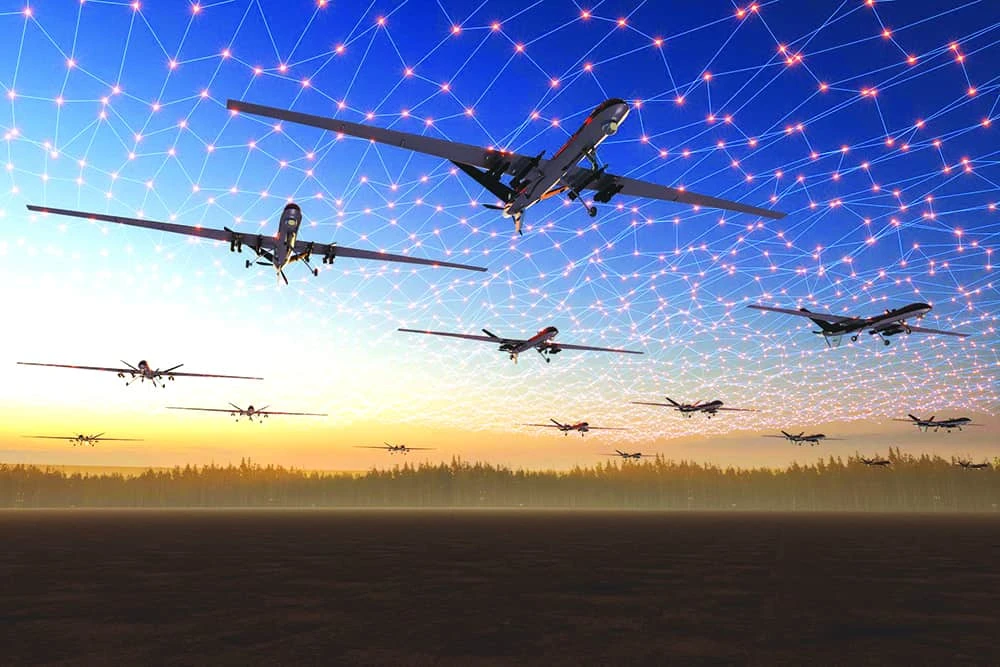
Against this backdrop, the military has intensified aerial attacks, including drone operations, that have devastated civilian spaces. The military has increasingly relied on Russian-supplied reconnaissance and suicide drones, anti-drone systems, and technical assistance, alongside Chinese-made UAVs and modified commercial drones. Hospitals, villages, and towns have been struck, even as the regime publicly celebrates the Air Force’s role in ‘counterinsurgency.’ According to Armed Conflict Location and Event Data Project (ACLED), Myanmar now ranks third among the world’s most intensive users of drone warfare, with a sharp rise of 30 percent in air and drone attacks in last year.
Meanwhile, the Rohingya crisis sits at the core of this political and humanitarian collapse. Long before the 2021 coup, the military engineered the Rohingya’s exclusion through policies of “Myanmarisation”. The 1982 Citizenship Law rendered them stateless, stripping basic rights and legitimizing repeated military operations designed to expel them from the country. Operation ‘Dragon king’ (1978), Operation ‘Clean and Beautiful Nation’ (1991), communal violence and localized clearances from 2012 onward; and the mass expulsions after the 2017 attacks and subsequent push-ins have forced hundreds of thousands Rohingyas into Bangladesh, embedding a cross-border humanitarian burden that remains unresolved. Nothing in the current electoral framework addresses Rohingya citizenship, safety, or repatriation. Instead, the same military structures responsible for atrocities now seek electoral validation without accountability.
The regional implications are severe. Myanmar’s civil war has generated refugee flows, cross-border shelling, trade disruption, and the expansion of illicit economies involving drugs, arms, and human trafficking. Bangladesh and India face direct security and humanitarian spillovers, while Thailand and China confront instability along their borders. Continued conflict risks further militarisation of the region and prolonged humanitarian emergencies.
For Bangladesh in particular, hosting over a million Rohingyas, the elections raise pressing diplomatic and moral questions. As one of the largest contributors to UN peacekeeping operations and current Chair of the BIMSTEC (Bay of Bengal Initiative for Multi-Sectoral Technical and Economic Co-operation), Bangladesh is well placed to advocate for civilian protection, accountability, and inclusive political solutions through multilateral forums. A response grounded in principled diplomacy and sustained humanitarian leadership remains essential, as Myanmar’s elections threaten to entrench instability rather than resolve it.
আরও পড়ুন -