






Editor & Publisher: Rabb Majumder
House # 05 (2nd Floor, 2-C), Road# 04, Banani DOHS, Dhaka - 1206
Phone: +8801715822782
Phone (Advertisement): +8801712863234
Email: rabb.h.majumder@gmail.com, info@securityworldbd.com

Becoming the Modern ‘Ababil’: A Blueprint for Muslim Unity and Geopolitical Survival
Commodore Jasim Uddin Bhuiyan (Retd)
15:52, 12 June, 2026
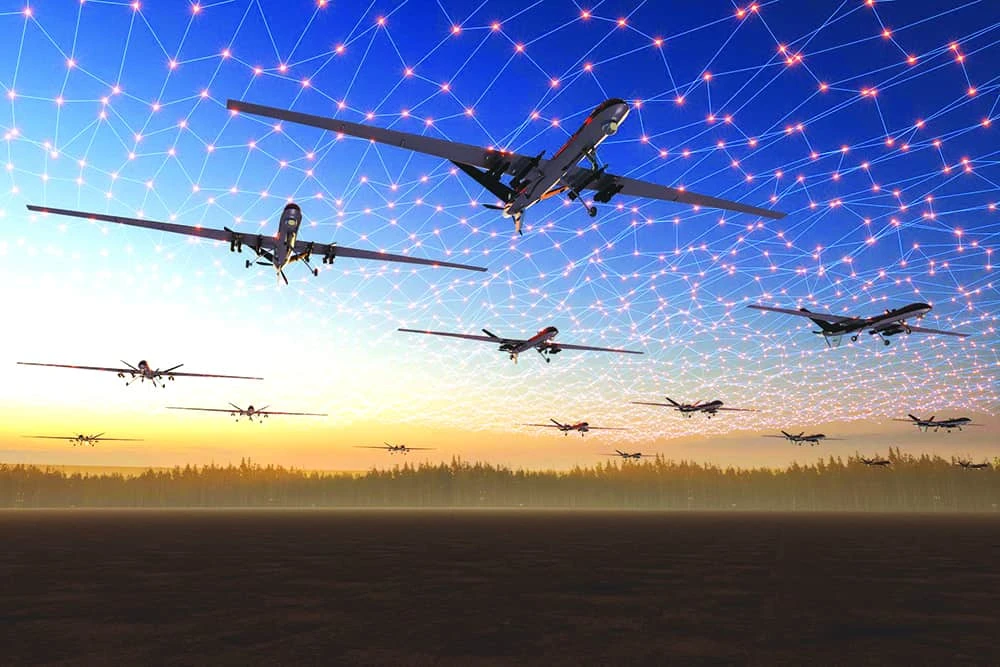
Swarm of Autonomous Military Drones Connected by Digital Network
Commodore Jasim Uddin Bhuiyan (Retd)

The contemporary Muslim world presents a jarring paradox. Home to over two billion people, controlling the world’s most critical maritime choke points, and sitting upon the lion’s share of global energy reserves, the Ummah remains geopolitically paralyzed. When crises erupt, the response from Muslim capitals follows a tragically predictable script: empty press releases, toothless resolutions, and public displays of grief. For decades, the global Muslim community has watched these tragedies unfold as mere spectators.

This passivity has birthed a dangerous psychological complex. When watching the destruction of sovereign Muslim lands, many within the Ummah instinctively retreat into passive theological waiting. They wonder why the legendary Ababil—the flights of birds sent by Divine decree to destroy Abrahah’s elephant army—have not arrived to rescue today’s oppressed. But this mindset misinterprets the fundamental laws of nature and faith. The Quran explicitly establishes the prerequisite for divine intervention and historical change: “Indeed, Allah will not change the condition of a people until they change what is in themselves” (Surah Ar-Ra’d 13:11).

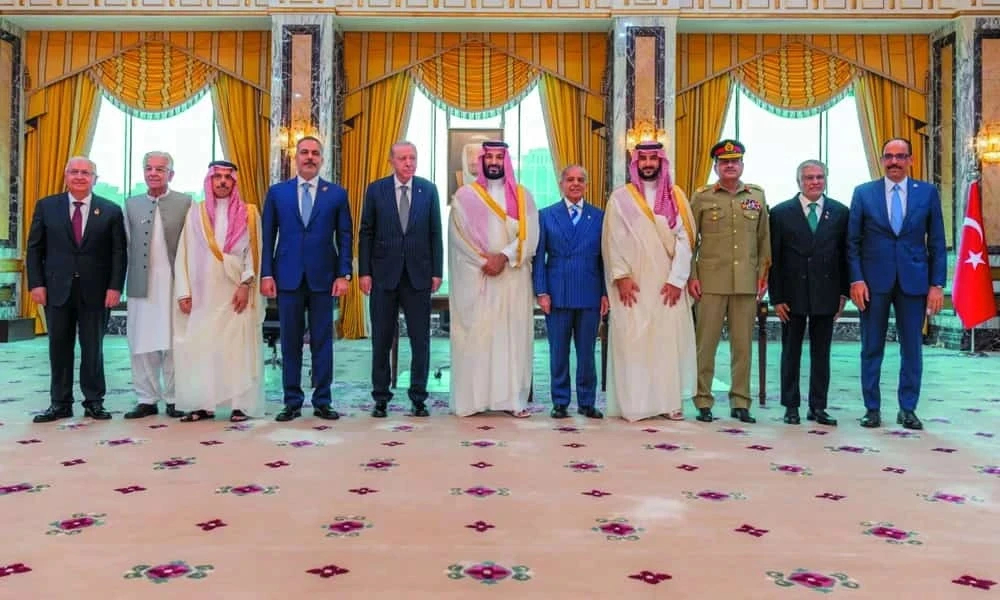
Turkey, Saudi, Egypt, Pakistan Discuss Defence Cooperation. Photo: Net
Divine help is not a mandate for human laziness or strategic apathy. Miracles require action, preparation, and the cultivation of strength. If the Muslim world wants to understand what a modern manifestation of strategic defiance looks like, they do not need to scan the skies for a miraculous rescue. They need to look at recent history.
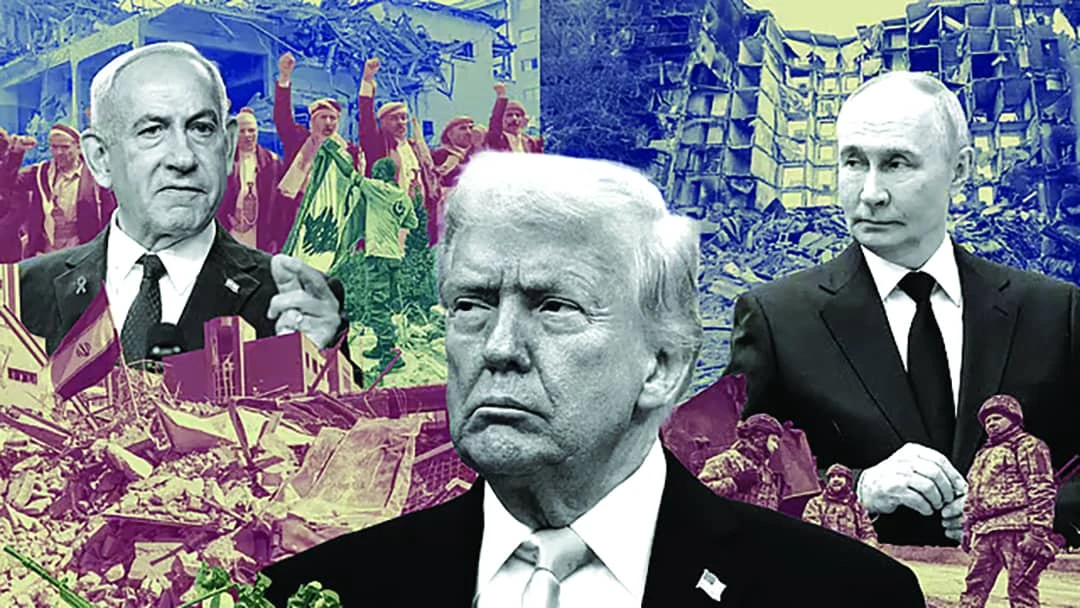
In a historic geopolitical shift, Iran demonstrated that a single, highly disciplined, and technologically self-reliant nation could stand its ground against the combined military, intelligence, and cyber capabilities of two of the world’s most formidable warriors: the United States and Israel. If one isolated, heavily sanctioned nation can create such a potent deterrent, imagine what a unified, resourceful Muslim world could achieve. To transform this lesson into reality, the Ummah must move past emotional rhetoric and establish a concrete, highly organized structure: the Ababil Treaty Organization (ATO).
How the West Divided the Muslim World
The greatest weakness of the Muslim world today is not a lack of resources, money, or soldiers; it is a total lack of structural unity. This fragmentation is not an accident. It is the result of a deliberate, long-standing geopolitical strategy by Western powers to keep the region weak and dependent.
Exactly a century ago, following the collapse of the Ottoman Empire in 1924, British Lord Curzon explicitly outlined this goal, declaring: “We must ensure that Muslims will never arise again in unity, whether it be intellectual or cultural unity.”
To achieve this absolute global dominance, Western powers performed a political surgery on the weakened Muslim countries of the Middle East. By drawing fake, arbitrary borders, they broke up the region to create new states and installed a class of spineless, submissive rulers. These hand-picked individuals were set up to rule as the kings, sheikhs, and emirs of the Middle East, serving foreign masters rather than their own people.
This strategy of “divide and rule” continues today. In 2002, former Israeli Prime Minister Benjamin Netanyahu openly stated that a fractured Middle East filled with small, weak states serves the long-term interests of the US and Israel. Similarly, UK Prime Minister Keir Starmer has noted that many autocratic rulers in the Muslim world rely heavily on foreign protection to stay in power, acting directly against the security of their own citizens.

The Pakistan Navy commissions PNS Khaibar in Turkiye reinforcing its fleet modernisation drive and deepening the MILGEM defence partnership with Ankara. Photo: Net
The heartbreaking result of this trap is visible today. While the majority of Arab Sunni rulers have quietly accepted foreign dominance to protect their own thrones, the people of Persia—one of human civilization’s oldest lands—refused to accept defeat. If the eyes of the Arab Sunni rulers do not open even after seeing these recent events, it must be understood that Almighty Allah has sealed their hearts with His wrath. They spend billions on foreign weapons to fight each other, while external actors reap the benefits.
Deconstructing the Myths of Language and Sectarianism
To build a functional defense alliance like the Ababil Treaty Organization, the Muslim world must first dismantle the internal myths and historical baggage that perpetuate its disunity.
For generations, the romantic myth of pan-Arabism preached that speaking the Arabic language meant that the Arab world shared “one heart and one spirit.” This ideological framework assumed that linguistic and cultural proximity would naturally translate into political unity. However, history proved exactly the opposite. Pan-Arabism talked about unity while walking the path of deep political disunity, ultimately collapsing under the weight of state-centric ego, tribal rivalries, and competing nationalist agendas. Language alone cannot substitute for structural, institutionalized integration.
Worse than linguistic division is the weaponization of history. What began centuries ago as a purely political dispute over leadership and governance gradually evolved into a rigid theological and sectarian divide between Sunni and Shia Islam. Today, these theological differences are exploited by self-serving political elites and external actors to turn neighbors into existential enemies. While Muslim nations bicker over historical grievances that occurred over a millennium ago, their current populations pay the price in blood and economic stagnation.
Leadership in Action: How Statesmen Bridge the Divide
Dismantling a century of deep-seated distrust requires a rare breed of leadership. The Muslim world does not need more populist agitators; it requires visionary statesmen who understand both modern geopolitics and historical lessons.
We must remember that unity is entirely possible. In Michael H. Hart’s book, A Ranking of the Most Influential Persons in History, Prophet Muhammad (Sm.) was chosen as the number one most influential figure. His unparalleled success lay in his ability to unite fiercely warring, deeply divided tribes into a single, cohesive, and powerful nation. This masterclass in unity explains his lasting influence on both religious and secular history.

Islam: A Universal Message for All Humanity.
In modern times, figures like Tun Dr. Mahathir Mohamad of Malaysia and Recep Tayyip Erdoğan of Turkey offer a blueprint for how Muslim leaders can intelligently dismantle disunity. Mahathir Mohamad famously understood that emotional appeals to Islamic brotherhood achieve very little without economic sovereignty and technological capability.
Mahathir’s vision was built on concrete projects: developing indigenous industries, mastering information technology, and creating alternative economic systems to bypass Western financial hegemony. By focusing on shared development, leaders can create a platform where nations interact not through the lens of theology, but through mutual economic survival.
Recep Tayyip Erdoğan’s geopolitical strategy highlights the importance of building robust, independent regional institutions. Erdoğan recognized that relying on Western-dominated security apparatuses leaves Muslim nations vulnerable to shifting foreign priorities. Through initiatives like the D-8 Organization for Economic Cooperation and defense partnerships, Erdoğan demonstrated how to operationalize unity.
Turkey’s aggressive development of its domestic defense industry, becoming a global leader in drone technology, aerospace, and naval engineering, proved that a Muslim nation can break its dependency on foreign suppliers. A leader following this path shows neighboring states that unity is a highly profitable, secure, and realistic geopolitical strategy.
Formulating the Ababil Treaty Organization (ATO)
The proposed Ababil Treaty Organization (ATO) is the institutional vehicle needed to operationalize this vision. It is not an organization designed for unprovoked aggression, but a collective defense shield, a highly sophisticated “Muslim NATO” tailored to the harsh realities of 21st-century geopolitics. To succeed, the ATO must be built upon three unyielding pillars:
1. Geopolitical Realism Over Ideology The North Atlantic Treaty Organization (NATO) consists of member states with radically different languages, distinct cultures, historical animosities, and varied internal political systems. Yet, NATO remains effective because all members adhere to a single rule: An attack on one is an attack on all.
The ATO must adopt this exact brand of cold geopolitical realism. It must completely bypass the Sunni-Shia divide, linguistic differences, and internal governing styles. Strategic survival must take precedence over theological alignment. If member nations continue to let sectarian biases dictate their foreign and defense policies, they will remain isolated, low-hanging fruit for external exploitation.
2. Collective Indigenous Defense and Technological Self-Reliance The recent escalation of global conflicts has taught the world a vital lesson: You cannot import national security. For decades, wealthy gulf nations spent trillions of dollars purchasing top-tier American and European military hardware. However, these systems come with severe political strings attached, requiring foreign maintenance and the constant threat of supply embargoes.
In contrast, Iran’s ability to withstand immense external pressure was driven by forced self-reliance. Cut off from global markets by decades of strict sanctions, they were forced to develop an indigenous military-industrial complex, mastering long-range missile tech, asymmetric drone warfare, and domestic cyber defense networks.
The ATO must standardize and scale this blueprint across the Muslim world. By pooling the financial capital of wealthy energy exporters with the advanced engineering and manufacturing capital of nations like Turkey, Pakistan, Iran, and Malaysia, the ATO can establish joint defense industries. True defense cannot be bought; it must be built.
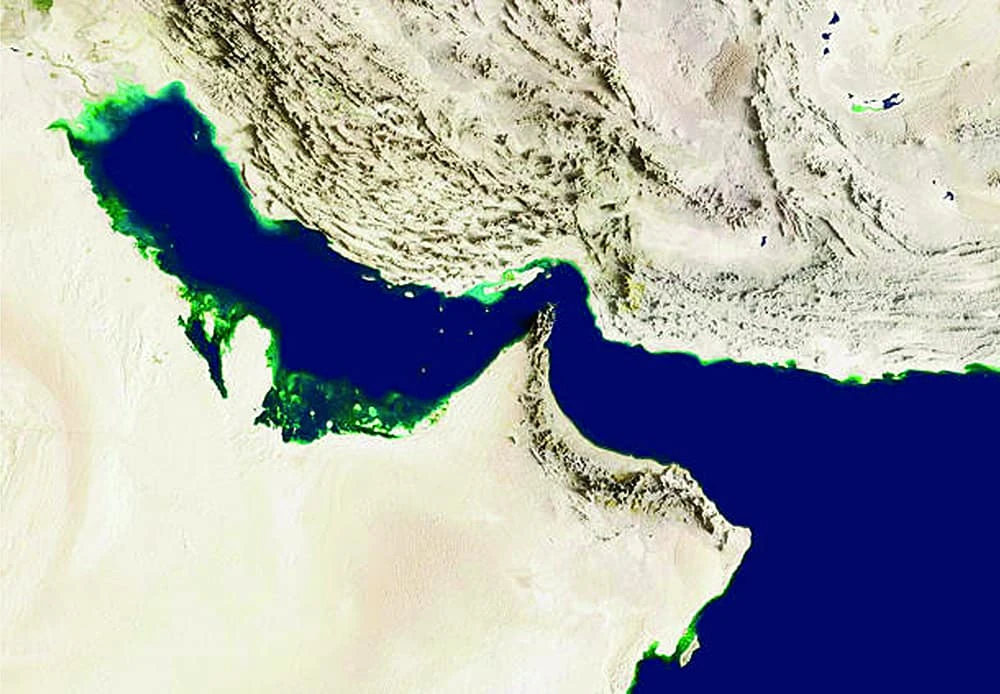
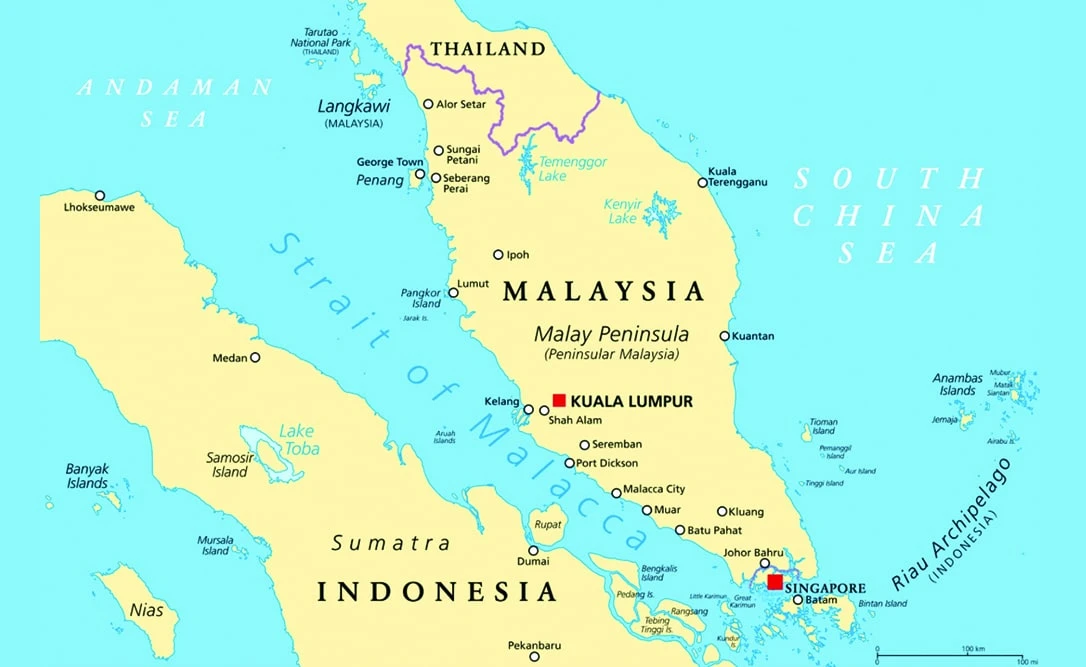
3. Sovereign Resource and Geopolitical Leverage The geographic footprint of the Muslim world represents some of the most valuable real estate on Earth. Muslim-majority nations sit atop the vast majority of the world’s proven oil and natural gas reserves. Furthermore, they control the planet’s primary maritime shipping arteries: the Strait of Hormuz, the Suez Canal, Bab al-Mandab, and the Malacca Strait.
Under the umbrella of the ATO, these assets would be treated as collective strategic leverage. The organization would coordinate economic, energy, and maritime policies to protect its member states. If an external superpower attempts to illegally sanction or attack an ATO member, the alliance can collectively deploy its economic leverage, restricting access to shipping lanes or adjusting energy production. This creates an immediate, peaceful, yet devastatingly effective diplomatic deterrent.
Who Will Bell the Cat?
The grand plan for the Ababil Treaty Organization is strategically flawless on paper, but it faces a classic, historic dilemma: Who will bell the cat? Everyone agrees that the threat of external exploitation must be checked, but taking the first step to openly defy global superpowers is incredibly dangerous. Which Muslim nations have the courage, independence, and power to step forward and lead this alliance?
The answer lies in a tripartite leadership core formed by the major non-Arab Muslim powers: Turkey, Iran, and Pakistan, with strong diplomatic backing from maritime nations like Malaysia.
Because many Arab regimes remain structurally tied to Western security blankets, these non-Arab nations must act as the primary movers. Turkey possesses the advanced NATO-standard military-industrial complex and economic infrastructure. Iran has perfected the art of asymmetric defense, technological self-reliance, and direct resistance against hegemony. Pakistan brings the indispensable weight of being the Ummah’s sole nuclear-armed power.
If these three nations can set aside geopolitical rivalries, they can collectively “bell the cat.” By forming the initial core of the ATO, they can create a secure umbrella that smaller or more vulnerable Muslim nations can gradually join without fearing immediate economic or military destruction from external powers.
Becoming the Modern ‘Ababil’
The era of standing on the sidelines as passive spectators to the dismantling of the Muslim world must come to an end. Waiting for a miraculous rescue while remaining internally divided, ideologically distracted, and entirely dependent on foreign powers for security is a betrayal of both faith and logic.
The Ababil of the modern era will not fall from the sky to save a people who refuse to lift a finger for their own defense. The modern Ababil must be forged in the research laboratories, the joint military command centers, the diplomatic halls, and the industrial manufacturing plants of a unified Muslim world.
By taking inspiration from the unparalleled unity achieved by Prophet Muhammad (Sm.), matching the pragmatic statecraft of leaders like Mahathir Mohamad and Tayyip Erdoğan, and learning from the raw geopolitical resilience demonstrated by nations that refuse to back down, the Ummah can break the century-old cycle of fragmentation. The Ababil Treaty Organization is not a utopian dream; it is an urgent geopolitical necessity. It is the only viable pathway for the Muslim world to transform from a helpless, fragmented audience into a unified, powerful force for global peace, stability, and civilizational justice.
আরও পড়ুন -