















Editor & Publisher: Rabb Majumder
House # 05 (2nd Floor, 2-C), Road# 04, Banani DOHS, Dhaka - 1206
Phone: +8801715822782
Phone (Advertisement): +8801712863234
Email: rabb.h.majumder@gmail.com, info@securityworldbd.com

Changing Dynamics of Reserve Currency Hegemony-What Shape and What Shakes
Dr. Jamaluddin Ahmed, FCA
15:58, 12 June, 2026
Jamaluddin Ahmed FCA PhD

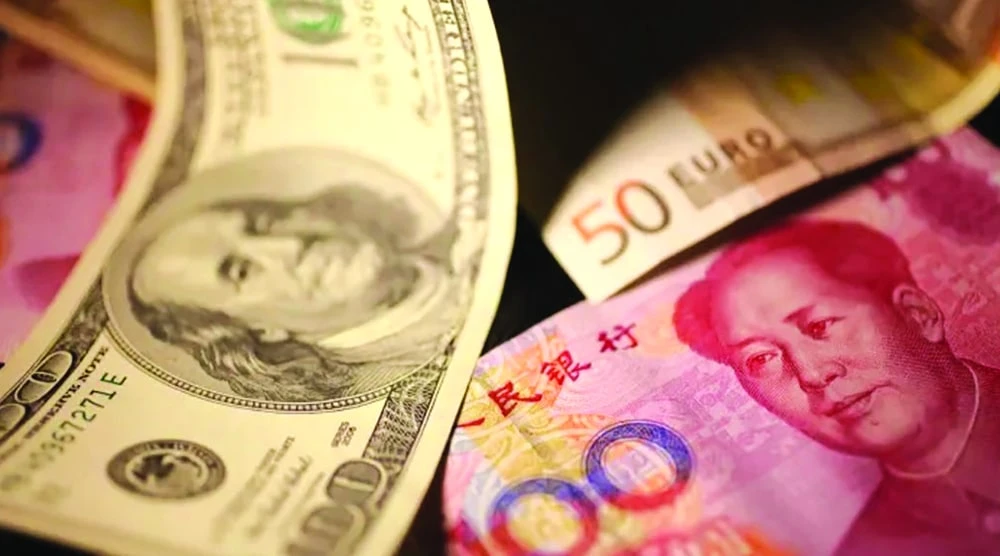
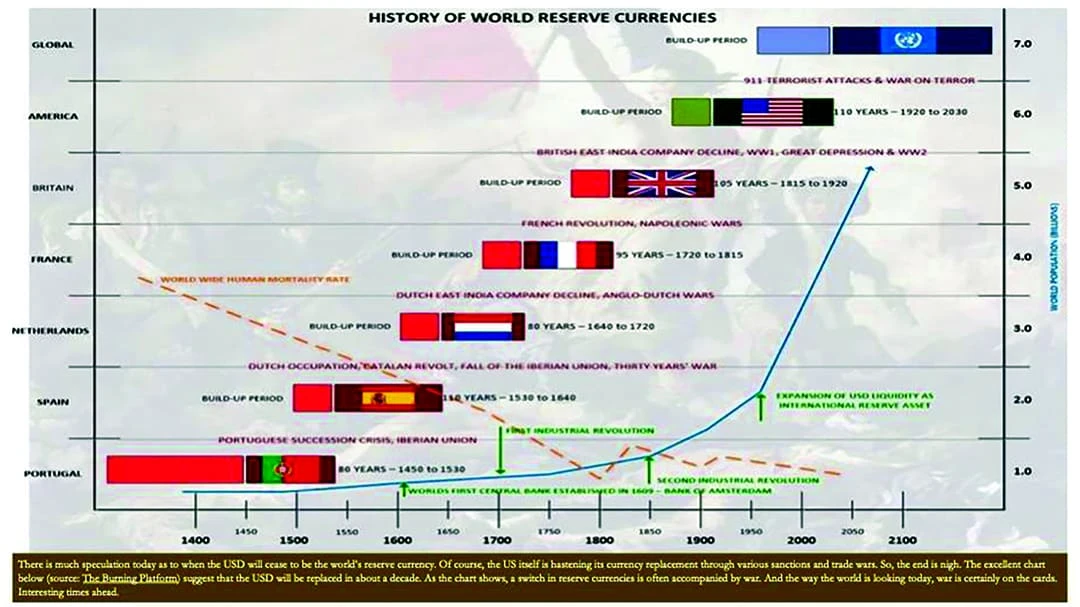
There is much speculation today as to when the USD will cease to be world’s reserve currency, of course, the US itself is hastening its currency replacement through colonial rules, applying various techniques like sanctions and trade wars. History provides evidence of reserve currency build up period for Portugal 80 years (1450-1530), Spain 110 years (1530-1640), Netherlands 80 years (1640-1720), France 95 years (1720-1815), Britain 105 years (1815-1920) and the USA 110 years (1920-2030 estimated). By time line from 1450-2030 Portugal can be cited as the first colonial power enjoying currency hegemony which shifted from one to the other with change of hegemony through war or other means. The USA ranked the as the 6th nation that took the currency hegemony from Britain in 1920. In most cases changing currency hegemony power were ended through war. The winner country’s currency took over from the defeated nations and their currency took position of reserve currency. The world economy requires some kind of internationally acceptable money, otherwise the nations would be reduced to crude barter, limiting gains from cross-border trade, investment, etc. From the economic point a single currency might be appropriate to reduce transaction cost although the socio-political economy does not permit in reality in all cases. The benefits of reserve currency stressed by the economists include transaction costs, familiar gains of international seigniorage. The political scientists include leverage and reputation, risk of undue currency appreciation. The exorbitant privilege enjoyed by the issuer of reserve currency which potentially is significant distributional consequences. Cross border use of dominant currency can loosen constraints of payments on domestic monetary and fiscal policy which is easier for policy makers to pursue public spending objectives and external discipline is relaxed.

Between 1860-1914, nearly 60 percent of world trade was dominated in sterling although the UK accounted 30 percent. More recently when dollar ruled 45 percent of international debt securities in dollar (end 2008), 86 percent of all foreign exchange transactions (2007) 66 countries being dollar as anchor currency (2008), for many countries 70-80 percent of trade is denominated in dollars, and most commodities are priced in dollars and dollar still rules shadow world of crime and illicit transactions. In some ways one could argue that private sector actions are indeed the deep determinants of reserve currency status. Countries exhibit a certain ambivalence about their reserve currencies because there are both benefits and costs associated with reserve currency status. A country’s exporters, importers, borrowers, and lenders are able to deal in their own currency rather than foreign currencies. Thus, the transaction costs of obtaining another currency and the psychological costs of having to move or convert from domestic to foreign currencies are lowered and eliminated.
Having one’s currency as the reserve currency tends to confer power and prestige in the global financial crises the USA or rather Fed, supplied countercyclical liquidity to Europe and several emerging markets. Parity by virtue of its reserve currency status, the Fed could use essentially its balance sheet to help the world. This conferred prestige, and had the USA wanted to, it could have exploited this source of power. Britain’s gradual loss of key currency status was simultaneous with gradual political and military pre-eminence as noted the quote from Harold Wilson. History provides interesting examples of the reserve currency status by the US for achieving noneconomic and economic objectives. The ability t finance current account deficit more easily can lead to irresponsible government and private sector behavior thereby contributing to financial instability. The US experience in the recent global financial crisis is a case in point, the argument being that the large current account deficits-steaming in part from reserve currency status to a large capital inflows and cheap easy money, which combined lax regulations led to reckless behavior and sowed the seed for crisis. The reserve currency status and cheaper financing it afforded, may have been the rope that allowed the USA to hang itself.

Looking at the evidence for the demand for dollar from private international sources, it appears that dollar not only started gaining in ascendency in early 1920’s but also retained that status in the inter-war years. In the pre-WW-1 nearly all issuance was in sterling but after the War an overwhelming share was in dollars. This situation helped the US as the premier reserve currency was considerably less than 60-plus years which was congenitally believed closer to 5-10 years from 1919 to the mid-to-late 1920’s but in reality, the dollar hegemony is continuing days in 2022. But the earlier situation, if applied to current based on the index of economic dominance for China surpassed that of USA after 2010. This can be considered as a theoretical time line for the Chinese currency possibly overtaking the dollar after 2020 would be similar to, or even slightly greater than that between the USA and the UK in mid-1920’s when dollar eclipsed sterling. Or which may delay transition beyond 10 years suggested by history on the ground of non-democratic country (China) can inspire the basic trust in rule of law that might be necessary for spreading internationalization of currency. The key issue to note that trade is a significant determinant of reserve currency status combined with China’s growing trade dominance portend strongly for the renminbi. It is likely that renminbi internationalization will be increasing rapidly.
Historical experience of the other transition-from dominance to demise of sterling is also considered instructive on the other hand, the handover is difficult for the USA for reasons of history, namely inheritance of the sterling area from era of empire. This inheritance become difficult to eliminate because of the weakness of UK economy-also the USA and UK are allies and there was consensus and concerted efforts by governments to minimize cost of transition to the UK and internationally.
The current environment is quite different between the USA and China which seems to be less cooperative between the two to manage the transition of reserve currency dominance. Before the eyebrows go up at the magnitude and timing implied by either of the scenarios, one must be careful about their interpretation. Many of policy changes will be needed to occur before the fundamentals can prevail. The visible role for the renminbi as a reserve currency may be still some ways off as it remains in convertible, restrictions on the use of renminbi for capital account transactions, easy buy of Chinese assts for foreigners and limited access to foreign assets by the Chinese citizens. PBOC cannot use the renminbi to intervene in foreign exchange markets. The heart of the problem that China’s current growth strategy is heavily reliant on export which is fostered by competitive, undervalued exchange rate, a closed capital account in limiting the local currency by foreigners and for international transactions. The prerequisite for the use of the renminbi as international reserve currency yet to market must free first become more transparent, banks must be commercialized, supervision and regulations must be strengthened, monetary and fiscal policy must be sound and stable, and exchange rate more flexible. China must first move away from a growth model where bank lending and pegged exchange rate have been central pillars. In short, there are many reasons to believe that China is far way from attaining major reserve currency status. Although the rise of dollar and its eclipsing of sterling as the primary reserve currency was quicker than expected and it would have been even quicker had politics and history no intervened.
Regarding benefits and costs for the issuer of dominant currency needs a comprehensive analysis must be an exercise of political economy taking account of both economic and political dimensions. Benefits stressed by economists include a cluster of favorable impacts at the macroeconomic, subsumed under rubric of transaction costs at the aggregate level and the familiar gains of international seignories and macroeconomic flexibility. The political scientists add two effects are more overtly political in nature-leverage and reputation, external constraints, policy responsibility and misconceptions.

Differentiation of Currencies. That a hierarchy has always tended to exist among the world’s moneys, forming what call a Currency Pyramid, has long been understood by students of monetary history. Today, as it happens, there is really only one Top Currency, the U.S. dollar, which for all its tribulations still dominates for most cross-border uses and in most regions (Cohen 2009). Not even the gale-force winds of the recent global financial crisis could topple America’s greenback from its perch at the peak of the Currency Pyramid, though debate about its future continues, in the name of Patrician currencies, people’s currency, Elite Currency play a critical difference between the several medium-of exchange and unit-of-account roles, on the one hand, and the two store-of-value roles on the other. Use of a currency in foreign-exchange trading, trade invoicing, or for official intervention purposes will almost certainly generate some measure of benefits at the microeconomic level—denomination rents or reduced transactions costs of various kinds. Leverage through the financial-market role is not impossible, of course. Consider the case of Panama, which back in 1988 found itself in a grim political dispute with the United States. Consider the case of Panama, which back in 1988 found itself in a grim political dispute with the United States. Coercion via private financial markets worked. Top Currencies or even Patrician Currencies are bound to enjoy more political leverage than Elite Currencies. For for any government contemplating internationalization of its currency, it is critical to keep the entire range of potential benefits and costs. It it is also critical to keep all the possible roles of an international currency in mind, each with its own mix of gains and losses. If the issuer’s objective is strictly economic gain, it is not really necessary to aspire to what we call Patrician Currency or Top Currency status.
On balance, the biggest economic benefits are associated with just a limited range of roles—most importantly, the roles in trade invoicing and financial markets. A country with limited ambitions, Elite Currency status may be enough. The country that wants more—a money that will pay political and perhaps even security dividends—strategy must be correspondingly more ambitious. it is not necessary to give up current-account surpluses in order to promote an international currency. Both history and logic suggest that internationalization can be attained via intermediation on capital account alone. The factor of time must be taken into account—the possibility that initial gains might, in time, be offset by losses. The challenge for policy makers is to frame strategy from the start to put off that day of reckoning for as long as possible.
In the past two hundred years of human history, only two nations enjoyed monetary hegemony, Great Britain and the United States, whose money was the world’s dominant currency for medium of exchange, unit of account and store of value. Possessing monetary hegemony gives the issuer of that currency both economic and political gains. Many experts agree that the United States defeated Great Britain as the top currency issuer status and established its own monetary hegemony right after WWII. The dollar’s share in world reserve currencies dropped to around 20% in 1933. Therefore, consensus can be reached that the United States finally secured the dollar’s uncontested leadership among international currencies at the end of the Second World War in 1945. During the years following 1914, the United States came across the first golden opportunity in the history of its monetary expansion. Because of the huge cost of the war, the British Empire was not able to maintain the gold standard any longer. The U.S. stayed out of the war towards the end of the war and benefited from the sharp increase of exports to the warring states in Europe. The dollar was the only currency to remain convertible into gold at a fixed price in the 1920s. Compared to the devaluation of the pound, the dollar began to emerge as a major international currency; its use in international trade and finance widened increasingly. Because of these reasons, for the first time in history, the dollar overtook the pound as the main reserve currency in 1924. Robert Triffin, a Belgium-born economist at Harvard University, in his 1947 report to the Fed. He pointed out an intrinsic design flaw of the Bretton Woods system, which was later known as the ‘Triffin Dilemma’, in his popular book Gold and Dollar Crisis. In plain plain words, the Triffin Dilemma could be explained as: “if the United States stopped running balance of payments deficits, the international community would lose its largest source of additions to reserves. The resulting shortage of liquidity could pull the world economy into a contractionary spiral, leading to instability. If U.S. deficits continued, a steady stream of dollars would continue to fuel world economic growth. However, excessive U.S. deficits (dollar glut) would erode confidence in the value of the U.S. dollar. Without confidence in the dollar, it would no longer be accepted as the world’s reserve currency. The fixed exchange rate system could break down, leading to instability (IMF, 2001, ‘The Dollar Glut’ in Money Matters: An IMF Exhibit—The Importance of Global Cooperation. Triffin’s prophecy finally became reality. On August 15, 1971, U.S. President Richard Nixon imposed a 90-day wage and price freeze, a 10 percent import surcharge, and, most importantly, “closed the gold window”, ending convertibility between US dollars and gold.
A new phase of monetary history was turned. The world entered into a new era of fiat money which was backed by nothing. When Paul Volker chaired the Fed in 1979, he began to deal with the problem of high inflation caused by a persistent over-issuing of dollars. Finally, the dollar started to be strong and its share in foreign exchange reserves tended to be stable, thanks to Volker’s successful move to squeeze inflation. The strong dollar weakened the competitiveness of American products; therefore, in the middle of the 1980s, the United States successfully pressured its main allies, West Germany and Japan, to appreciate their currencies against the U.S. dollar by signing the Plaza Accord and the Louvre Accord. The collapse of the Soviet Union and its ruble sphere provided the U.S. dollar with a whole new world full of opportunities.
Although it only costs a few cents for the U.S. government to print a $100 bill, other countries have to provide added value in the form of goods or services in order to receive $100 dollars. Approximately $500 billion of U.S. currency circulates outside the United States which foreigners ac- quired, not because their governments printed the dollars but because they had had to provide the United States with $500 billion of actual goods and services. This privileged position of the dollar is not intrinsic nor inevitable but is rather a reflection of U.S. domination and conversely, international trust in U.S. stewardship of the dollar and the dollar-based system. Even with the closure of the gold link, the dollar did not become a normal currency like all the others but rather, retained its unique role as a world currency. Nonetheless, economists cautioned that the overpriced dollar will sooner or later have to decline to a more normal level. The crucial question is whether this will become a soft landing or a crash landing.
Despite U.S. trade deficits and budget deficits throughout the 1980s and onward, the dollar perversely maintained its top dog status. In the 1980s, the dollar had no rival. Not so now. Despite economic troubles in Greece and the Euro zone and the 2015 economic slowdown in China, things are different today. The U.S. budget deficit, which ballooned because of tax cuts and increased war spending, continues without solution in sight. Even in 2003, Alan Greenspan had warned, far more urgent than tax cuts . . . was the need to address the threat posed by the soaring new deficits. At the same time, the combined GDP of the United States, the European Union and China together constitute almost 60 percent of global GDP. Hence it is not surprising that there are currently three major currencies in the world: the dollar, the Euro, and the yuan.The focus on the currency war between the dollar and the yuan (rather than the euro) for several reasons. First, unlike Western European countries, China is a rival, not an ally of the United States. Second, China is a rising global power with global ambitions, political, economic, and monetary. Third, China has by word and deed taken steps to dethrone the dollar.
PBOC acquisition of dollars resulted in even more dollar exposure for China. Once the PBOC held those newly acquired dollars, it also needed to invest these dollar reserves (Morrison & Labonte, 2009) and given its traditionally conservative orientation, it preferred to invest in highly liquid securities issued by the U.S. Treasury. Consequently, China possessed a massive quantity of U.S. Treasury obligations, which was estimated by some sources as early as 2011 as $950 billion U.S. dollars.
Implication of Reserve Currencies for Competitiveness. From the perspective of the three basic functions of money, medium of exchange, unit of account, and store of value (Greco 2001), the monetary hegemon usually owns a national currency which is the main medium of exchange of international trade, the unit of account for most important goods worldwide, and store of value for most other states. About sixty-four percent of the world’s official foreign exchange reserves are currently held in U.S. dollars; roughly 88% of daily foreign exchange trades involve U.S. dollars. Oil, gold and other important goods are denominated in U.S. dollars. The international use of the dollar brings the United States remarkable economic benefits. The Benefits of an International Currency include, Seigniorage, Inflation tax, Cheap credit, and Macroeconomic flexibility. Dollar Hegemony creates U.S. Privilege, Others’ Problem. John Connally, the U.S. Secretary of the Treasury, once told his European counterparts that the dollar is our currency, but your problem. Monetary Imperialism and Dollar Hegemony under the Breton Woods system gold and dollars were both reserve assets in foreign central banks and the dollar’s value was pegged to gold, thus giving foreign holders of the paper money firm confidence in its value. The U.S. deficits continued to inflate, confidence in the dollar’s value collapsed; private investors and central banks made a dollar run at the end of the 1960s, which finally led to President Nixon’s decision to stop the convertibility of dollar into gold in 1971. The monetary hegemony so far, the United States had established was a sophisticated and complicated mechanism centering on the Treasury bill standard. Central banks, IMF, and the World Bank become the vehicles of this mechanism. All the rest of the world relies on U.S. credit-creating power to develop their economies. Their dollar holdings devalued gradually, but there was no alternative way out of this dead-locked dollar circulation. With everyone clamoring for dollars, all the US had to do was print fiat dollars and other countries would accept them in payment for their exports. These dollars then flowed back into the US to be invested in Treasury Bonds and similar instruments, offsetting the outflow. The U.S. continued to run a large budget and balance of payment deficits in order to finance its military race with the Soviet Union. More and more dollars were piled up in the central banks of European countries and Japan. By persuading Japan and European allies into the Plaza Accord and Louvre Accord, the United States was able to devalue the dollar significantly in the 1980s against the Japanese yen and Deutsche mark. Petrodollar Recycling, the Hidden Hand of Dollar Hegemony, the U.S. designer of dollar hegemony had already put this scenario in their consideration and plugged this vulnerability by linking the dollar to oil. How could the linkage keep this dollar mechanism from collapsing. No one would doubt the importance of oil, as it is “not just the most important commodity traded internationally. It is the key industrial mineral, without which no modern economy works. The dollar hegemony has been one of the pillars of the American hegemony and probably is more important than the other pillar, military dominance. In the cold war era, the dollar’s reserve currency status served the U.S. military power by incessantly transporting resources to the latter. The military power more and more plays a role of the guardian of the money. This potential factor poses a threat to the operation of the dollar hegemony mechanism, the gigantic military machine might start, thus shifting the American hegemony from the ‘benign hegemony’ into a ‘dangerous hegemony’.
The costs and benefits to the United States in a Normal Year, the estimated net benefit from reserve currency status to be about $40 billion to $70 billion to US GDP, or 0.3 to 0.5 percent of GDP (McKinsey Global Institute 2009). More precisely, the United States obtains a small net benefit from reserve currency status of 0.3–0.5 percent of GDP in a normal year. What are the costs and benefits of being a reserve currency (+40 to +70 i.e .3% to 0.5% of US GDP). The first class of benefit is from seigniorage income. The income generated by the US Federal Reserve from the reserve currency status of the United States is an estimated $10 billion. This revenue results from the ability of the United States to receive an effectively interest-free loan on the currency it issues that is held by nonresidents. Indeed, about half of the physical US notes and coins—around $400 billion—are held overseas. The second class of benefit is the cost of capital advantage obtained by borrowers in the United States as a consequence of foreign demand for dollar assets. United States has been able to generate an investment income surplus of a few percentage points of GDP even with a significantly negative net financial-asset position (of about $2 trillion over the past fewyears. Reserve currency status has some sharp distributional consequences routed from distribution of costs and benefits. Broader economic analysis of currency hegemony status indicate possible expression of these costs and benefits in terms of the overall impact on GDP and employment in the normal year and crisis years. McKinsey Global Institute (2009) calculated calculate that the net financial benefit of $40 billion to $70 billion from reserve currency status converts into an overall GDP effect of $115 billion to $185 billion, or 0.9 to 1.4 percent of GDP. In a crisis year, using the same approach, MGI (2009) estimate that the net financial benefit converts into an overall GDP benefit of $15 billion to $75 billion, or 0.1 to 0.5 percent of GDP.
Is Dollar Dominance in Doubt. The dollar has been the global currency of choice for nearly a century, but in light of recent U.S.-led financial sanctions, some wonder whether that status will endure. The world runs on the U.S. dollar. Apart from Europe, where the euro dominates, the majority of global trade is invoiced in dollars. The Fed estimates that foreign investors held nearly $1 trillion in cash at the end of the first quarter of 2021, roughly half of all U.S. notes in circulation. Central banks around the world hold about 59 percent of their foreign currency reserves in dollars. Much of these reserves are held as dollar-denomi- nated debt — that is, U.S. Treasuries—rather than currency. About a third of all U.S. debt was held abroad as of 2021, and a little over 60 percent of debt issued by non-U.S. companies in a foreign currency was denominated in dollars. The world runs on the U.S. dollar.
The widespread adoption of the dollar as a global currency has long been thought of as a source of “exorbitant privilege” for the United States, a term coined in the 1960s by France’s then Finance Minister Valéry Giscard d’Estaing. Having a large share of trade invoiced in dollars protects U.S. exporters and importers from exchange rate risk. The dollar wasn’t the first currency to attain global reach, though. In the 16th century, the Spanish silver dollar rose to prominence through Spain’s colonial expansion. In the 17th century, Dutch florins and bills issued by the Bank of Amsterdam became the currency of choice. And by the 18th century, the pound sterling of the British Empire had become dominant—a position it would main- tain into the 20th century. Each of these global currencies emerged organically without coordination as in Bretton Woods. In fact, the dollar had already begun to compete with the British pound by the mid-1920s, years before Bretton Woods solidified its place. Economists have different theories about which of these functions is most important for explaining a currency’s rise, but First Deputy Managing Director of the International Monetary Fund (IMF) Gita Gopinath and Harvard University professor and former Fed Governor Jeremy Stein argue that they are all interconnected and reinforcing. If a currency becomes a global unit of account through its use in trade invoicing, that increases the demand to hold that currency to conduct trade, which bolsters its position as a global store of value. Similarly, if there is a lot of global demand to hold a currency as a store of value, that reduces the cost of borrowing in that currency and makes it attractive for traders in other countries to price exports in that currency to access that cheap funding market. Does the dollar’s widespread use abroad confer an “exorbitant privilege” upon the United States as Giscard d’Estaing claimed. Most economists agree that it has its benefits, though not many would say they qualify as exorbitant. The law of supply and demand implies that higher global demand for dollar-denominated Treasuries means the United States can attract buyers at lower interest rates, allowing it to borrow more cheaply. But in practice, this advantage appears slight.
Competition for the Crown. One of the recent sanctions that garnered a lot of attention was the decision to bar several Russian banks from SWIFT. Many commentators referred to this as the financial “nuclear option,” since it effectively cut those banks off from much of the global financial system. Because many of the transfers that use SWIFT are made in dollars, some feared this action could spark a negative backlash against the dollar. The analogy illustrates the challenge of substituting away from the dollar: There simply isn’t any comparable alternative. “The dollar represents the entire ecosystem of payments and banking,” says Wong. “It is difficult to find a close substitute that is equally deep, liquid, broad, and safe.” Most competitor currencies face limitations that the dollar does not. The euro is widely used for trade in Europe and is viewed as safe, but the fact that the euro- zone does not have a unified fiscal policy limits its ability to produce enough euro-denominated safe assets to satisfy global demand. Plus, as the recent actions against Russia illustrate, switching to the euro would not necessarily offer any additional protection over the dollar, as Europe and the United States often work in partnership. China has taken steps to internationalize the renminbi in recent years by opening its financial markets up to more foreign investors, but Maggiori says it still has a long way to go to match the openness of the U.S. market.
The long view, while there may not be a single obvious replacement for the dollar, that doesn’t mean that countries haven’t been diversifying into other currencies. The dollar’s share of global foreign exchange reserves fell to a 25-year low at the end of 2020, to 59 percent from 71 percent in 1999. Rather, most of the shift away from dollars has been into dozens of smaller currencies. They cited a greater desire for portfolio diversification on the part of central banks as well as the falling cost of trans- acting in smaller currencies as factors that have contrib- uted to this change. This has led some economists to speculate that we could be heading toward a “multipolar” world of many different competing currencies, which could have some advantages.
Many economists point to a new kind of Triffin dilemma as a greater risk to dollar supremacy than the use of sanctions. Just as the United States faced a crisis of confidence in its ability to back the dollars in circulation during the Bretton Woods era, economists have warned that it could face a similar challenge in the coming years to supply enough safe assets to meet global demand while simultaneously maintaining confidence in its ability to repay its debts. Having more options for safe assets to choose from in the form of different currencies could solve this problem, but not all economists agree that a multipolar system would necessarily be more stable. Competition among countries to grab the reserve currency crown could lead to coordination challenges and questions about which assets are truly safe. Moreover, the transition from the dollar regime to its successor could be unstable. “One historical precedent is the coexistence of dollar and sterling during the inter- war years,” the late Harvard University macroeconomist Emmanuel Farhi told Econ Focus in a 2019 interview. “It’s not a particularly happy precedent; it was a period of monetary instability.
History teaches that dominant currencies change infrequently and often over long transition periods. But crises can be the catalyst for those transitions, as was the case when the British pound’s centuries-long reign started to unravel after World War I. While almost no economist predicts that the dollar will be replaced soon, market confidence is fickle, and the types of crises that spark a changing of the reserve currency guard are inherently hard to predict.
Drivers of Reserve Currencies include four key elements in determining reserve currency status, The economic size/dominance of reserve issuers, credibility of reserve issuers, Inertia, and reserve currency shares at the global level. Trade Links as a factor could lead to more diversified supply chains and/or localized production to avoid overreliance on a single dominant supplier country in the future, with implications for the demand for reserves. For instance, more localized production could reduce international trade and subsequently the demand for international reserves. Alternatively, more diversified international supply chains might encourage demand for a more diversified portfolio of reserves. The post crisis period, lower trade shares with reserve issuers could lead to lower reserve shares. However, this potential development in trade links could be countered by any reserve issuer’s ability to elevate the status of its currency as an invoicing currency. The Credibility matters. The US dollar’s dominance has been related, in part, to a lack of credible alternatives. Rising demand for reserve assets, particularly in the context of a global shortage of safe assets, may create incentives for other potential suppliers to take proactive steps to develop new reserve currencies. Exchange Rate Anchor, Geopolitics as a Trigger of Currency Switches, Technology as a Disruptor, Development of Central Bank Digital Currencies, Digitization of Payment Systems and Revenue System, and Longer-Term Considerations can play a vital role in changing the reserve currency status.
Recalibrating sanctions policy to preserve U.S. financial hegemony. The American economy, dollar, and banking system create unparalleled power for the U.S. in the global financial system. This power provides disproportionate influence over the world’s key economic and financial institutions, regulatory authority over major foreign companies and banks, and allows borrowing on favorable terms and in dollars, enabling long-term deficit spending. U.S. policymakers are increasingly deploying financial sanctions to punish or coerce other states. Once targeted at weak rogue states, sanctions are now used against great powers and allies. These sanctions yield few political victories because they ask too much and are often implemented reflexively, to punish, rather than strategically, to achieve a desired outcome. But they carry serious political and economic costs—damaging relations with allies and locking American companies out of foreign markets.
Although financial sanctions have come into vogue among policymakers as a seemingly low-cost, effective way to manage hostile states, other nations are increasingly alarmed at the weaponization of commercial institutions. Financial coercion has made both allies and adversaries aware of just how vulnerable they are to U.S. pressure. This realization has spurred other major economies to invest in alternatives to the current U.S.-led system. Aside from carrying long-term costs for U.S. dominance, the efficacy of liberally applied sanctions deserves further scrutiny. Sanctions often succeed in punishing adversaries but this tactical achievement rarely reforms target states’ behavior when important policies are at stake.2 Sanctions do shift commercial activity to channels outside the reach of the U.S., however, and change the cost benefit calculus for affected nations, making them more likely to invest in building their own alternative institutions to bypass the American-led system. The U.S. should not renounce sanctions as a policy tool but should use them far more judiciously. In many cases, policymakers have reacted to the failure of sanctions to change a target’s behavior with even more sanctions, locking in hostile relationships and locking American firms and those of U.S. allies out of the sanctioned economy.
This means forgone opportunities for wealth creation in the U.S. and a market opening for competitors, often from great power rivals like China and Russia.Under the umbrella of USA the SWIFT has grown to 11,000 member institutions, representing nearly every country. Because the world needs USD, and because the dollar runs through American banks and ultimately the Federal Reserve, the U.S. also has incredible control over foreign banks who need USD, their clients who need to transact in USD, and institutions such as SWIFT. The dollar overwhelmingly dominates the foreign exchange markets, accounting for 87.6 percent of global market turnover in 2016 (BIS, 2016). This means those looking to convert one third-party currency to another (say Chinese yuan to Pakistani rupees) will often have to convert their own currency to USD before buying the destination currency. The ability to limit access to USD thus creates a potent bottleneck even for those not trading with the U.S. The recent sanctions US is indirectly creating her allies to join its enemy because of economic reasons.
আরও পড়ুন -