







Editor & Publisher: Rabb Majumder
House # 05 (2nd Floor, 2-C), Road# 04, Banani DOHS, Dhaka - 1206
Phone: +8801715822782
Phone (Advertisement): +8801712863234
Email: rabb.h.majumder@gmail.com, info@securityworldbd.com

Predictive Consequences of the US–Iran Standoff: Strategic Pathways and Global Security Implications
Major General (Retd) Dr. Md. Nayeem Ashfaque Chowdhury
16:08, 12 June, 2026
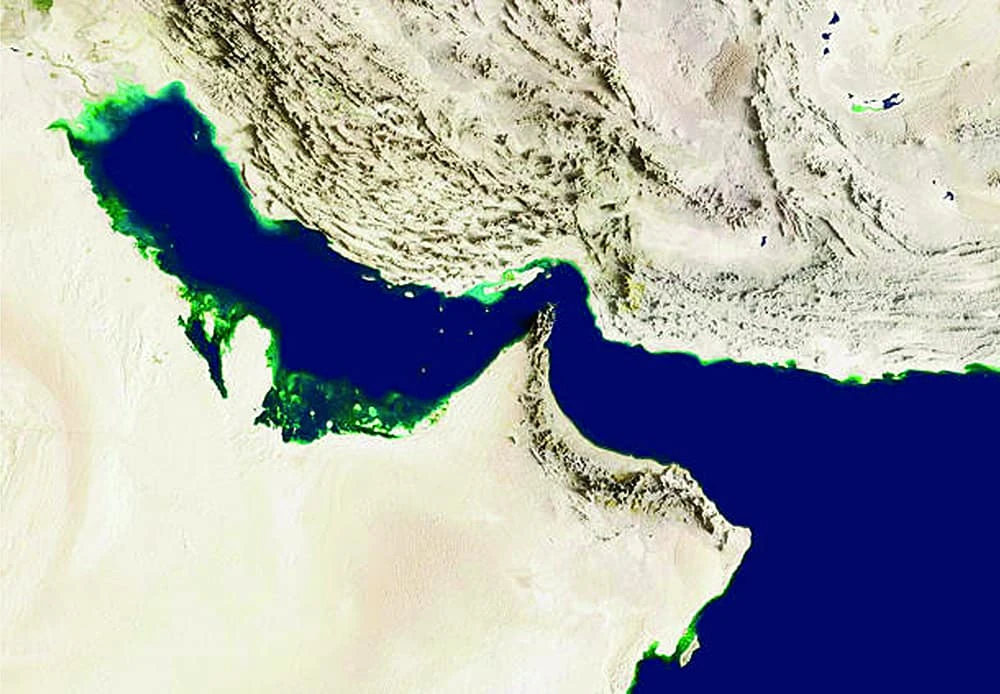
Strait of Hormuz
Major General (Retd) Dr. Md. Nayeem Ashfaque Chowdhury

Introduction: A Crisis at the World’s Energy Artery
The Strait of Hormuz—through which nearly 20 percent of globally traded oil and one-third of global LNG passes—has once again become the epicenter of a geopolitical confrontation with far-reaching consequences. The ongoing US–Iran confrontation, now hardened into a dangerous stalemate, has created a dual blockade: the United States maintains a naval cordon to pressure Iran, while Iran continues to restrict passage, asserting control over the strait and targeting vessels it deems hostile.
Diplomatic exchanges through Pakistan have yielded no breakthrough. Both sides continue to table proposals unacceptable to the other, reflecting deep strategic mistrust. In early May 2026, the United Arab Emirates was accused of conducting a covert air strike on Iran’s Lavan Island refinery in the Persian Gulf.
Reports from The Wall Street Journal and The Independent indicate that the attack caused extensive fires and temporarily crippled operations, marking the first direct military action by a Gulf state against Iran. Tehran denounced it as an “enemy attack” and retaliated with missile and drone strikes on the UAE and Kuwait. The incident widened the confrontation’s scope, transforming the Gulf into an arena of overt interstate engagement and heightening strategic volatility across the Strait of Hormuz. Meanwhile, a new development has added a volatile
layer: a 40-nation naval coalition from Europe, Asia, the Middle East, Africa, and the Americas—led jointly by the UK and France—was formed in early April 2026. Its objectives are to free stranded commercial vessels, restore freedom of navigation, establish humanitarian corridors for essential goods, coordinate economic and diplomatic pressure on Iran, and prepare for mine-clearing and escort operations once hostilities subside.
Iran has responded with an unambiguous warning: any foreign naval vessel entering Hormuz will be treated as an enemy combatant. The United States, despite maintaining its own naval presence, did not join the coalition—seeking to avoid blurring the line between containment and escalation, preserve command autonomy, and manage domestic political calculations. The UK-France initiative thus embodies European strategic sovereignty, while Washington’s caution reflects a recalibration of global engagement priorities.
The U.S. Absence: Strategic Meaning of a Silent Superpower
The United States’ abstention from the 40-nation coalition represents a deliberate posture of restraint. Washington aims to avoid direct confrontation with Iran while maintaining operational autonomy under CENTCOM rather than operating within a European-led framework. Politically, the decision seems war fatigue and a desire to limit entanglement in another Middle-East conflict. Strategically, however, the absence carries profound implications: it underscores Europe’s growing independence in crisis management, marks a visible shift toward multipolar leadership, and reduces U.S. influence over maritime security norms.
By allowing Europe to lead humanitarian and commercial rescue efforts, the U.S. tacitly acknowledges a redistribution of global authority. America’s silence at Hormuz is possibly not weakness—it is a cautious recalibration of power, emblematic of a world transitioning from U.S. primacy to shared strategic stewardship.
In this evolving dynamic, the United Arab Emirates increasingly functions as a quasi-proxy for U.S. interests—executing limited kinetic actions that align with Washington’s deterrence objectives while preserving American deniability. The Lavan Island strike exemplifies this calibrated delegation of coercive capacity, signaling a shift from passive alignment to active enforcement within the Gulf’s strategic theatre.

This calibrated restraint by Washington has created a vacuum of initiative that Europe has swiftly filled. The subsequent deployment of France’s Charles de Gaulle carrier group exemplifies this redistribution of maritime leadership—transforming strategic caution into operational assertion.
Coalition Naval Posture: France’s Forward Deployment
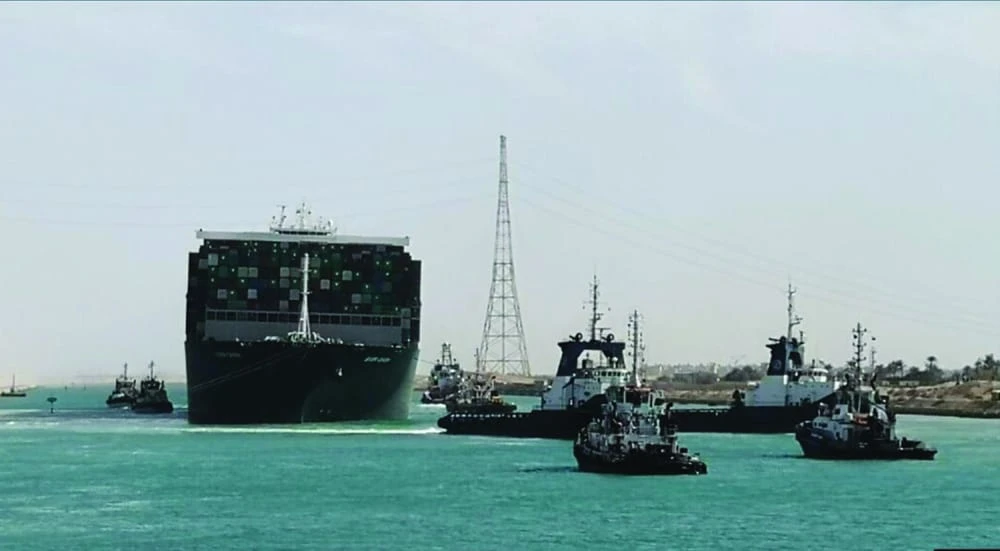
As of May 12 2026, France’s aircraft carrier Charles de Gaulle operates in the southern Red Sea near the Gulf of Aden, having crossed the Suez Canal on May 6. Supported by Italian and Dutch escorts, the carrier strike group sits within operational reach of the Strait of Hormuz yet remains outside Iran’s missile threat zone. Its mission is defensive and humanitarian, providing air and maritime surveillance for the UK-France-led coalition tasked with securing commercial shipping lanes and coordinating mine-clearing operations.
This forward deployment reflects Europe’s determination to act independently of U.S. command structures, symbolizing a strategic assertion of European leadership in Gulf maritime security and reinforcing the coalition’s credibility as a multilateral initiative for stability and safe passage.
The coalition’s forward deployment now defines the operational baseline for Gulf security. Against this backdrop, three predictive pathways emerge—each illustrating how tactical choices at Hormuz could reshape global energy and security dynamics.
Predictive Scenarios: Pathways and Consequences
This article outlines three predictive scenarios, each with distinct implications for regional stability, global energy security, and the international order.
Scenario 1: Prolonged Stalemate and Gradual De-escalation
The current military postures remain intact; neither side escalates to direct large-scale conflict. Over time, the intensity of the blockade wanes, and commercial shipping resumes selectively, with Iran imposing targeted restrictions—especially on U.S. and Israeli vessels.
Iran retains operational control over the Strait of Hormuz, striking UAE’s Fujairah bypass route to prevent alternative export corridors. Regional exporters and importers negotiate bilaterally with Iran to secure passage, while the U.S. and Israel—less dependent on Gulf energy flows—absorb the disruption more easily. The U.S. responds with intensified sanctions, targeting Iranian exports and penalizing states that continue to buy Iranian oil.
Energy markets remain volatile but avoid total collapse. Insurance premiums for Gulf shipping stay high, Gulf economies suffer prolonged uncertainty, and global inflation persists without systemic breakdown. This scenario is the least catastrophic yet still destabilizing, normalizing a semi-blocked Hormuz and entrenching Iran’s asymmetric leverage.
Scenario 2: Full-Scale U.S.–Israel Offensive Against Iran
A coordinated air-sea-land campaign by the U.S. and Israel aims to degrade Iran’s military infrastructure. Iran retaliates across the region with missile strikes, proxy mobilization, and closure of Hormuz.
This is the most dangerous scenario: Iran’s missile and drone capabilities would target U.S. bases, Gulf infrastructure, and Israeli cities. The Strait of Hormuz would shut completely, with mines, anti-ship missiles, and swarm attacks. Proxy forces in Iraq, Syria, Lebanon, and Yemen would activate simultaneously, and global oil supply could drop by 15–20 million barrels per day, triggering an unprecedented energy shock.
Gulf monarchies become frontline battlefields, global recession becomes inevitable, NATO faces internal fractures, and China and Russia may intervene diplomatically—or militarily—to prevent regime collapse in Tehran. The 40-nation coalition risks entanglement in a multi-theater conflict. This scenario threatens regional collapse, global economic depression, and irreversible damage to the international security architecture.
Scenario 3: Intensified Diplomacy and Institutionalized Peace Framework
Diplomatic efforts expand beyond Pakistan’s mediation, engaging regional powers—Turkey, Saudi Arabia, Qatar, Oman—and global actors such as the EU, China, and Russia, alongside multilateral institutions like the UN and OIC.
A successful diplomatic surge would require security guarantees for Iran against regime-change threats, a phased lifting of sanctions tied to verifiable commitments, and a maritime security framework ensuring freedom of navigation for all states. A UN-mandated monitoring mechanism and a regional dialogue platform would anchor long-term Gulf stability.
Under this scenario, energy markets stabilize, commercial shipping resumes fully, and the 40-nation coalition transitions from crisis response to cooperative security. The Strait of Hormuz becomes part of a rules-based maritime regime, strengthening international order and reducing the risk of miscalculation. This is the most sustainable pathway, offering a foundation for enduring regional peace.
Whether through confrontation or cooperation, the Hormuz crisis has become a litmus test for global governance. The following conclusion distills the strategic imperative that must guide all actors navigating this volatile theatre.
Conclusion: The Imperative of Strategic Restraint
The US–Iran confrontation at the Strait of Hormuz is not merely a bilateral dispute—it is a global security crisis. The world economy, already fragile, cannot absorb prolonged disruption at the planet’s most critical maritime chokepoint. The emergence of a 40-nation coalition underscores both the urgency and the risk of unintended escalation.
Among the three predictive scenarios, diplomatic intensification remains the only viable path to prevent catastrophe. It demands political courage, multilateral coordination, and a willingness to transcend zero-sum calculations. The stakes are immense: the choices made in the coming weeks will determine whether the Strait of Hormuz becomes a symbol of global cooperation—or the flashpoint of a new era of conflict.
আরও পড়ুন -