









Editor & Publisher: Rabb Majumder
House # 05 (2nd Floor, 2-C), Road# 04, Banani DOHS, Dhaka - 1206
Phone: +8801715822782
Phone (Advertisement): +8801712863234
Email: rabb.h.majumder@gmail.com, info@securityworldbd.com

US PRESIDENT’S MAY 2026 VISIT TO CHINA:
POWER POLITICS, THE THUCYDIDES TRAP, GAME THEORY, AND THE STRATEGIC PATHWAY FOR BANGLADESH
15:25, 12 June, 2026
Major General Md Mostafizur Rahman, SUP, ndc, hdmc, afwc, psc, PhD (LPR)
The author is now working as a Professor (Adjunct) in Military Institute of Science and Technology

Abstract
The May 2026 visit of US President Donald Trump to China illustrates the evolving complexity of twenty-first-century power politics. Contemporary US–China relations defy traditional categories of alliance or hostility, instead reflecting a paradoxical mix of strategic rivalry, economic interdependence, technological competition, and negotiated coexistence. This article analyzes the existing US-China relation through the dual frameworks of the Thucydides Trap and Game Theory, demonstrating how both powers seek to maximize strategic advantage while avoiding catastrophic confrontation under conditions of deep mutual dependence. The study argues that the relationship embodies “competitive interdependence,” where cooperation persists not from trust but from the prohibitive costs of escalation. It further explores the implications for Bangladesh, emphasizing the need for strategic balance, economic diversification, technological modernization, and institutional resilience. In an increasingly fragmented international order, Bangladesh’s long-term security and prosperity will depend on its ability to maintain diplomatic flexibility and internal cohesion while navigating great-power rivalry.
Introduction
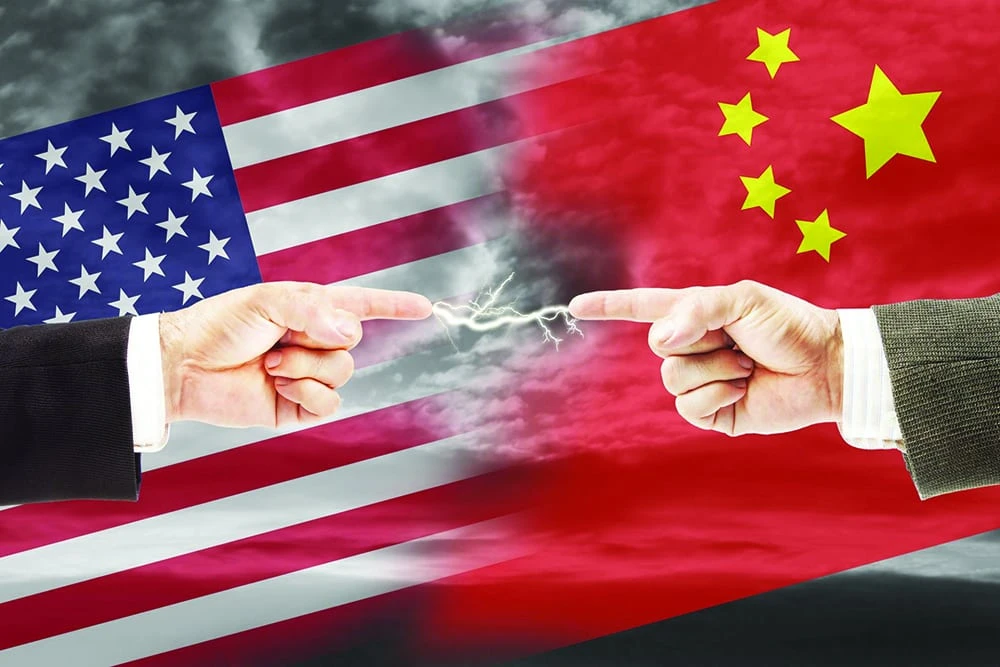
The strategic relationship between the United States and China has become one of the defining features of twenty-first-century geopolitics. Unlike earlier great-power rivalries, this relationship is marked by paradox: intense competition coexists with deep economic interdependence, technological rivalry intersects with financial integration, and military deterrence operates alongside selective cooperation. The result is a complex structure of “competitive coexistence” that resists simplistic categorization as either alliance or hostility.

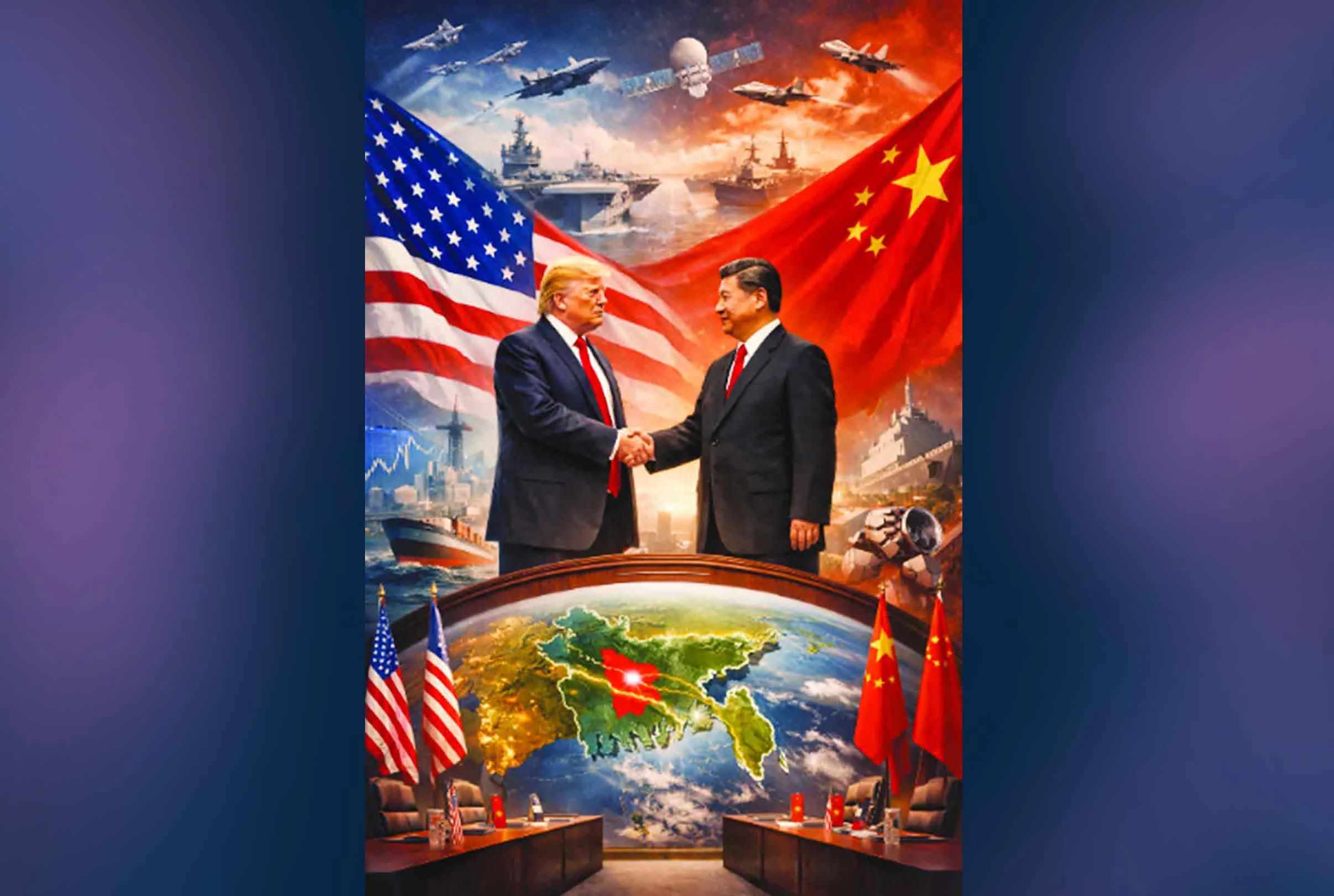
President Donald Trump’s May 2026 visit to China vividly illustrated this evolving reality. The summit, which concluded on 15 May, was significant not merely for its formal diplomatic exchanges but for the symbolism and restraint it projected. President Trump, long associated with confrontational rhetoric on trade and strategic competition, adopted a more measured posture. Chinese President Xi Jinping, in turn, emphasized calm confidence and institutional stability. The carefully choreographed ceremonies, extended discussions, and controlled public messaging signaled a shared recognition of the enormous costs of uncontrolled escalation.
Yet beneath this diplomatic composure lay profound structural tensions. The summit underscored that the US–China relationship can no longer be understood through binary categories of friendship or rivalry. Instead, it reflects a condition of permanent competition managed through negotiation, signaling, and bounded cooperation. To analyze this dynamic, two frameworks prove particularly useful: the Thucydides Trap, which highlights the structural anxieties of power transition, and Game Theory, which explains the operational logic of simultaneous cooperation and competition. Together, these frameworks provide a lens through which to understand not only the summit itself but also the broader trajectory of global order.
The Thucydides Trap and the Structural Anxiety of Great Powers
The concept of the Thucydides Trap originates from the writings of the ancient Greek historian Thucydides, who argued that the rise of Athens and the fear this created in Sparta made conflict increasingly likely. In modern international relations, the concept describes the dangerous tensions that often emerge when a rising power begins challenging the position of an established hegemonic power (Allison, 2017).
The contemporary US–China relationship increasingly reflects many characteristics of such a structural transition
For decades following the Second World War, the United States maintained overwhelming dominance within the international system especially till the end of cold war in 1992. American influence extended across military alliances, global finance, technological innovation, maritime security, and international institutions (Brzezinski, 1997). China’s extraordinary rise over recent decades has gradually transformed that strategic environment. Through rapid industrialization, manufacturing expansion, technological modernization, military development, and economic integration, China has emerged as the principal long-term challenger to American strategic primacy (Mearsheimer, 2014).
This transformation has generated strategic anxiety for both powers
For the United States, China’s rise raises concerns regarding the future balance of power in the Indo-Pacific, technological competition, maritime influence, supply-chain dependency, and the erosion of long-standing American dominance within global institutions. For China, meanwhile, American alliance structures, technological restrictions, military deployments in Asia, and Indo-Pacific balancing strategies are increasingly viewed as efforts designed to contain China’s geopolitical rise (Kissinger, 2011).
The danger of the Thucydides Trap lies not necessarily in deliberate aggression, but in the gradual accumulation of strategic mistrust, nationalist pressure, alliance commitments, security dilemmas, and the possibility of miscalculation. Rising powers often seek greater strategic space, while established powers seek to preserve existing influence. Such dynamics create conditions where fear, signaling, and perception become as important as actual military capability (Waltz, 1979).
Trump’s May 2026 visit to China suggested that both Washington and Beijing increasingly understand these dangers. The summit appeared less focused on resolving strategic rivalry than on ensuring that competition itself remained manageable. Conscious application of Game Theory in the relation management may be useful.
Game Theory and the Logic of Strategic Coexistence
While the Thucydides Trap explains the structural pressures driving rivalry between a rising and established power, Game Theory helps explain the operational behavior of both states within this competitive environment. The contemporary US–China relationship increasingly resembles a complex strategic game in which both sides simultaneously cooperate and compete. The logic of the Prisoner’s Dilemma is particularly relevant. Both countries benefit enormously from economic cooperation, stable markets, predictable trade flows, technological exchange, and global financial stability. Yet both also seek unilateral strategic advantage in areas such as artificial intelligence, semiconductor production, cyber capability, military modernization, and geopolitical influence (RAND Corporation, 2025).
This contradiction was clearly visible during Trump’s visit. Discussions reportedly focused on tariff adjustments, supply-chain stabilization, agricultural trade, aviation agreements, technology access, and broader economic coordination. Despite years of trade wars, sanctions, and technological restrictions, both sides continue recognizing that complete economic decoupling would generate severe global consequences. The contemporary US–China relationship increasingly resembles a combination of Competitive Interdependence, Bounded Competition, the Prisoner’s Dilemma and the Game of Chicken. These models help explain why both powers simultaneously cooperate economically while competing strategically.

Competitive Interdependence
China remains dependent upon export markets, financial integration, and access to advanced technologies, while the United States continues relying heavily upon Chinese manufacturing capacity, industrial supply chains, rare earth processing, and consumer markets. Thus, cooperation persists not because genuine strategic trust exists, but because the cost of total confrontation remains irrationally high for both parties. The summit therefore illustrated a form of competitive interdependence. Both powers seek to weaken strategic vulnerabilities while preserving enough cooperation to prevent systemic collapse.
Bounded Competition
Nuclear deterrence and economic interdependence create what strategists often describe as “bounded competition.” Both powers compete aggressively below the threshold of direct military conflict because the costs of total war remain irrationally high.
Prisoner’s Dilemma
The Prisoner’s Dilemma describes situations in which two actors would benefit most through cooperation, yet each remains tempted to pursue unilateral advantage. This dynamic is clearly visible in the US–China relationship. Economically, both countries remain deeply interconnected despite years of trade disputes, tariff escalation, technological restrictions, and geopolitical tension. During Trump’s May 2026 visit, discussions reportedly focused on tariff adjustments, supply-chain stabilization, agricultural trade, technology access, aviation agreements, and broader market cooperation.

Both states recognize that complete economic decoupling would trigger severe disruptions across global trade, industrial production, inflation control, financial systems, and domestic political stability. China continues to depend on access to global export markets, advanced technology, and financial integration, while the United States remains reliant on Chinese manufacturing capacity, supply-chain efficiency, consumer markets, and rare earth processing. Over time, China has complemented the U.S. economy by assuming large segments of manufacturing once dominated by American firms—transforming small-scale industries into globally competitive sectors. Whereas the United States traditionally pursued high-end innovation and large-scale strategic projects, China focused on incremental industrial expansion, turning “small things into big things.” Cooperation between the two powers therefore persists not because of mutual trust, but because the cost of uncontrolled confrontation remains extraordinarily high for both sides.
The diplomatic tone of the summit reflected this reality. Observers noted that Trump adopted a more restrained and conciliatory posture than during earlier phases of US–China confrontation. Chinese President Xi Jinping similarly projected calm confidence and strategic patience. The carefully choreographed symbolism of the summit — including ceremonial hospitality, extended private discussions, and controlled public messaging — appeared designed to signal stability rather than escalation. Yet beneath the diplomatic warmth remained profound strategic distrust. The relation is could be confronting causing damage to both while avoiding it gives more dividends which is well explained by another Game Theory “The Game of Chicken”.
The Game of Chicken
The Game Theory model — the Game of Chicken — helps explain the strategic dynamics surrounding Taiwan. For China, Taiwan represents sovereignty, territorial integrity, and national reunification. For the United States, Taiwan represents Indo-Pacific strategic balance, alliance credibility, maritime security, and broader regional deterrence (The Diplomat, 2026). Neither side currently desires direct military confrontation, yet both remain unwilling to appear strategically vulnerable. This mutual caution sustains a tense equilibrium—each power signaling resolve while carefully avoiding actions that could trigger escalation. The result is a dynamic of deterrence through perception, where maintaining credibility becomes as critical as preventing conflict itself.
During the summit, Xi Jinping reportedly reiterated the sensitivity of the Taiwan issue and warned against actions capable of destabilizing regional security. Trump, meanwhile, avoided excessively provocative rhetoric, suggesting that both sides increasingly recognize the catastrophic consequences that miscalculation in the Taiwan Strait could produce.

A conflict over Taiwan would likely trigger global economic disruption, semiconductor shortages, maritime insecurity, cyber warfare, financial instability, and broader geopolitical fragmentation. In this sense, Taiwan represents the most dangerous intersection between the Thucydides Trap and Game Theory dynamics within the US–China relationship.
The Emerging International Order
The May 2026 summit also reflected broader transformations occurring within the international system itself. The world is gradually moving away from the relatively unipolar order that emerged after the Cold War toward a more fragmented and competitive geopolitical environment characterized by multi-polarity, strategic regionalism, technological nationalism, and economic securitization (Gilpin, 1981).The polarity may not necessarily be based on single country, rather could be on Forums; such as BRICS, SCO, AUSCUS, NATO (America’s), NATO (Europe’s), Global South Bloc, etc.
The Indo-Pacific has become the central theatre of this transformation.
The United States seeks to preserve strategic influence through alliance systems, naval dominance, technological superiority, and Indo-Pacific balancing strategies. China, meanwhile, seeks expanded influence through industrial modernization, maritime expansion, infrastructure diplomacy, technological advancement, and connectivity initiatives such as the Belt and Road framework.
Yet unlike the Cold War rivalry between the United States and the Soviet Union, the contemporary US–China relationship combines strategic competition with deep economic integration. Diplomatic engagement continues alongside military signaling. Economic cooperation persists alongside technological restriction. Strategic rivalry coexists with financial interdependence.

This creates a world defined neither by stable peace nor direct confrontation, but by prolonged strategic coexistence under permanent competition.
Bangladesh and the Strategic Implications of US–China Competition
For Bangladesh, the evolving US–China relationship carries profound strategic implications. Bangladesh occupies an increasingly important geopolitical position because of its location near the Bay of Bengal almost in the center of the Eastern Hemisphere, expanding economy, maritime connectivity, manufacturing capability, and growing relevance within the Indo-Pacific region.
Bangladesh’s future prosperity depends heavily upon stable global trade, energy security, export markets, maritime stability, technological modernization, and geopolitical predictability (World Bank, 2025). Consequently, Bangladesh benefits most when strategic competition between Washington and Beijing remains controlled rather than confrontational.
The challenge for Bangladesh lies in navigating relations between two major powers without becoming excessively dependent upon either. China has emerged as a major economic partner through infrastructure investment, energy projects, transportation development, industrial cooperation, and connectivity initiatives. Simultaneously, the United States remains critically important for Bangladesh’s export economy, technological access, higher education, financial systems, and broader global economic integration.
In this context, Bangladesh’s most effective strategic approach is likely to be one based upon balanced pragmatism rather than rigid geopolitical alignment. The long-standing foreign policy principle of “friendship toward all, malice toward none” remains highly relevant within the emerging international environment.
Strategic balance, however, requires more than diplomatic neutrality alone. It also requires internal national resilience. This includes:
Institutional professionalism to safeguard governance against polarization and fragility.
Technological modernization to reduce dependency on foreign innovation and enhance competitiveness.
Maritime and cyber security to protect critical trade routes and digital infrastructure.
Economic diversification to mitigate risks associated with supply-chain disruptions and geopolitical shocks.
National unity and political moderation to prevent external rivalries from exacerbating domestic divisions.
In an era of fragmented geopolitics, states weakened by internal discord are more vulnerable to manipulation. For Bangladesh, preserving strategic autonomy will depend not only on external diplomacy but also on domestic cohesion and National Unity. By cultivating resilience, diversification, and balanced diplomacy, Bangladesh can position itself as a model for smaller states navigating great-power rivalry—leveraging its geography and economic potential while safeguarding sovereignty in an increasingly contested Indo-Pacific order. Bangladesh must therefore strengthen institutional professionalism, technological capability, maritime security, cyber resilience, economic competitiveness, and long-term strategic planning.
National unity and political moderation are becoming increasingly important strategic assets within an era of geopolitical polarization. External rivalries should not be allowed to intensify ideological extremism, sectarian division, political radicalization, or social fragmentation within Bangladesh itself. Ultimately, a country divided internally struggles to preserve strategic autonomy externally. Strategic balance requires more than diplomatic neutrality. Bangladesh must strengthen its internal foundations of resilience to withstand external pressures.
Conclusion
Donald Trump’s May 2026 visit to China revealed the evolving realities of modern power politics. The summit demonstrated that the United States and China are neither traditional enemies nor genuine strategic partners. Instead, they exist within a condition of competitive coexistence shaped by economic interdependence, strategic rivalry, technological competition, and geopolitical caution. The Thucydides Trap helps explain the deeper structural tensions generated by China’s rise and America’s desire to preserve strategic primacy. Game Theory, meanwhile, explains the operational behavior of both states as they simultaneously cooperate, compete, deter, negotiate, and manage escalation under conditions of mutual vulnerability. Together, these frameworks suggest that the future international order will likely be defined neither by absolute peace nor outright Cold War confrontation, but by prolonged strategic competition managed below the threshold of catastrophic conflict.
For Bangladesh, the broader lesson is clear. The country must pursue strategic autonomy, balanced diplomacy, economic diversification, technological modernization, national resilience, and institutional strength. In an increasingly fragmented world shaped by great-power rivalry, the states most capable of preserving flexibility, internal stability, and strategic balance will likely possess the greatest long-term geopolitical resilience. Bangladesh’s ability to maintain strategic autonomy will depend not only on external diplomacy but also on internal cohesion, positioning it as a model for small states navigating great-power rivalry.
References
Allison, G. (2017). Destined for war: Can America and China escape Thucydides’s trap? Boston, MA: Houghton Mifflin Harcourt.
Brzezinski, Z. (1997). The grand chessboard: American primacy and its geostrategic imperatives. New York, NY: Basic Books.
Gilpin, R. (1981). War and change in world politics. Cambridge: Cambridge University Press.
Kissinger, H. (2011). On China. New York, NY: Penguin Press.
Mearsheimer, J. J. (2014). The tragedy of great power politics (Updated ed.). New York, NY: W.W. Norton & Company.
Organski, A. F. K. (1958). World politics. New York, NY: Alfred A. Knopf.
RAND Corporation. (2025). Game theory and great-power competition. Santa Monica, CA: RAND Corporation.
History of the Peloponnesian War. (2008). Oxford: Oxford University Press. (Original work published ca. 431 BCE)
The Diplomat. (2026). Taiwan Strait tensions and Indo-Pacific strategic stability. Tokyo: The Diplomat Magazine.
Waltz, K. N. (1979). Theory of international politics. Reading, MA: McGraw-Hill.
World Bank. (2025). Bangladesh development update. Washington, DC: World Bank.
আরও পড়ুন -