


Editor & Publisher: Rabb Majumder
House # 05 (2nd Floor, 2-C), Road# 04, Banani DOHS, Dhaka - 1206
Phone: +8801715822782
Phone (Advertisement): +8801712863234
Email: rabb.h.majumder@gmail.com, info@securityworldbd.com

Transactional Multipolarity and Regional Cooperation in South Asia
Lieutenant General Aminul Karim (Retd.)
16:04, 12 June, 2026
Mohd Aminul Karim, Lt. General (Retd.)
is a retired Lieutenant General, and presently a Distinguished Professor in International Relations at Bangladesh University of Professions (BUP). He can be reached at: mdaminulkarim1967@gmail.com; aminul.karim@bup.edu.bd
Prelude
Any period of transition is fraught with risks and uncertainty. There is a now visible tectonic shift undergoing in the international world or regional orders. During most of the post-World War period, U.S. foreign policy has been driven by principles like global leadership, democracy, liberty, rule of law, rule-based order, alliance commitments, and a commitment for maintaining the liberal international order. Even when presidents in the United States differed in their intonation, the underlying messages remained intact. No ambivalence or conditionalities were prompted. Is that period over now? Is it the beginning of a longer curve that will redefine America’s global role from ‘strategic guarantor to strategic vendor’? Is there any probability—even in the distant future- the United States will coil back its lock, stock and barrel to its own hemisphere i.e. the Western hemisphere? Is China challenging its supremacy?
The answers will probably be mixed. It is difficult to come to any definite conclusion at this point in time. One possible outcome of a permanent shift to transnationalism could be the return of multipolarity.
The paper attempts to explore that possibility and its impact on regionalism in South Asia.
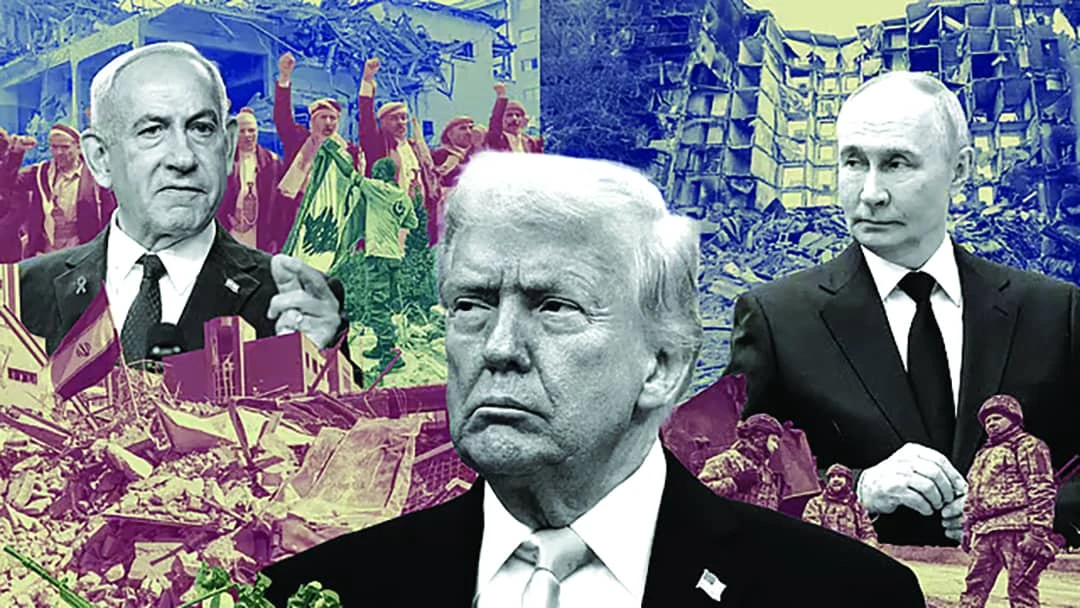
Donald Trump’s foreign policy has been described by Stephen M. Walt in the 2026 March Issue of the Foreign Affairs as a predatory hegemon, where he uses American power to extract concessions, tribute, and demonstration of admiration from other states. This strategy has been criticized for undermining international institutions like the central United Nations system, and creating opportunities for rival powers. As the days are passing, the global institutions are decaying due to neglect and budget constraints.
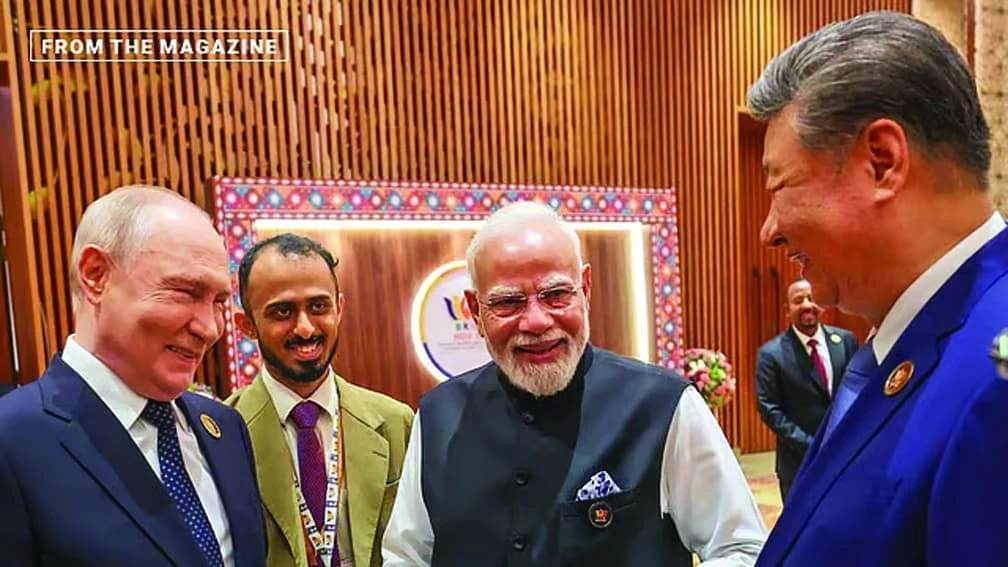
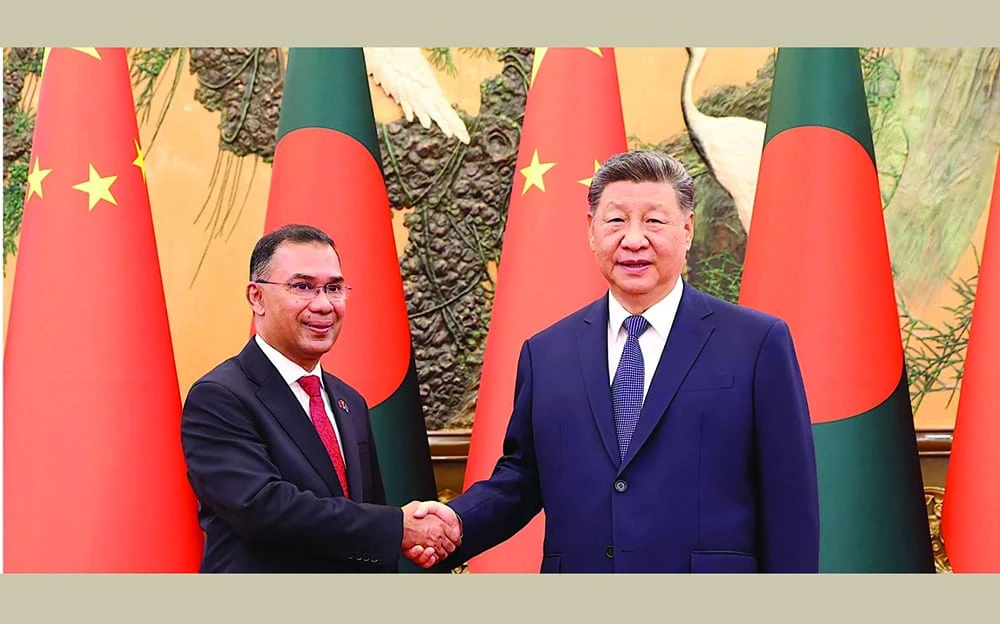
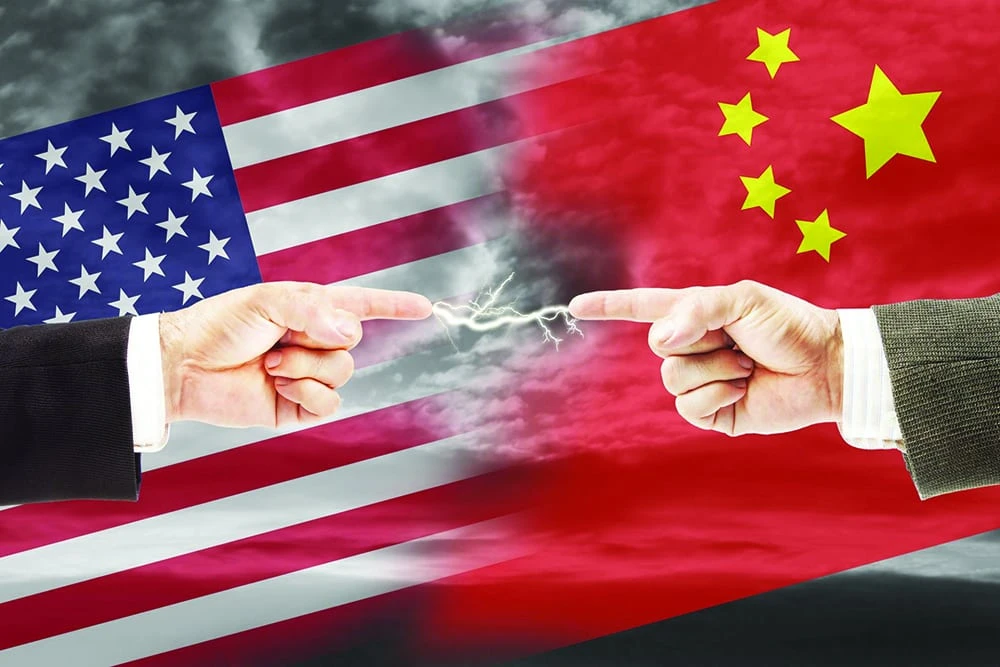
Henrietta Levin in the latest issue of the Foreign Affairs has described China-US relations, where it shows the USA has lost its leverage over China. President Xi during the American President’s state visit to China said, ‘We all need to work together to avoid the Thucydides trap’. He urged President Trump to avoid conflict to go for cooperation. This is necessary for inter-country or international trade. This interdependence is also necessary for a restraint regime. This syndrome has been working well so long.
All said and done, I think the world is no more unipolar or uni-multipolar but tending to move towards multipolarity, with China’s phenomenal rise that may make a real difference within the next few decades. This rise is astronomical. Russia is a great world power, which is, however, far from achieving the comprehensive national power (CNP) to the height achieved by China. No wonder, Foreign Policy magazine has already branded Russia as a junior partner of China. Hopefully, as my research indicates and as supported by other literature, China will be out to challenge the might and fury of the United States, at least in this hemisphere, by the mid of this century or even before.
This argument is supported by facts like China’s astronomical economic growth, military modernization or revolution, superb technological advancement, and lifting millions of people out of poverty in the last few decades etc. China has the advantage of fighting its battles, mostly from its mainland as it can now cover almost the entire Indo-Pacific region, whereas the United States will have to do so from another hemisphere entailing an exterior-lines of logistics or communication. This vulnerability got badly exposed even during the present War with Iran. American military has been suffering from imperial overstretch syndrome since the Second World War. Paul Keneddy had rightly warned against this overstretch quite some time back.
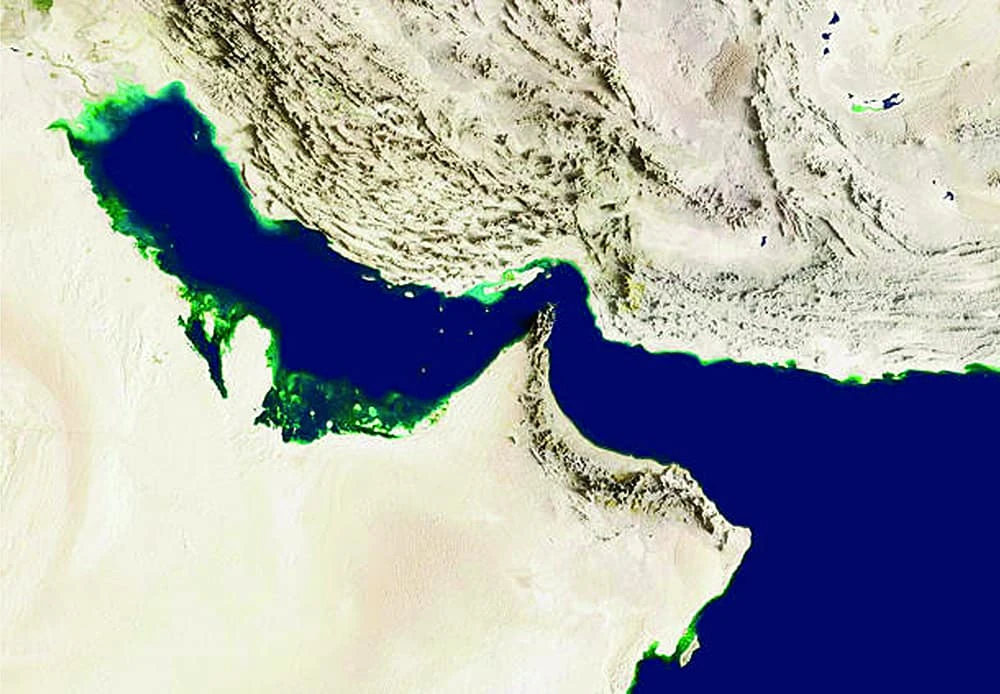
So the US military is now bent upon getting USD 1.5 trillion budget for defence for the coming year from the Congress. This is too astounding, 45 percent higher than the last year. The US military wants to overhaul its entire military systems including developing its own internal value chain in defence industry production line. During the last Iran War the US military deployed three of its state-of-the-art aircraft carrier groups in the Middle East but these did not carry substantial value, when it came to the question of sending foot soldiers inside the rugged mountainous territories of Iran. It was like defenders’ paradise and attackers’ nightmare. Americans are wary of their experience during the Vietnam and the latest Afghan Wars. Americans, by nature, just cannot accept hundreds of body bags being carried from one hemisphere to another.
So this is likely to be a world of several regional and global powers. All these powers are going to jockey for influence without any singular hegemon dictating terms. Hegemonic stability theory is seemingly getting redundant gradually. It, therefore, can be inferred that hard power will likely call the shots to dictate international or regional order in the foreseeable future. China is likely to come out real assertive –although it is already doing so in the South China Sea and in the First Island Chain in Western Pacific including challenging the United States—-by the middle of this century. Thus said, China is unlikely to go for imperialistic designs as its history dictates so and as China proclaims so in its statements and pronouncements time and again. China, however, will not compromise on Taiwan and Tibet, as China claims these are inseparable part of mainland China.

CHINA-US-TRUMP-POLITICS-DIPLOMACY
Russia and Europe will remain entangled in hard power issues, now primarily over Ukraine. The NATO is likely to remain Euro-centric as it is an existential issue, to be funded by the Europeans only. Each NATO country is now increasing its percentage of GDP for sustaining a vibrant NATO. America failed to manage its NATO powers to support its Iran war efforts. “The new U.S. National Security Strategy, urging Europe to “stand on its own feet,” is only the latest indication of a break with the traditional American approach to defence on the continent”.2 Here transactional logic works, which erodes trust and propels dispersion of power. In a similar vein in Asia, countries like Japan, South Korea, and Vietnam are presumably enhancing their military capabilities, others by cultivating ties with China or building regional coalitions. As an example, Japan may go for alignment relations with the Philippines, Singapore, Vietnam etc, in case of lack of the US support. In such an eventuality, Japan can even go nuclear within shortest possible time.
By 2035, as a forecast made by an Americal expert, traditional alliances will exist in name only, not in substance. It is no longer given but has to be a negotiated settlement, contingent on financial contributions or direct economic return. 3 This was lime lighted by the American President Clinton at the outset of the Iran War.
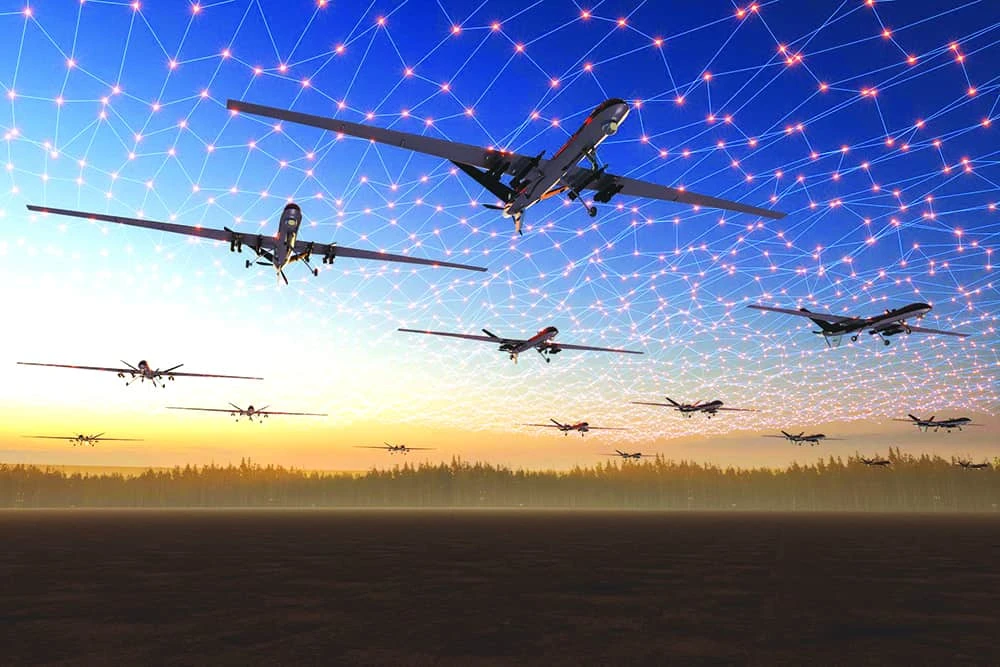
So a war has different dimensions of which presently technopower plays a domineering role as exemplified in last air battles between Pakistan and India. Pakistan outgunned Indian air force by applying its most integrated systems that primarily depended on technology, system integration. training and decision making. This War has led both the countries to go for more sophistication in its air power potential. They are seen to acquire fifth-generation aircraft and other state-of-the-art systems from different parts of the world.
So hard power is getting prominence in national psyche of both the nations, as both these nations are afflicted by severe jingoistic nationalism. They constantly suffer from stability-instability paradox. Both the countries suffer from economic ills such as unemployment, poverty, poor sanitation and hygiene, economic disparity, other human development indexes, lack of freedom and social inequality in varying degrees. It is this type of nationalism that has propelled these fragile or not-so-developed nation-states to acquire nuclear, including tactical nuclear weapons, on all its delivery modes. Suffice it to say, nuclear weapons are prohibitively expensive.
Challenges
So I see a remote possibility of these two nations returning to the diplomatic table to sort out economic problems of South Asia. The SAARC was a fascinating initiative to take forward the regional integration or cooperation issues of South Asia. That said, intra-South Asian trade is merely five percent of their total trade as comparative advantage of almost all South Asian countries is almost the same. Their export basket consists of almost the same products. It is the export of ready-made garments and manpower to different other countries but not within the South Asian countries. Tyranny of distance theory is not applicable in South Asia, and gravity model is beneficial for intra-SAARC trade; but these theories did not yield good results for this region. Around 30 per cent of people in this region—around 400 million— are under the poverty line. All the SAARC nations have a low ranking on the Human Development Index (HDI) as mentioned.
The term ‘cooperation’ in the SAARC region is entirely based on the respect for the five principles —sovereign equality, territorial integrity, political independence, non-interference in the internal affairs of the member states and mutual benefit. These are, in fact, universal principles. The SAARC countries are far from honouring these much coveted principles. India’s hegemonistic attitude and Pakistan’s overt refusal to accept Indian preponderance, and India’s tendency to interfere in the internal affairs of other South Asian countries work as great hindrance to achieve the objectives of the SAARC. This is the perception of other smaller South Asian countries. India has to go extra miles to remove this perception from the psyche of other smaller states. India’s neighbourhood first policy is seemingly failing to do its best.

On top of everything, the vexed Kashmir issue between Pakistan and India that breeds terrorism across the borders, time and again, leading to outbreak of limited conventional wars between them make the concept of cooperation a nightmare. There is a serious lack of trust between India and Pakistan. All said and done, overall, the SAARC could not flourish due to political tensions, glaring economic disparities among the nations, serious lack of implementation of agreements, and inadequate infrastructure connectivity within the region.
Thus said, SAARC moved forward with few signature projects such as SAFTA to boost trade between the member countries that got signed during the 12th Summit in Islamabad, SAARC Food Bank, SAARC Development Fund, SAARC Arbitration Council etc. but these projects could not see their implementation stage. There was, however, a kind of solidarity during the last Covid pandemic.
While eighteen SAARC leaders’ summits have been held so far, the last one was eleven years ago in Nepal. The SAARC summit lost its momentum after the terrorist attack on an Indian army camp in Uri in Jammu and Kashmir in September 2016. At that time, India declared that terrorism and the next SAARC summit – set to be hosted in Pakistan – could not go together. Such sentiments were also echoed by other South Asian countries who joined India in boycotting the event. The 2016 summit was thus cancelled, and no SAARC leaders’ summit has been held so far.4 It was also followed by similar accusations of terrorist attack inside Kashmir in 2025 that resulted in a limited air war between these two arch rivals. This has added a blazing fuel to fire. The mad race for arms acquisition is going on in full swing in both these countries. This mad race is accompanied by very dangerous rhetoric emanating from both sides.
Bangladesh and Nepal consider regional cooperation is important to strengthen regional institutions like the SAARC and the BIMSTEC, those already exist. However, some policymaking communities in India view this initiative of Bangladesh with suspicion. No less a figure than India’s external affairs minister indicated that Bangladesh was “batting for Pakistan” by attempting to revive SAARC. 5
Possible ways Out
So what are the ways out? Can the original SAARC be activated? Can diplomacy salvage it? Doubtful. India has deep-seated mistrust with Pakistan as mentioned. Recently, it looks like India is sensing mistrust with Bangladesh as well, primarily because Bangladesh and Pakistan are inching forward to smoothen their relations. India has not taken kindly the Gen-Z movements in Bangladesh and Nepal. These are internal matters of these countries, and the countries should be left to decide their own system of governance and political systems. Such a trend works as disincentives to regional cooperation.
Nevertheless, we should all put our best efforts to take all parties on board, however arduous it may be. It will be well-nigh difficult to take these two arch rivals to come forward to take on this great humanitarian initiative.
If that fails in the long run, other South Asian countries may move to form a similar forum for regional cooperation in the same model as that of the SAARC. Hard politics or bilateral contentious issues should be kept out of its ambit. In that case, these smaller powers may think of taking China on board. I think China would love to come forward to assist such a framework. Alongside, the BIMSTEC may continue as another body for regional economic and maritime cooperation.
We may encourage both India and Pakistan to revive their dialogue to sort out other issues, setting aside the Kasmir issue for the time being. We may need the diplomatic support of both America and China. It is no doubt an uphill task but we, the South Asians, have no option but to bridge the gap of mistrust between these two age-old arch-rivals. Such mistrusts impact all the South Asian countries. All SAARC members may declare openly that they will not harbour terrorism in any form or manifestations.
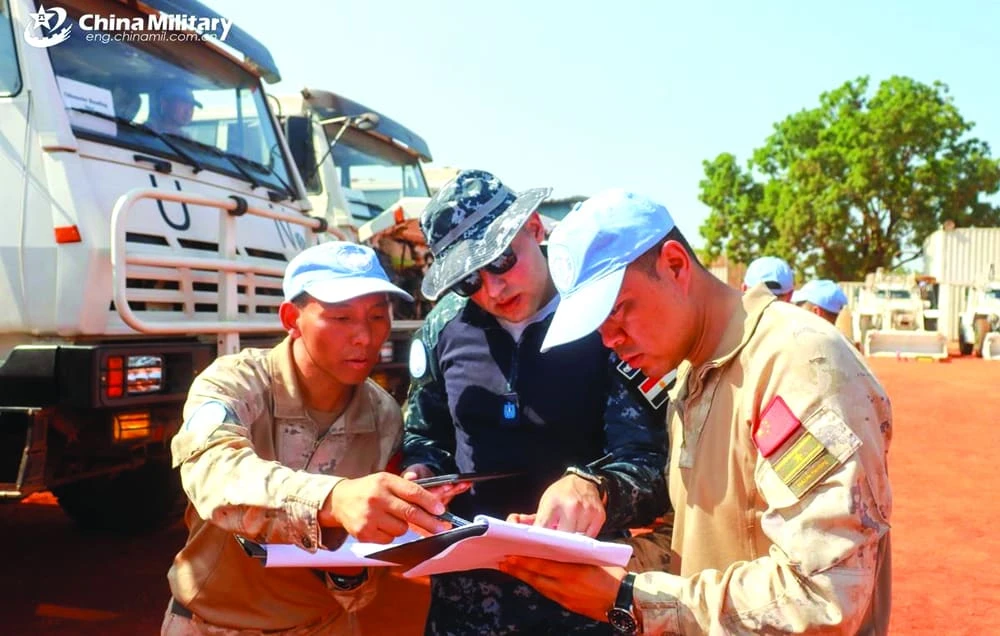
South Asians may come forward with certain issue-based programs like Green South Asia like that of the ASEAN or a coordinated cell for disaster relief operation, joint training for the UN peace support operation, pandemic handling, cultural exchanges, education and research collaboration etc.
Thus said, once the mistrust issue is adequately addressed, we can explore the possibility if these two countries can be persuaded to sign a treaty of ‘No War’ or at least make arrangements for their dialogue. Dialogue and diplomacy need to be reinvigorated in South Asia.
1 He is a retired Lieutenant General, and presently a Distinguished Professor in International Relations at Bangladesh University of Professions ( BUP). He can be reached at: mdaminulkarim1967@gmail.com; aminul.karim@bup.edu.bd
2 Sophia Besch and Jamie Kwong, “Unpacking Europe’s Deterrence Dilemmas “, Carnegie Europe, December 11, 2025.
3 Jeremy Boss, “ How U.S. Transnationalism Could Drive Multipolarity”, Team Global, September 22, 2025
4 Mohd Amdadul Haque, “Beyond Terrorism: A Brief History of SAARC’s Failures”, the Diplomat, March, 2025.
5 Ibid.
আরও পড়ুন -