






Editor & Publisher: Rabb Majumder
House # 05 (2nd Floor, 2-C), Road# 04, Banani DOHS, Dhaka - 1206
Phone: +8801715822782
Phone (Advertisement): +8801712863234
Email: rabb.h.majumder@gmail.com, info@securityworldbd.com

Defense Minister Dong Jun's keynote sets a constructive tone as regional tensions simmer
Beijing Positions Xiangshan Forum as Premier Platform for military diplomacy
Rabb Majumder
08:27, 14 October, 2026
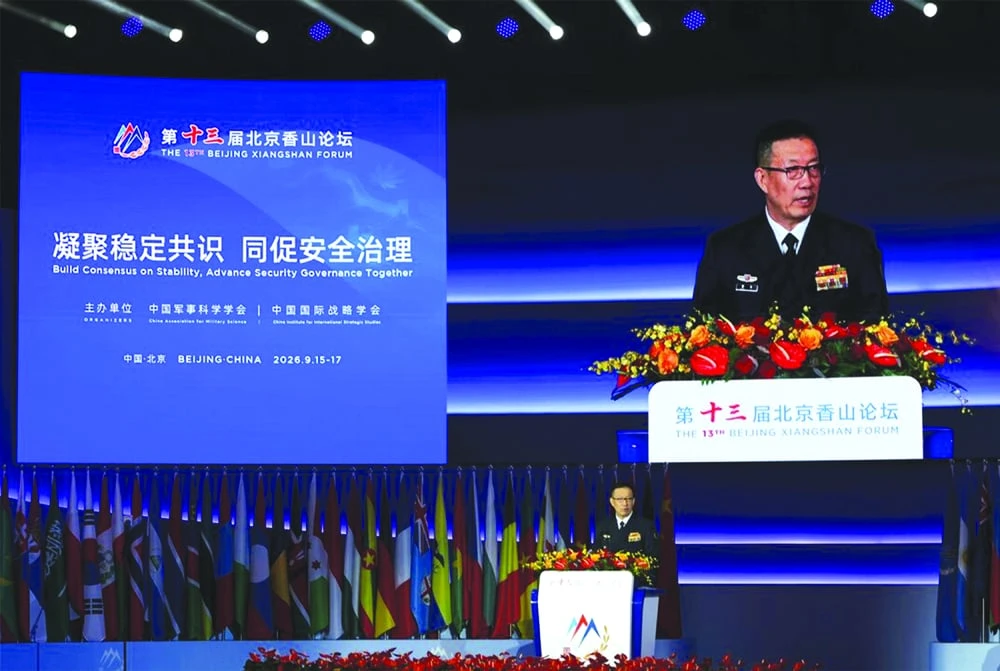

"Stagnation is regression. We must not turn a blind eye or condone such behaviour."
— Chinese Defense Minister Dong Jun
Dong Jun is a Chinese admiral of the People's Liberation Army Navy (PLAN). He has been serving as the 14th Minister of National Defense of China since December 2023. He is China's first defense minister from the Navy.
The 13th Beijing Xiangshan Forum opened on September 15, 2026, bringing together hundreds of military officers, diplomats, and scholars from 100 countries. As a delegate and speaker at this year's gathering, I witnessed firsthand how China is positioning this forum as its premier platform for military diplomacy — and how Defense Minister Dong Jun used his keynote to articulate a security vision that was inclusive in tone yet pointed in its warnings.
Over three days in Beijing, the forum served as far more than a diplomatic talking shop. It was a carefully orchestrated demonstration of China's growing ambition to shape the global security narrative — one that positions Beijing not as a revisionist power, but as the steward of a multipolar order. For those of us in the room, the message was unmistakable: China intends to be the architect, not merely a participant, in the security architecture of the coming decades.
A Fragile Juncture: The Keynote Address
Dong Jun took the stage on the morning of September 16 with a message framed around urgency. According to state coverage from China Daily, he described the international security environment as sitting at a fragile juncture where "stagnation is regression."
Dialogue over confrontation: Dong advocated for security rooted in dialogue rather than confrontation.
Partnership over alliance:He promoted partnership models as an alternative to traditional alliance structures.
Global Security Initiative: The Chinese military, he said, stands ready to work with armed forces of other countries to jointly implement the Global Security Initiative.
What struck me in the room was the deliberate calibration of the speech. Dong offered few specifics and no direct criticisms of rivals — a restraint that analysts had predicted and that signaled Beijing's intent to keep the forum's tone constructive ahead of a busy diplomatic calendar.
The phrase "stagnation is regression" carried particular weight. It framed inaction not as neutrality but as complicity — a rhetorical device that subtly pressured attending nations to align with China's vision of proactive security cooperation. The absence of direct criticism of the United States or its allies was equally telling. Beijing, it appeared, had chosen to project confidence rather than grievance.
"We must rally broad-based forces of justice to suppress the resurgence of historical dregs."— Dong Jun
The Six-Point Proposal for Security Governance
At the heart of Dong's address was a structured six-point proposal for improving global security architecture — a framework that will likely shape China's diplomatic messaging for years to come:
Building consensus: through a new security concept that prioritizes mutual trust over mutual deterrence.
Maintaining stability; by upholding multilateralism and strengthening international institutions.
Preventing risks; with historical awareness, urging nations to learn from past conflicts.
Resolving problems: through dialogue and consultation rather than confrontation.
Laying a solid foundation: for common development as a prerequisite for lasting peace.
Deepening cooperation through concrete action and practical military-to-military engagement.
For delegates in attendance, the proposal read as both a policy statement and an invitation — a framework China hopes to see reflected in regional security conversations. Each point was deliberately broad enough to accommodate diverse national interests, yet cohesive enough to project a coherent worldview. The emphasis on "common development" as a foundation for peace, in particular, reflected Beijing's long-standing argument that economic prosperity and security are inseparable — a direct counter to the deterrence-first logic that has long dominated Western strategic thinking.
The six points also functioned as a diplomatic checklist. Nations that engage with China on military cooperation, multilateral forums, and development initiatives will find themselves aligned with the framework almost by default. Those that do not may find themselves cast, implicitly, as obstacles to the very stability Dong described.
Warnings on Historical Trends
The most pointed passages of Dong's speech came when he turned to history — and the lessons he believes the world is at risk of forgetting.
Vigilance urged: He stressed the need to remain highly vigilant against "all latent manifestations of hegemony, militarism and historical revisionism."
No turning a blind eye: We must not turn a blind eye or condone such behaviour," he said.Forces of justice:
Dong called for rallying "broad-based forces of justice" to suppress what he termed "the resurgence of historical dregs."
While no country was named, the remarks were widely read in the room — and in subsequent coverage by Al Jazeera — as veiled criticism of Japan, particularly given recent tensions over Taiwan and the South China Sea.
The language was unmistakably loaded. "Historical revisionism" and "historical dregs" are terms that carry deep resonance in a region still shaped by the memory of the Second World War. By invoking them without naming a target, Dong left little doubt about his intended audience while preserving the diplomatic fiction of a general principle. It was a masterclass in strategic ambiguity — a warning delivered through the vocabulary of universal values rather than bilateral grievance.
"The international security environment is at a fragile juncture. Dialogue, not confrontation, must guide us forward." — Dong Jun
Bilateral Diplomacy on the Sidelines
The forum's value as a diplomatic marketplace was on full display in the corridors and meeting rooms, where the formal agenda often mattered less than the conversations happening around it.
Separate talks: Dong held individual meetings with defense officials from Thailand, Mongolia, Cambodia, Singapore, Myanmar, Brunei, Belarus, Azerbaijan, Kyrgyzstan, and Armenia.
ASEAN engagement: ASEAN Secretary-General Kao Kim Hourn also met with Dong to discuss regional security cooperation.
Military cooperation pitch: In each setting, Dong reiterated the Chinese military's readiness to implement the Global Security Initiative.
For visiting envoys, navigating the forum meant balancing complex regional dynamics — a challenge I observed in the careful choreography of bilateral schedules and session attendance. Delegations from Southeast Asia, in particular, moved with visible caution, seeking to deepen defense ties with Beijing without signaling any retreat from their own multilateral commitments.
The breadth of Dong's bilateral schedule was itself a statement. By meeting with representatives from Central Asia, Southeast Asia, and Europe in a single forum, Beijing demonstrated the reach of its security diplomacy — and its willingness to engage across regions that Western powers often treat as separate theaters.
Focus on Japan and the South China Sea
Regional tensions provided a persistent undercurrent throughout the three days, surfacing in formal sessions and informal conversations alike.
China-Japan ties: Relations plummeted after Japanese Prime Minister Sanae Takaichi last year suggested a hypothetical Chinese attack on Taiwan could trigger a Japanese military response.
Scholar's warning: Wu Shicun, chairman of the Huayang Center for Maritime Cooperation and Ocean Governance, warned that Japan's growing involvement in the South China Sea could undermine regional peace over the long term.
Historical framing: Wu stated that Japan fixates on the waterway as a springboard to attack and invade Southeast Asia, and to control sea lanes.
Code of Conduct concerns: He added that Tokyo's actions would negatively affect dispute resolution, maritime cooperation, and consultations on a Code of Conduct.
Wu's remarks, delivered on the sidelines of the forum and reported by the Chinese news agency CNS, extended Dong's historical framing into the maritime domain. His warning that Japan "could be more damaging to peace and stability in the South China Sea than the United States" was a striking escalation of rhetoric — one that positioned Tokyo, rather than Washington, as the primary long-term threat to regional order.
For Southeast Asian delegates, the message was delicate. Many of their governments maintain substantive defense relationships with Japan while also managing deep economic ties with China. Wu's framing left little room for that middle ground, effectively asking regional states to choose which historical narrative they would align with.

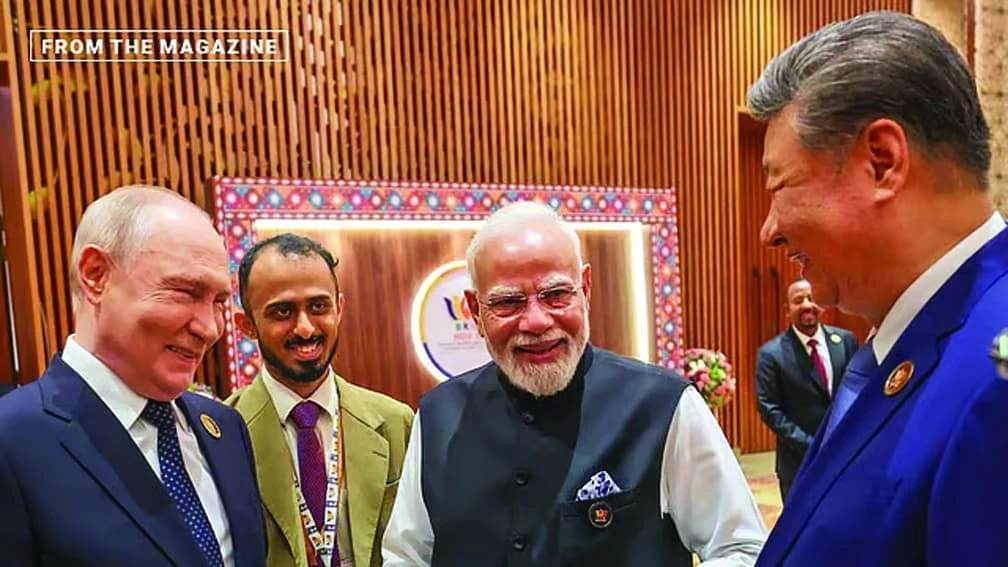
US–China relations form an important backdrop to debates over global security governance. Photo: Net
Timing and Strategic Context
The forum convened a week before an expected trip by Chinese President Xi Jinping to Washington to meet US President Donald Trump — a timing that gave the gathering added significance.
Diplomatic sequencing: The gathering gave China a high-profile stage to articulate its security vision ahead of high-level US-China talks.
Measured messaging: Dong avoided direct criticism of the United States or its regional allies while still conveying China's core concerns.
Platform maturation: Over two decades, Beijing has carefully built the Xiangshan Forum into a tightly scripted alternative to Singapore's Shangri-La Dialogue.
The sequencing was almost certainly deliberate. By articulating its security vision publicly — and to a broad international audience — before sitting down with Washington, Beijing ensured that its positions were on record and its coalition of partners visibly assembled. The forum effectively became a pre-negotiation statement of intent.
It also served a domestic purpose. Chinese audiences watching state coverage saw their defense minister commanding a global stage, articulating a coherent alternative to Western security frameworks, and courting dozens of nations in the process. The imagery of leadership was as important as the substance of the speech.
Reflections from the Floor
As both a delegate and a speaker in a separate session, I came away with a clear impression: the Xiangshan Forum is no longer a secondary venue in global security diplomacy. It is a carefully curated stage where China advances its multipolar vision, courts the Global South, and manages its relationships with rivals — all within a single, three-day window.
The 13th edition reaffirmed China's commitment to the Global Security Initiative and its preference for dialogue-based security governance. Whether that vision translates into concrete cooperation, however, will depend on the conversations that continue long after the delegates return home.
For those of us who work in this field, the forum offered a reminder that security is not merely a matter of capabilities and alliances. It is also a contest of narratives — and in Beijing, it is clear which narrative China intends to tell.
আরও পড়ুন -