

















Editor & Publisher: Rabb Majumder
House # 05 (2nd Floor, 2-C), Road# 04, Banani DOHS, Dhaka - 1206
Phone: +8801715822782
Phone (Advertisement): +8801712863234
Email: rabb.h.majumder@gmail.com, info@securityworldbd.com

What Works in Countering Violent Extremism: Toward Human-Centric and Evidence-Based Policies
Major General (Retd) Dr. Md. Nayeem Ashfaque Chowdhury
02:22, 14 October, 2026
Pro-Vice Chancellor, BUP

Abstract
Violent extremism remains one of the most complex challenges
confronting states and societies in the twenty-first century. While traditional
responses have emphasized coercion and punitive security measures, emerging
global norms highlight that sustainable prevention requires human-centric,
community-driven, and evidence-informed approaches. Drawing on Bangladesh’s
evolving countering violent extremism (CVE) framework, this article examines
six interrelated pillars—prevention, protection, preparedness, pursuit,
cooperation, and policy coherence—that collectively advance resilience,
inclusion, and justice. It argues that CVE must be reframed as a human challenge
rather than a purely security challenge, and that Bangladesh’s growing emphasis
on data collection and institutional accountability aligns with international
normative trends toward evidence-based policymaking. Yet, substantive proof of
effectiveness remains aspirational, underscoring the need for rigorous
evaluation and transparent governance.
Introduction
Violent extremism is not confined to battlefields or borders; it
is embedded within the vulnerabilities of human societies. It undermines
dignity, fractures trust, and erodes the social fabric that binds communities
together. For decades, counter-terrorism policies have relied heavily on
coercive instruments—military operations, surveillance, and punitive
legislation. While these measures address immediate threats, they often neglect
the deeper social, economic, and ideological roots of extremism.
A sustainable approach to countering violent extremism (CVE)
demands a paradigm shift from reactive security responses to proactive,
human-centric strategies. It requires integrating prevention, protection,
preparedness, pursuit, cooperation, and policy coherence into a unified
framework that aligns national, regional, and local efforts.
Policy coherence ensures that interventions across education,
social welfare, justice, and security sectors are harmonized rather than
fragmented, enabling institutions to act in concert toward shared objectives.
By embedding coherence within governance structures, states can
transform isolated initiatives into mutually reinforcing actions that
strengthen resilience and inclusion. This holistic orientation situates CVE not
merely as a security imperative but as a multidimensional policy challenge—one
that calls for evidence-based coordination, community engagement, and sustained
institutional synergy.
Prevention Must Be Human-Centric
Traditional security-centric approaches often treat extremism as a
problem to be suppressed rather than understood. However, radicalisation
thrives where trust erodes—when youth feel unheard, communities marginalized,
and institutions distant. A human-centric approach begins with listening before
acting, understanding before intervening, and building trust before structures.
Investments in education, mental health, youth empowerment, and
community leadership are not peripheral to security; they are foundational. For
example, vocational training programmes in rural Bangladesh have provided
pathways for at-risk youth, reducing susceptibility to extremist recruitment.
Similarly, initiatives that engage religious scholars in dialogue have helped
counter misinterpretations of faith that extremists exploit.
Bangladesh’s preventive pillar emphasizes compassion and
inclusion, consistent with global findings that punitive measures often deepen
grievances rather than resolve them. This principle resonates with global
findings: studies in Kenya and Indonesia show that community-based
interventions focusing on dignity and belonging are more effective than
coercive policing in reducing radicalisation.
Evidence-Based Policy as Foundation
CVE must move from assumption to evidence. Too often, programmes
begin with enthusiasm but lack impact metrics, making it difficult to assess
whether they reduce vulnerability or strengthen resilience. Rigorous research,
continuous evaluation, and accountability for outcomes are essential.
Data underscores the urgency in Bangladesh: youth unemployment
stands at 16.8% (14.8% male, 22.7% female), while 30.9% (11.1% male, 49.3%
female) of young people aged 15–24 are not in education, employment, or
training (ILO/World Bank, 2025,estimates vary across sources ). Educated yet
unemployed youth facing relative deprivation—the perception of unfairly limited
opportunity—are particularly vulnerable to extremist narratives.
Evidence-based CVE requires asking critical questions: Are we
reducing vulnerability? Are we enabling reintegration? Are we strengthening
resilience? Bangladesh’s protective pillar anchors CVE in transparency and
institutional accountability. Pilot initiatives in Dhaka that track
reintegration outcomes of former extremists offer early descriptive insights
into participant needs, although these have not been independently verified or
published in peer-reviewed literature.
Globally, evidence-based approaches are gaining traction. The EU’s
Radicalisation Awareness Network emphasizes monitoring and evaluation as core
components of CVE programming. Bangladesh’s emphasis on data collection aligns
with emerging international normative trends toward evidence-informed CVE, even
as substantive proof of effectiveness remains largely aspirational due to the
global absence of robust impact evaluations.
Community Resilience as Defence
Extremism arises within communities; therefore, communities must
anchor the solution. Empowering teachers, religious scholars, women, and youth
leaders through civic education, sports, arts, and digital literacy builds
belonging and identity—the very elements extremists seek to exploit.
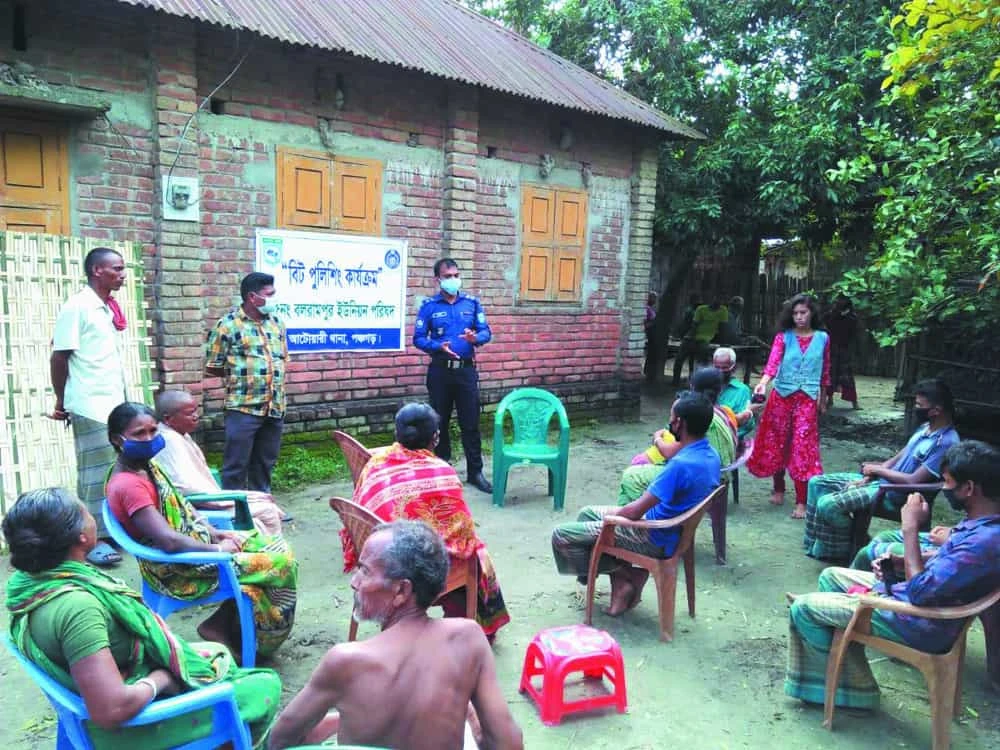
Bangladesh’s community policing model exemplifies this approach.
Studies in Bangladesh—including examples from Rajshahi, Satkhira, Cumilla,
Gazipur, and Rangpur—suggest that districts with sustained community policing
initiatives experienced reductions in crime and higher levels of public trust,
though systematic impact evaluations remain limited. By transforming law
enforcement into partners in peace rather than instruments of fear, community
policing strengthens resilience and fosters collaboration.
The preparedness pillar thus reframes prevention as a social
contract between citizens and institutions. When trust replaces fear,
prevention becomes sustainable.
Comparative evidence from Uganda and Morocco reinforces this
point: community-led initiatives that integrate cultural traditions and local
leadership have proven more effective than externally imposed programmes.

Youth empowerment through education, ski ls development and vocational training as a pathway to prevention.
Digital Spaces as Battleground
Bangladesh’s progress in cyber security capacity presents a mixed
picture. According to the National Cyber Security Index (NCSI), Bangladesh
ranked 65th globally in 2026 with a score of 44.16, ahead of all other South
Asian countries except India. Earlier NCSI assessments recorded a high of 59.74
points (38th) in 2021, though rankings have since fluctuated as other countries
accelerated improvements. Critically, the official NCSI country profile records
0% scores in two foundational domains—Protection of Personal Data and Cyber
Crisis Management. The absence of personal data protection legislation and
national cyber crisis management exercises represents a concrete institutional
gap directly relevant to countering online radicalization. This achievement strengthens
the Protection pillar in incident response—where Bangladesh scores 100% on the
relevant NCSI sub-indicator—yet the data also expose vulnerabilities that
extremist actors could exploit in the absence of robust data governance and
crisis preparedness frameworks.

Digital literacy and cybersecurity awareness are increasingly important in preventing online radicalisation.
Rehabilitation and Reintegration as Strength
A society is judged not only by how it prevents extremism but also
by how it heals those affected. Rehabilitation is not about excusing
wrongdoing; it is about preventing future harm and restoring civic belonging.
Reintegration programmes—psychosocial support, vocational training, and family
counselling—aim to restore lives and reinforce national security.
Bangladesh’s pursuit pillar reframes pursuit not as punishment but
as restoration, justice, and reintegration. Pilot reintegration initiatives
have begun documenting participant experiences, yet no independent evaluation
has been conducted to measure long-term outcomes. Global systematic
reviews—including the 2024 Campbell review of counter-radicalization
case-management interventions and the 2026 review of non-criminal justice youth
programmes—conclude that the effectiveness of these approaches remains poorly
understood due to the absence of robust impact evaluations.
Comparative evidence from other contexts offers conceptual
guidance rather than proven models for direct replication. In Saudi Arabia,
rehabilitation programmes combining religious dialogue with vocational training
have been credited with notable success, though independent evaluations of
recidivism remain limited; in Denmark, community-based reintegration
initiatives have shown promising reductions in extremist re-engagement, though
rigorous long-term evidence is still emerging. Bangladesh’s emphasis on
reintegration aligns with this global trend in design, yet its own outcome data
remain limited. Early results from programmes such as Al Shifa Home in East
Africa—reporting improvements in mental health and reductions in violent
intent—are promising but remain self-reported and have not been independently
validated.
Accordingly, Bangladesh’s reintegration efforts should be
presented as emergent and exploratory, contributing to a growing body of
practice rather than claiming evidence-based effectiveness. Transparent
monitoring and independent evaluation will be essential to substantiate future
claims and to ensure that reintegration becomes a measurable pillar of national
resilience.
Rohingya Camps and the CVE Imperative
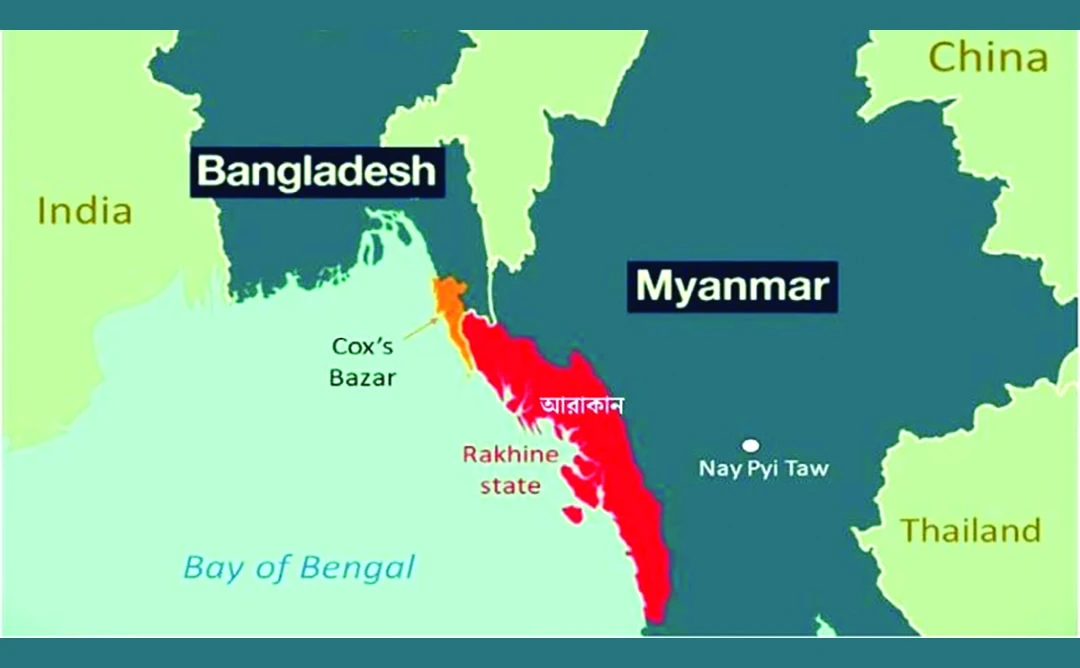
Bangladesh’s CVE framework remains incomplete without addressing the Rohingya refugee camps in Cox’s Bazar, home to roughly 1.19 million refugees. These camps have become zones where humanitarian vulnerability overlaps with armed-group activity, including operations by ARSA and RSO, as well as ARA and RIM (reported by Bangladeshi media and humanitarian monitors), and reported links between radicalized youth and Tehreek-e-Taliban Pakistan, including at least one arrest confirmed by Bangladeshi security officials and reported in national media. Reports of multiple killings in 2024–2025—documented by Bangladeshi media and humanitarian monitors—highlight the urgency of integrating CVE principles into camp governance.

Rohingya refugee settlements in Cox’s Bazar: Where humanitarian vulnerability and community resilience intersect.
Scholars describe this environment as one of “structured
precarity”—blocked education, restricted mobility, and economic exclusion that
enable mobilization when intermediaries exploit grievances. Applying
Bangladesh’s six pillars here is essential: prevention through education and
youth engagement; protection against trafficking and coercion; preparedness via
early-warning systems; pursuit targeting armed networks without alienating
communities; cooperation among state, UN, and humanitarian actors; and policy
coherence linking refugee management with national CVE strategy.
Omitting the Rohingya context would render Bangladesh’s CVE
framework analytically incomplete. Integrating it ensures that Bangladesh’s
approach remains both human-centric and regionally relevant, addressing
extremism where vulnerability and displacement converge.
Regional and Global Cooperation
Violent extremism transcends borders. Bangladesh’s peacekeeping
and humanitarian diplomacy highlight the importance of collaborative
approaches. Strengthening South–South cooperation, cross-border intelligence
sharing, and regional research networks is essential.
Bangladesh’s experience in UN peacekeeping demonstrates the value
of collaborative security. By integrating local innovation with global
frameworks, developing nations can transform vulnerability into resilience and
isolation into solidarity. Regional cooperation within SAARC, for example,
could provide a platform for shared research, coordinated interventions, and
collective resilience.
Globally, CVE requires multilateralism. The UN’s Plan of Action to
Prevent Violent Extremism emphasizes regional cooperation as a cornerstone.
Bangladesh’s model aligns with this vision, offering a template for how
developing nations can contribute to global security governance.
Political Economy of CVE
CVE in Bangladesh cannot be understood as a neutral or purely
technocratic governance project. Recent scholarship reveals that policy actors
operate through a “reverse conflation approach”—advancing human-centric
interventions while navigating Bangladesh’s dual identity as a secular republic
and a Muslim-majority nation. These tensions shape how extremism is defined,
which actors are prioritized, and how resources are distributed. At the same
time, securitization practices—surveillance, policing, and movement
restrictions—can inadvertently reproduce the vulnerabilities they aim to
mitigate, a dynamic visible in the Rohingya camps where security measures often
deepen structured precarity. Integrating this political-economy dimension is
essential for analytical depth, ensuring that Bangladesh’s six-pillar CVE
framework reflects not only institutional design but also the political forces
that condition its implementation.
Policy Coherence
Understanding the political economy of CVE clarifies why policy
coherence must extend beyond institutional alignment to include political legitimacy.
Governance frameworks cannot succeed if they ignore the identity tensions and
securitization dynamics that shape implementation. Thus, the sixth
pillar—Policy Coherence—emerges not only as a technical necessity but as a
political imperative: harmonizing national, regional, and local strategies
while ensuring that human-centric interventions remain credible within
Bangladesh’s evolving political context.
Conclusion
Countering violent extremism must evolve beyond episodic
interventions toward a coherent, human-centric governance paradigm. The six
interrelated pillars—prevention, protection, preparedness, pursuit,
cooperation, and policy coherence—collectively articulate a multidimensional
framework that bridges security imperatives with developmental and civic
priorities. Among these, policy coherence functions as the integrative
mechanism that aligns institutional mandates, harmonizes national and local
strategies, and embeds CVE objectives within broader social, educational, and
economic policies.
Policy coherence can transform fragmented efforts into synergistic
governance, provided that institutional mandates and political incentives are
aligned. It situates CVE within the continuum of sustainable development,
emphasizing that resilience against extremism is inseparable from inclusive
governance and social justice.
Ultimately, a policy-coherent and community-driven CVE framework
may redefine the state’s role—from reactive containment to proactive
empowerment—anchored in data, dialogue, and institutional integrity, though
this remains contingent on sustained political commitment.
আরও পড়ুন -