





Editor & Publisher: Rabb Majumder
House # 05 (2nd Floor, 2-C), Road# 04, Banani DOHS, Dhaka - 1206
Phone: +8801715822782
Phone (Advertisement): +8801712863234
Email: rabb.h.majumder@gmail.com, info@securityworldbd.com

Iran–US, Israel War: Military Power Has Limits Bangladesh Perspectives
Lt. General Md Mahfuzur Rahman (Retd.)
14:32, 1 August, 2026
Lt Gen (Retd) Mohammad Mahfuzur Rahman, PhD
Chairman, Osmani Centre for Peace and Security Studies. mahfuzba2172@gmail.com

By far, the USA is the strongest military power in the
world. Even in recorded history, among the strongest military empires, the USA
would be considered one of the leading military powers. Currently, the USA
spends more on defence than the next ten countries combined. The combined
defence budget of the USA and Israel is more than one trillion dollars. Their
military technology is far superior to that of most leading defence-spending
countries. In contrast, Iran spends around $17 billion on defence and is not
considered technologically comparable to the USA and Israel.
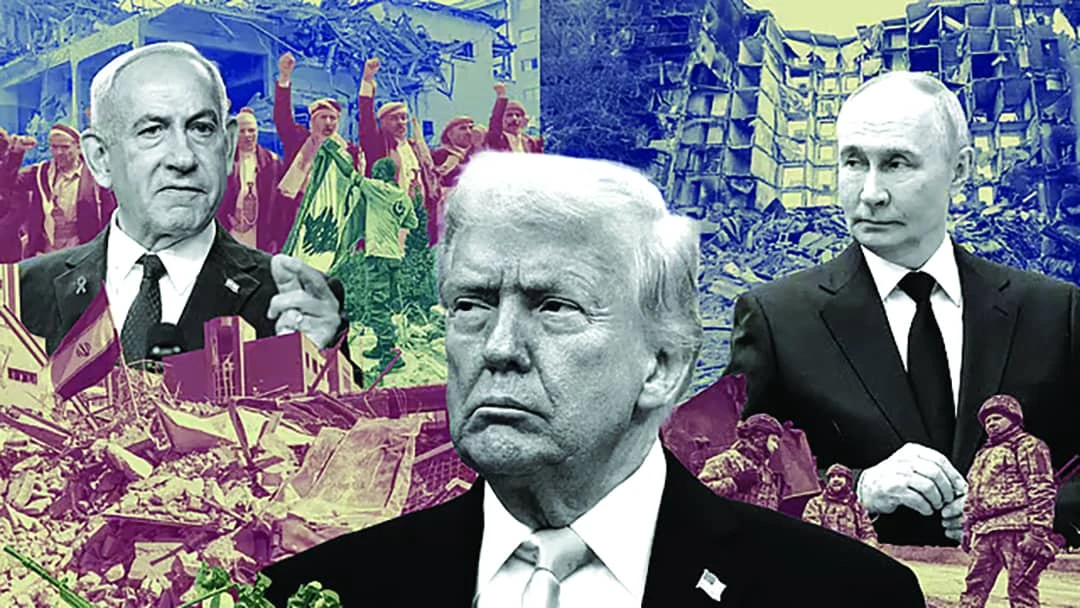
Military power has limits. Let us take the examples of the
USA versus Vietnam, Afghanistan, and Iraq; Russia versus Ukraine; and now the
USA and Israel versus Iran.
War is an extension of politics. The ultimate goal of war is
to achieve a political end state. However, military power alone may not achieve
political aims. It is also a fact that one may win battles yet lose the war;
one may win the war yet lose the peace; and one may win militarily but still
fail to achieve the political objective. These are different things. The
achievement of military objectives may facilitate the securing of political
objectives, but it does not guarantee their achievement. On the other hand, one
may also fail to convince the adversary of their defeat despite apparent
military victory.
Why a stronger military, despite tactical and operational
victories, may not achieve strategic victory?
a. The enemy may not play the game on your turf and may
apply asymmetric methods of warfare, where, many a time, huge military
capability may appear redundant.
b. The enemy may decide, psychologically and physically, to
accept suffering at a much higher level.
c. The adversary may engage in attrition and prolonged
warfare, not allowing the aggressor to achieve a quick victory.
d. Suffering and pain may galvanize society into unity,
making it a more formidable opponent. That might be the case in Gaza as well as
Iran.
What is there for Bangladesh?
Somehow, Bangladesh’s relationships with both of its
neighbours, if not unfriendly, are at least cold. Both neighbours are
militarily stronger, resource-wise greater, and geographically bigger; their
strategic cultures suggest the possibility of military action.
So, what does Bangladesh need to do? Bangladesh should
diplomatically address the situation so that it does not develop unfriendly
relations with both neighbours. At a minimum, Bangladesh should normalize
relations with one neighbour, if not possible with both. My suggestion is that
it should be India, to a level where, if there is a standoff with Myanmar,
India at least remains neutral.
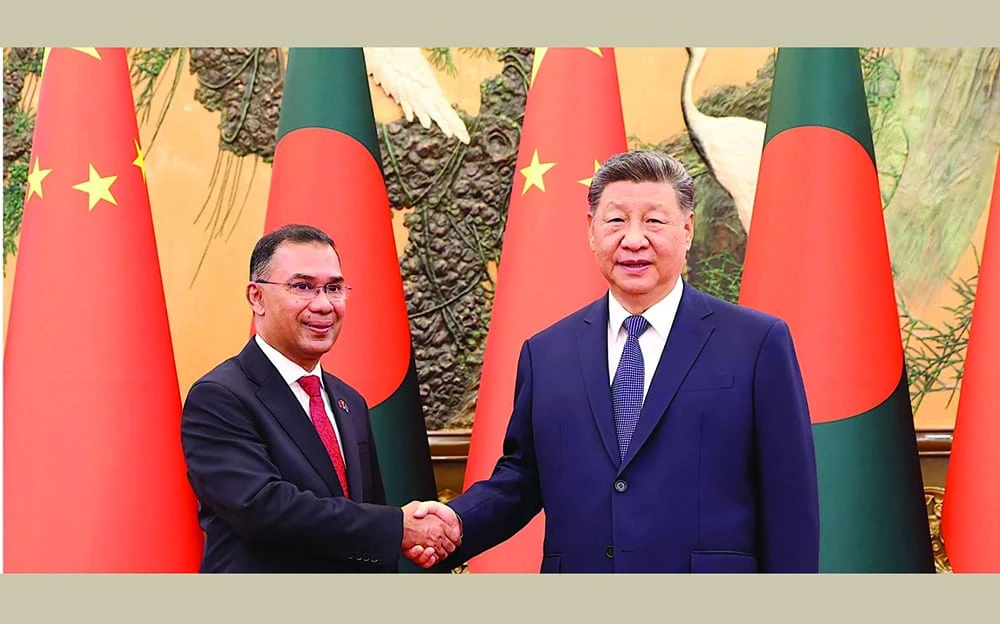
In any case, China is likely to stand with Myanmar as its
strategic partner. In recent history, China sacrificed the Burmese Communist
Party to develop a strategic partnership with Myanmar. Therefore, sacrificing a
development partner like Bangladesh for the sake of a strategic partnership
with Myanmar may be a simple choice for China.
If it is not at all possible to achieve normalcy in the
bilateral relationship with both neighbours (which is very unlikely),
Bangladesh should develop both conventional and unconventional warfare capabilities
to fight on interior lines, as Israel did against its Arab neighbours in 1967
and 1973. The suggested way forward for
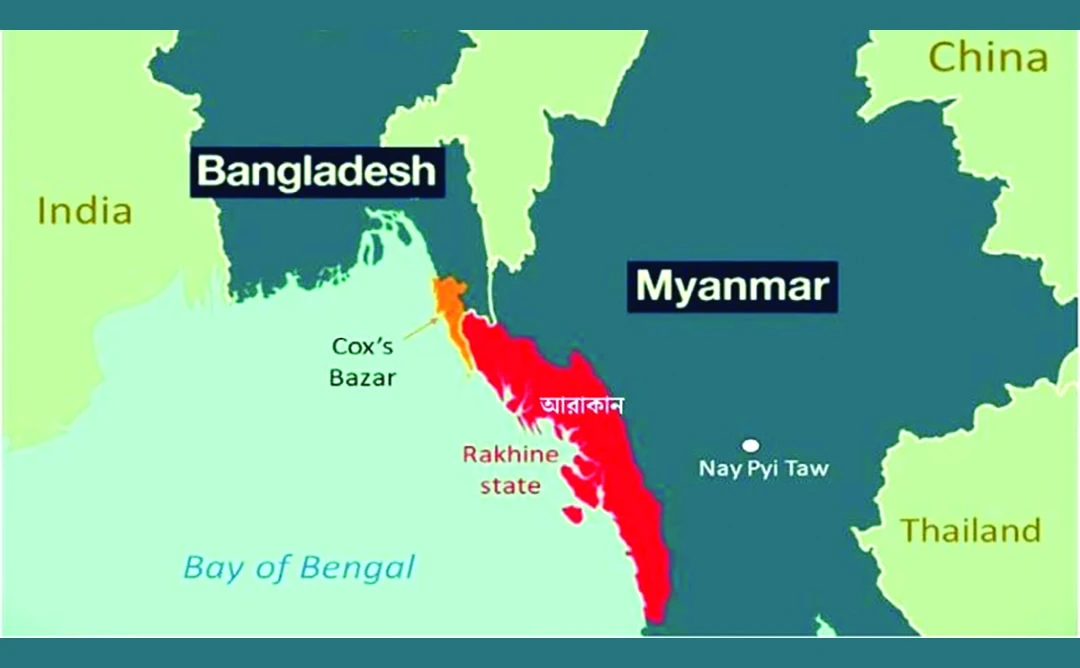
Dhaka in the regional geopolitical environment, with 1.3 million Rohingyas and
the prevailing neighbourhood relationships, is as follows:
a. The nation needs unity in national priorities, causes,
and interests.
b. It should be Bangladesh first, but more importantly,
Bangladesh’s people first.
c. Bangladesh needs to develop a strategic culture in
society.
d. Bangladesh needs to develop a higher level of ability to
absorb pain. It is also important to develop logistic stamina for asymmetric
and attrition warfare.
e. Bangladesh should develop some niche capabilities, like
Iran and Ukraine, while at the same time developing credible deterrence and
deterrence dominance.
f. To balance geopolitically, and based on national
interest, Bangladesh should develop triangular relationships as a foreign
policy priority.
(1) China–Bangladesh–Pakistan: The major issue here is
addressing the Rohingya crisis. Both Bangladesh and Pakistan have large numbers
of Rohingyas. China and Pakistan have good relationships with Myanmar. At the
same time, Pakistan is an important member of the OIC, and its recent
diplomatic role in mediation has given the country international credibility.
In this relationship, the main effort should be with China.
(2) India–Bangladesh–Myanmar: The major issue is addressing
transnational crimes in the tri-border region. Non-traditional security issues,
such as insurgency, drug proliferation, arms smuggling and human trafficking,
affect all three countries. Their collaboration would contribute to regional
stability. Here, the main effort should be with India.
(3) USA–Bangladesh–India: Looking at democratic peace
theory, peace among them should come naturally. Their collaboration in areas
such as political institutionalization, strengthening democracy, and freedom of
the press could be essential for peace and stability. Here, the main effort
should be with the USA.
g. In the case of the Rohingya issue, Bangladesh should not
become involved in direct military confrontation with Myanmar. Instead,
Bangladesh should empower the Rohingyas, as needed, to pursue their own
struggle, while at the same time being prepared to withstand Myanmar’s
retaliation.
h. The Rohingya issue is not a short-, middle-, or
long-distance run; it is a marathon. Bangladesh needs stamina, not merely
agility.
i. We need to remember that the Tatmadaw flourishes and
survives in crisis and has long experience in fighting prolonged conflicts. On
the contrary, the AA and other EAOs survive on a conflict economy. Bangladesh
should prepare accordingly.
আরও পড়ুন -