









Editor & Publisher: Rabb Majumder
House # 05 (2nd Floor, 2-C), Road# 04, Banani DOHS, Dhaka - 1206
Phone: +8801715822782
Phone (Advertisement): +8801712863234
Email: rabb.h.majumder@gmail.com, info@securityworldbd.com

Bangladesh in the Age of AI
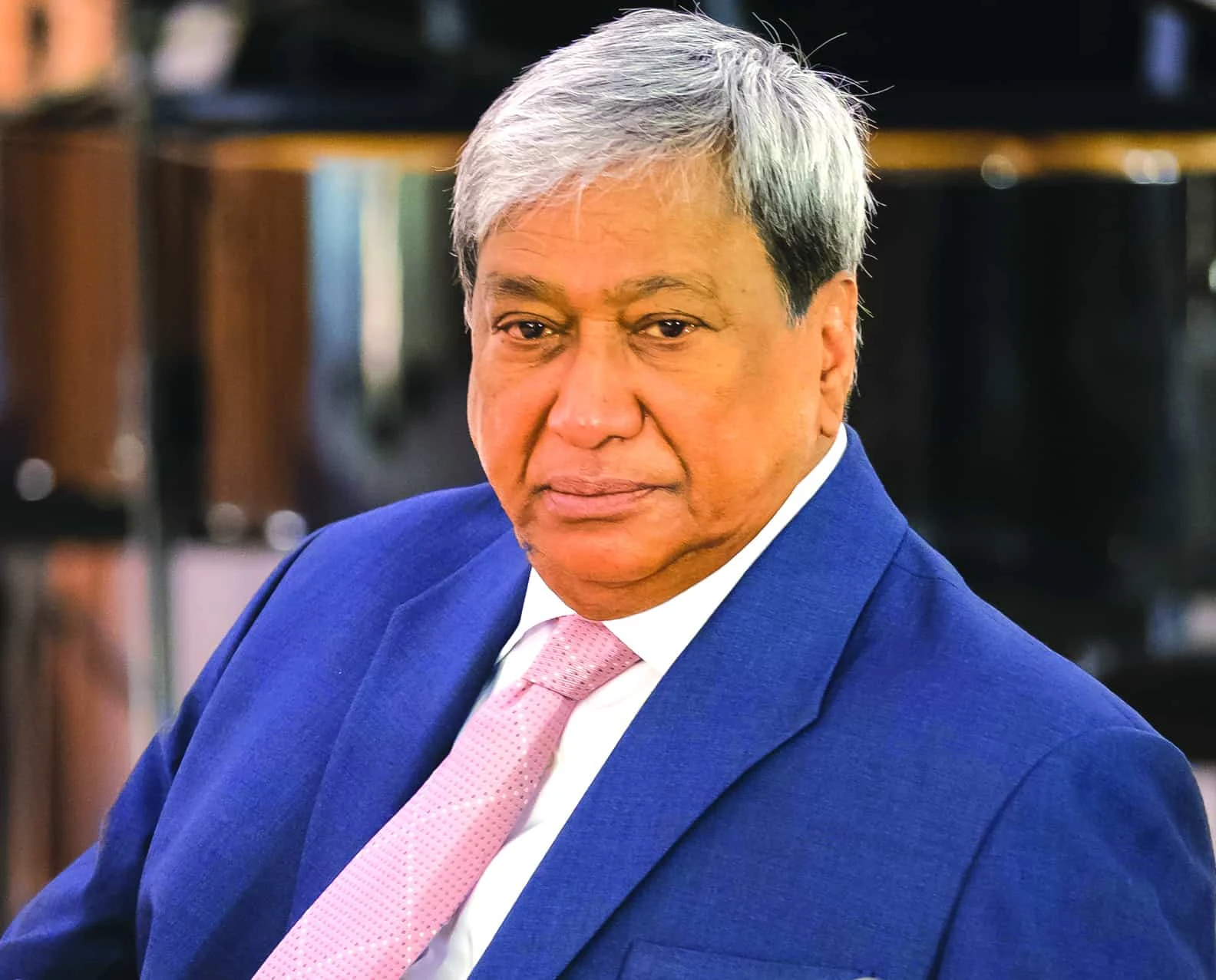
he is served as High Commissioner of Bangladesh to Brunei Darussalam from November 2016 to September 2020. He served as the Chairman, Civil Aviation Authority of Bangladesh (CAAB). Presently, he is working as the Distinguished Expert at Aviation and Aerospace University, Bangladesh (AAUB).
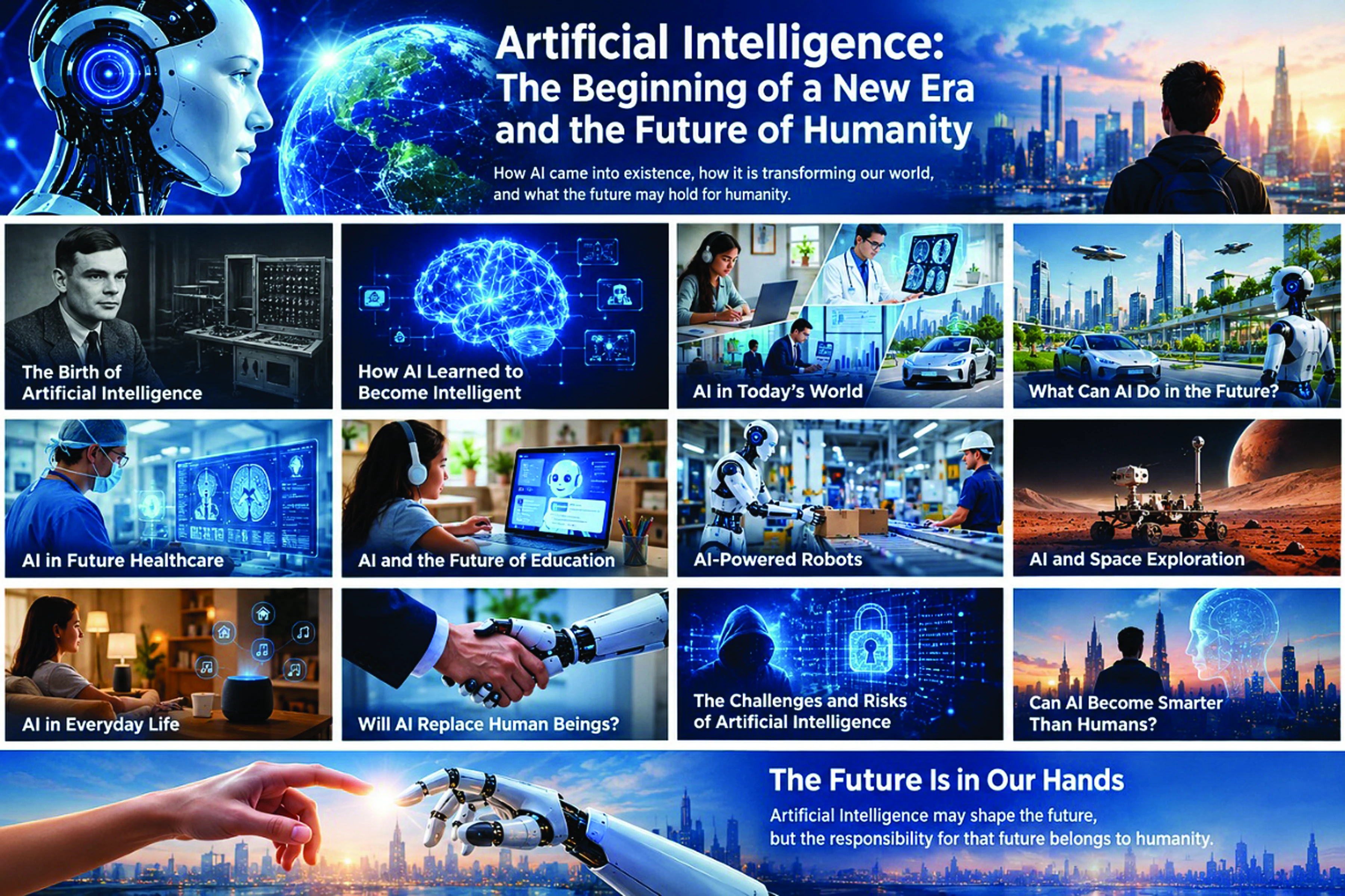
Our age has entered into a strange world of myth. Its innovation evolves around unprecedented realms of scientific fantasy that challenges the breadth of our imagination even to comprehend reality. There is no action in this present world that cannot be accomplished with the assistance of artificial intelligence. The truth is that such gargantuan leap by artificial intelligence has brought us to the verge of a strange moral dilemma. In his monumental book, The Age of AI and Our Human Nature, Henry Kissinger drew our attention to the impact that artificial intelligence would make on the psyche of mankind and clearly explained the negative side of its influence. Artificial intelligence possesses extraordinary power which has already been demonstrated in many areas of our intellectual, professional and commercial fields.
In September 2026, the famous company Open AI claimed to have resolved one of the most difficult century-old mathematical problems named Navier Stokes equation. More than 90 years, greatest human talents in mathematics could not find a solution to this particular problem of the physical laws of dynamics. AI had to design very robust mathematical model to solve this complex problem. Though many famous mathematicians have stated that AI solution to Navier Stokes equation is not exact, but the question remains how far into the future human intelligence would permit itself to be unnerved by AI’s creative faculty. That is why the greatest scientist of modern times Terence Tao has drawn our attention to the deep structural transformation of AI and stressed that the impact it puts on Mathematics necessitates a rethinking on the part of the human society and scientific minds to prevent further negative effects on our civilization. If AI moves past human brain, then as the greatest of all universal creation, the identity of human beings will be at stake in future.
The two states which are at the helm of AI innovations are US and China. However, the best AI companies are located in America. For the last few months, there is a legal battle going on between the US government and the AI company Anthropic. The US Department wants Anthropic should withdraw all its prohibitions from its Claude-controlled AI model that creates autonomous weapons and unrestrained surveillance of people. But the CEO of Anthropic Dario Amodei believes that if restrictions are withdrawn from the AI-models to limit their security risks and surveillance freedom upon individuals, then it would be too dangerous for the battlefield situations. The fight between the US government and Anthropic has gone up to the US Federal Court. But the sad part of the story is that the Court has given verdict in favour of the government. This judgement has forced Anthropic to cancel all its contracts with the government. Now the question arises, has the security of human civilization lost its moral perpetuity against politicians’ overblown hype of vouchsafing national security.
The geo-politics involving AI reminds us of the Second World War. After the start of the war, the US government decided to build a nuclear bomb. They had a fear that if Germany built the bomb first, it would be used against the allied countries. Hitler would obviously gain strategic advantage by possessing the atomic weapon. At the time, the trailblazer of Quantum Physics, Werner Heisenberg was an inveterate supporter of Nazi Germany. At last, under the officialdom of Manhattan Project and leadership of the famous physicist Robert Oppenheimer, the allies built the Atom Bomb with unceasing work and trial of three years. Later when the atom bomb was dropped on Hiroshima and Nagasaki, human conscience was made to stand face to face human rationality. Smitten by conscience, the world leaders realized that there was a need for the creation of a world body, if they wished to save human civilization from utter destruction. Thus, was created the United Nations, whose undisputed leader was America. Today, under the uncontrolled proclivity of AI, mankind is faced with a similar civilizational crisis whose complex problem has brought us to the margins of our patience.
Elon Musk, the tech giant, has reiterated for the secure and responsible progress of AI. In the meantime, the massive use of drones, robotics, and AI-driven weapons in the Middle East and Russia-Ukraine wars has put the lives of civilian population under serious threat. If the ominous capabilities of AI fall in the hands of non-state actors, it may not be possible to defend the peace and security of our humanity. In the Second World War, the strongest opponent of the US was Soviet Union. Similarly, China is the strongest competitor of US in the age of AI. In the Bi-polar World, as it was not possible to set the limit of nuclear stockpile without Soviet Union, so in the age of AI, due to the supremacy of China, no global security can be agreed upon without China’s whole-hearted participation. Elon Musk calls for a mutual understanding on the use of AI between China and US while working with other powerful states.
Now, is the need for creating a structural mechanism through the formation of a working committee at the UN Security Council which will guide the states under the mandate of a global framework to rein in the uncontrolled power of AI. If the great powers, leaving aside their harmful competitive mind-set, are not committed to securing the boundaries of AI, Elon Musk thinks within 5 years, AI will cross over human intelligence and capabilities. That will mean doom to human civilization. However, Elon Musk also considers that controlled AI possibilities can work as a catalyst to human advancement. In future, extensive use of AI for peaceful purposes will guarantee the richness of wealth and this will create well-being in the human society. That richness in material wealth will be first reflected in the universal growth of individual income.
In a developing country like Bangladesh, we need to harness the potentially beneficial side of AI. There are many aspects to AI, among which the most significant ones are the scientific and technological dimensions. Bangladesh has a large population size of 180 million people. A huge mass of this population is the work force between the ages 15 and 65, which constitutes 65 percent of the total population. If we want to turn this population into useable lot for future scientific and technological advancement, there is a need for introducing changes in our education system from the basic level. It is not enough to lure the younger generation into the practical use of digital products for practical or amusement purposes. Mathematics and creative scientific talent needed behind the digital progress should be adapted to the relevant and global innovative trend by sustaining the academic curriculum that matches the ever-dynamic growth of new ideas and inspiration to work. Many of us even do not know that Bangladesh offers a share of 16 percent of labour force to the global digital market. It is through comprehensive planning and implementation of realistic strategic planning that energetic and tech-savvy young generation of the country will get an opportunity to contribute immensely in national economy. In realizing the empowerment of our youth in the global platform, if we fail to recognize the creative potential of AI, then information technology will be reduced to mere means of entertainment which will have no meaning in the faculty of our intellectual edge.
Dr Eunus established Grameen Bank through which women fighting against poverty have been empowered. The institution received Nobel Prize for its contribution to the idea that household peace can be insured if the space of income sources of the family members can be broadened through institutional support by the societal and governmental action. Bangladesh earns about 40-50 percent of its revenue through remittances by exporting labour to the Middle East and other countries. But mostly these expatriate Bangladeshi workers are semi-skilled or unskilled. But there is a possibility of sending AI-trained labour force to foreign countries in future. If we can integrate the tech-capabilities supported by AI knowledge into the economic empowerment of our expatriate workers, this will certainly motivate our youth to aspire for a scientific culture in future.
In the meanwhile, the government is stressing upon the practical use of AI in different sectors, such as agriculture, health service, disaster management, public service and financial support. But not having adequate academic and industrial framework has denied extracting enough gains from AI’s breadth of promotion. This inadequacy translates into top students migrating to foreign countries at higher salary and availing higher research scope. Bangladesh now suffers from loss of talent called Brain Drain which is tragic for a country’s intellectual growth.
Since there is no comprehensive legal framework to control digital activities in Bangladesh, data protection and individual information privacy are very weak. The threat from cyber-attacks is high. This clearly indicates that if AI is not controlled with strong protective measures, national security will degrade undoubtedly beyond acceptable limit. Due to AI, a new dimension is added to a state’s physical and economic sovereignty in the parameters of its existential threat. Security analysts have given it a new name called “Sovereign AI”. Discussing about the negative impacts of AI, Elon Musk might have drawn our attention to the intervention of human and state sovereignty by AI.
We began this article with a doubt raised by Henry Kissinger in his book on AI. If we take his statement to be axiomatic for future, then there is no denial that what is most important for Bangladesh at this moment is to formulate a comprehensive strategic framework for AI governance. The pillar that must lead this strategy is the education institutions: schools, colleges and universities.
In order to build national capacity for multi-dimensional growth profile in future, there will be urgent need for investment in AI and techno-scientific knowledge. We cannot simply depend on government sponsorship on high-tech activities. The private entrepreneurs will also have to come forward with funding for AI innovation. At this critical juncture of AI, an understanding of AI’s strategic value through public-private partnership has become vital for national security. Elon Musk’s optimism that “The Age of AI will be an Age of Abundance”, to translate this forecast into reality, a country like Bangladesh needs a long-term, sustainable and universal standard that harmonizes with the national strategy for development.
Any scientific initiative has political dimension. Theoretically, states should endeavour to capture the fruits of scientific discovery and invention to lay claim over its commercial and political rights. We often ignore the “science element” of power politics and do not factor it into the typology of state’s power. This tendency is more visible with the under-developed states where politics has not taken a mature shape. To exploit the full potential of scientific and technology pace, a state’s political foundations are the most tangible assets. There are certain issues in a state’s calculation of sustenance, which requires politics, no matter how differentiable it is in ideological make-up of various groups, to be clear and succinct in measuring its societal cohesiveness and integrity.
In Bangladesh, one of the reasons that Science as an instrument of national power, has not shown visible mark is due to political immaturity. Politics in Bangladesh, seemingly, is still at an inchoate stage. So long politics remains brittle and infantile, the full potential of Science cannot be harnessed. This is clearly validated by the percentage of digital labourers from Bangladesh in the global market vis-à-vis the actual production of scientific goods locally available through indigenization. The onus of taking Bangladesh to the expected level of AI-driven digital competence lies with the political masters. It is the political leadership that kindles the spark of scientific dream of a nation. Can our political masters rise to that level of enlightened vision ——- that is the question, which will determine the place of Bangladesh in the Age of AI.
আরও পড়ুন -
About Author
- Latest
- Popular
© All rights reserved. It is illegal to use this website without permission.
Designed & Developed by: Security World