








Editor & Publisher: Rabb Majumder
House # 05 (2nd Floor, 2-C), Road# 04, Banani DOHS, Dhaka - 1206
Phone: +8801715822782
Phone (Advertisement): +8801712863234
Email: rabb.h.majumder@gmail.com, info@securityworldbd.com

After the Elections: The Coalition Changes, the Security Perspective Remains
Israel and the Eastern Mediterranean
Imad Rizk
02:14, 14 October, 2026
is a Lebanese security and strategic advisor and researcher based in Beirut who serves as the director of the Isticharia for Strategic Studies (Institute for Strategic and Communication Studies - ISCS).

The upcoming Israeli elections may open new horizons for different
political paths in dealing with regional conflicts and tensions, from Gaza and
Lebanon to Syria, Turkey, and Iran. Much will depend on the composition of the
next Israeli government and the extent to which the United States succeeds in
containing the existing flashpoints around Israel. However, the events of
October 7, 2023 left a deep impact on the Israeli approach to security. Israel
is expected to be more decisive and faster to act to protect itself, under any
circumstances, regardless of changes in its political leadership.
First: Theoretical Framework – The Impact of October 7 on Israeli
Security Doctrine
1.1 The Deep Impact on Israeli Consciousness
A poll conducted by the Israeli newspaper Haaretz on September 14, 2026 showed that 68 percent of Israelis believe that issues related to the attack carried out by Hamas on October 7, 2023 will occupy a central place in the Israeli elections scheduled for October 27. In light of this, the contours of Israeli security policy—before and after the elections—toward its immediate surroundings, including Gaza, Lebanon, and Syria, and the broader region, especially Turkey and Iran, are expected to be shaped by two main factors: the lessons the Israeli public has drawn from the events of October 7, and the nature of the government coalition that the elections will produce and that will assume power afterward.

1.2 Comparison with Pearl Harbor and 9/11
According to this argument, the events of October 7 left an impact
on Israeli consciousness greater than that left by the attack on Pearl Harbor
or even the September 11 attacks on the American psyche. On the one hand, the
events resulted in the killing and capture of a number of Israelis far
exceeding the human losses in those American tragedies. On the other hand,
unlike Pearl Harbor and 9/11, Israel’s very existence appeared threatened, or
at least threatened in the form it had before October 7, especially if Iran and
its proxies had entered the confrontation from the beginning instead of
becoming involved later. This reality left a decisive impact on the way Israel
views the threats surrounding it and on the formulation of its security policy.
1.3 Principles of the Prevailing Security Doctrine
Israel’s prevailing security doctrine today, which enjoys broad consensus
among military experts and a large segment of society, is based on:
· The principle of taking no risks under any circumstance: threats
should be dealt with before they reach Israeli territory.
· Assessing opponents according to declared positions and actual
capabilities: not according to Israeli estimates of intentions, which proved
inaccurate, unobjective, and failed badly on October 7.
· Offensive preemption: a military escalation that took an
offensive character in Gaza, Lebanon, Syria, and Iran.
1.4 Regional Repercussions of Israeli Policy
This led to an Israeli military escalation that took an offensive
character in Gaza and continued even after the ceasefire brokered by Trump. It
also extended to Lebanon and various areas of Syria and to a direct
confrontation with Iran. At the same time, Israel engaged in diplomatic moves,
especially with Greece and Cyprus, alongside military operations in Syria that
targeted Turkey.
1.5 Growing Diplomatic Isolation
Israel has not been this isolated in the region since 1948, as the
United States’ two main regional partners, Turkey and Saudi Arabia, have moved
away from their previous relations, which had been more open with Israel.
Inside the United States as well, figures and forces from both political parties
have begun to distance themselves from the current Israeli government. More
alarmingly for Israel, this aversion has gradually extended from the government
to Israel itself.
Second: Post-Election Scenarios in Neighboring Countries
2.1 Possible Scenarios for the Next Israeli Government
One rarely finds a democracy with a more complex electoral and
party landscape than Israel. It is therefore difficult for an outside observer,
and even for a well-informed Israeli, to foresee the results of any election or
predict the path of forming a new government coalition. Nevertheless, several
possible scenarios can be examined:
1. A return to the era of fragile coalitions that prevailed before
2022.
2. Formation of a more moderate coalition without Prime Minister Netanyahu.
3. A government headed by Netanyahu but with less representation
of hardline right-wing ministers.
4. A government similar to the current coalition.
Any new government will face great pressure to maintain existing policies, although it is unlikely to lead to a new escalation immediately upon formation. In contrast, a new government might choose a more moderate approach, but it is difficult to predict in advance the shape of the government or the nature of the leadership that might push in any of these directions. Even under his current coalition, Prime Minister Netanyahu agreed to the Gaza ceasefire announced by President Trump in 2025, and to the Lebanon ceasefire announced by President Biden in 2024. Any incoming Israeli government, even if centrist, is likely to find itself largely constrained by the new security perspective that has taken root in Israel after the events of October 7, as previously mentioned.

2.2 Gaza and Lebanon
In Gaza: Hamas has, at least theoretically, agreed to the second phase
of Trump’s peace plan. The “Peace Council,” established under the plan and
endorsed by UN Security Council Resolution 2803, has also announced its
readiness to gradually train and deploy police, form an international security
force, and establish a local Palestinian administration, provided Israel and
Hamas commit to implementing the plan. However, Israelis have serious doubts
about Hamas’s readiness to actually disarm and relinquish power. Questions
about the fate of weapons to be confiscated from Hamas, and the capabilities of
the various international bodies stipulated in the plan, reinforce Israel’s
insistence—whose motives are understandable—that any withdrawal must not lead
to a repetition of what happened on October 7.
In Lebanon: The scene appears more complex. The ceasefire
agreement stands between Israel and the Lebanese government, not with
Hezbollah, which rejects the agreement, distances itself from it, and refuses
to disarm. Israel expresses deep doubts about the ability of the Lebanese Armed
Forces and the government itself—and even about their intentions—to impose
security in areas from which Israeli forces will withdraw, which is the
fundamental pillar of the entire agreement.
2.3 Syria
With the new Syrian government in the post-Assad phase, the
situation has become more stable, first after the Israeli escalation strike
that targeted a Syrian base near the Turkish border, based on reports of
Turkish plans to establish a base there, and second after talks hosted by
Jordan with American mediation between Syria and Israel aimed at calming the
situation. Despite continued mistrust between the two sides, the Syrians, who
face major challenges on several fronts, have an interest in reducing tension
with Israel. Neither country, in theory, has fundamental security interests
that conflict with the other’s interests, which makes a return to the 1974
agreement, and an Israeli withdrawal from areas it seized after Assad’s fall,
theoretically possible after the elections.
However, Israel has serious security concerns that it sees as
necessary to address. These include the future of the Druze, who have family
ties to a number of Druze in Israel; maintaining an operational margin of
maneuver in Syrian airspace to deal with any contingency related to Iran; and
the requirements of its broader security vision. More generally, Israel still
finds it difficult to determine how to deal with al-Sharaa and his former
allies in the Nusra Front, given their entrenched Islamic background. Broader
tensions with Turkey, as discussed later, also increase Israel’s concerns, as
it finds it difficult to feel secure given the close relationship between
Damascus and Ankara. On the other hand, the fall of Assad, who was Iran’s
strongest ally in the region, represents a positive development from the
perspective of Israeli security.
In short, any Israeli government is likely to seek to maintain the
current calm, unless an unexpected development occurs in the Syrian arena. At
the same time, the United States will find itself forced to exert strong
pressure on an Israeli government more willing to address its issues with
neighboring countries, which may open the way for a return to an agreement
similar to the 1974 agreement. Israel’s annexation of the Golan Heights remains
one of the most prominent obstacles to achieving full reconciliation between
the two countries.
2.4 Iran
Although Iran represents the greatest threat by far, it may be, at
least in the near future, the easier challenge to manage compared with the two
converging challenges Israel faces in the region. The United States has now
become the main party in the confrontation with Iran, after the joint
Israeli-American strikes that targeted Iran in early 2026. As long as
Washington continues its efforts to contain Iran, Israel is unlikely to adopt a
policy that contradicts the American position. Whatever the degree of Israeli
skepticism about some American decisions, Israelis realize that dealing with
Iran cannot easily be done without U.S. support.
2.5 Turkey
Turkey may be the most complex challenge in Israel’s immediate
neighborhood. On the positive side, there is currently no direct military
confrontation between the two countries requiring urgent de-escalation. But the
absence of such a confrontation may make addressing larger issues more
difficult, since gaining shared experience in applying de-confliction and
ceasefire mechanisms that serve both sides’ interests could help build trust
and strengthen communication channels—two elements the two countries badly lack
at the current stage.
Unlike Iran, Turkey and Israel fundamentally belong to the status
quo powers; neither seeks to reshape the existing regional order, although each
fiercely defends its spheres of influence and immediate interests. Both deal
with the existing regional system and attach importance to their close
relationship with Washington. However, tension between them is linked to a
different reality: with Iran, even temporarily, transformed into a damaged
power burdened by pressures, Turkey and Israel have become the two most
influential and militarily successful powers in the region. This reality
generates structural tension between them, despite the absence of a fundamental
conflict in their security interests. Over the years, personal hostility
between the current two leaders has helped fuel these tensions, and Erdogan’s
support, along with that of a broad segment of the Turkish public, for the
Palestinians and his criticism of Israeli operations in Gaza has increased
their intensity.
The Assad regime formed a military and geographic barrier between
the two states, but that barrier has now disappeared, and both Turkey and
Israel are seeking, by different means, to expand their influence in Damascus.
Given the scale of the repercussions that could follow an open confrontation
between these two powers, which form two fundamental pillars of regional
stability, Washington has a major interest in calming relations between them. A
change in the power structure in either country could help ease existing
disputes, but there are also entrenched convictions on both sides that could
push toward conflict if not wisely managed by all parties.
Third: Turkish and Egyptian Security Doctrines in Light of Israeli
Transformations
3.1 Turkish Security Doctrine: An Offensive Shift and a “Central
Enemy”
Regional developments have caused a radical shift in Turkish
doctrine, which moved from focusing on internal threats, such as the Kurds, to
considering Israel the central threat, driven by the expansion of Israeli
operations after 2023.
· Expanding the concept of national security: It is no longer
limited to borders but includes the Ottoman “strategic depth” (Aleppo,
Damascus, Beirut), placing Turkey in direct confrontation with Israeli
influence in Syria and Lebanon.
· A doctrine of comprehensive mobilization: A presidential decree
in 2024 defined “mobilization and state of war,” allowing war powers to be
activated without a formal declaration, and adopting the concept of
“comprehensive national defense” that places the economy and infrastructure at
the service of the war effort.
· Capacity-building and deterrence: Turkey seeks to deter Israel
on the ground by developing defense industries, including drones and missiles,
and reducing external dependence, while emphasizing that direct confrontation
is “currently unlikely” but that the army is ready for any scenario.
3.2 Egyptian Security Doctrine: Defensive Deterrence and the
“First Enemy”
Despite the 1979 peace treaty, Egyptian doctrine strategically
maintains Israel as the “first enemy,” while focusing on defense and avoiding
being drawn into open confrontation in order to ensure development.
· The strategy of “peace with strength”: A combination of
commitment to peace and developing a military capability able to protect
borders and deter any aggression, while directing resources toward development
rather than wars.
· Balancing Israeli power: Cairo is defensive, not offensive, but
seeks to prevent Israeli military superiority from turning into regional
political superiority.
· Evolving deterrence: This appeared through the “Badr 2026”
exercises near the Israeli border as a clear deterrence message, along with
developing unconventional capabilities such as C4ISR and artificial
intelligence to confront Israeli qualitative superiority.
3.3 An Emerging Alliance: A Turkish-Egyptian Axis
Military rapprochement between Ankara and Cairo is the most
prominent development, driven by shared interests in balancing Israeli
influence.
· Field cooperation: “Golden Punishment” and “Anatolian Eagle”
exercises in 2026 to enhance operational compatibility and confront drones.
· Joint defense manufacturing: A $350 million deal in February
2026 including the “Tolga” defense system and the establishment of 155 mm
ammunition production lines in Egypt.
· A “strategic nightmare” for Israel: Cairo is studying joining
the “Makkah Pact” with Turkey, Saudi Arabia, and Pakistan, which could change
the balance of power and raise serious Israeli concerns.
Fourth: The Eastern Mediterranean – Energy and Trade in Light of
the Transformations
4.1 Energy: A Battle of Infrastructure and Alliances
Competition has shifted from “Who owns the gas?” to “Who controls
the export routes?”
· Egypt: It owns the Alexandria (Idku) and Damietta terminals, the
only two liquefaction facilities in the Eastern Mediterranean, making it a
major hub for Israeli and Cypriot gas for re-export to Europe.
· Turkey: It is trying to position itself as an alternative hub by
importing Egyptian LNG and re-exporting it to Europe, benefiting from its
rapprochement with Cairo.
· The EastMed pipeline: A point of contention. It is promoted by
Israel, Greece, and Cyprus, and strongly opposed by Turkey. It has become
almost frozen due to technical and financial obstacles and the withdrawal of
U.S. support.
4.2 Trade and Ports: Redrawing the Maritime Map
Container traffic has shifted clearly from European ports,
especially Greece, toward the ports of Egypt, Turkey, and Israel:
· Decline of Greece’s Piraeus port: From 34 percent in 2022–2023
to 13 percent in 2026.
· Rise of Egypt’s Port Said: It exceeded 20 percent in 2026.
· New shipping lines: Tarros (TLS) and Sidra Line (TEA) linking
the ports of Istanbul and Alexandria.
4.3 The India-Middle East-Europe Economic Corridor (IMEC)
This project, led by the United States and India, aims to connect
India to Europe via the Gulf and Israel, largely bypassing Turkey and Egypt:
· Current status: Egypt remains outside the official IMEC
agreement, but is actively seeking to join. In contrast, Turkey strongly
opposes the project and promotes an alternative corridor through Iraq.
· Turkey’s Development Road: A $15 billion project aimed at
linking Iraq’s Faw port to Turkey and Europe via 1,200 kilometers of railways
and highways.
· The Israeli position: Israel considers itself the biggest winner
from IMEC, as Haifa port would become the main gateway for trade between the
Gulf and Europe.
Fifth: The Chinese Position on These Scenarios
5.1 The Position on IMEC
Beijing does not see IMEC as an existential threat, but takes a
flexible position seeking coexistence. China believes that IMEC and BRI can
complement each other in areas such as energy, green transition, and the
digital economy.
5.2 China’s Strategy in the Eastern Mediterranean
China focuses on “deep economic presence” as an alternative to
military confrontation:
· With Egypt: It considers Egypt its most important partner,
having invested heavily—about $14.3 billion—in the Suez Canal Economic Zone,
making China the largest source of imports for Egypt.
· With Israel: Chinese companies manage major ports such as Haifa
Port, and participate in infrastructure and technology projects.
· With Turkey: China owns stakes in strategic ports such as
Kumport, and supports high-speed railway projects, although its investments in
Turkey, $5.27 billion, are lower than those in Egypt.
5.3 Dealing with Regional Tensions
China adopts a policy of “active neutrality,” calling for
political solutions and rejecting military interventions not authorized by the
Security Council. Some analysts believe Beijing seeks to encourage a leading
role for Egypt in the region, without forming a Chinese-Egyptian-Turkish
military axis against Israel.
Sixth: The U.S.-China Understanding and Its Implications for
Egyptian-Turkish Rapprochement
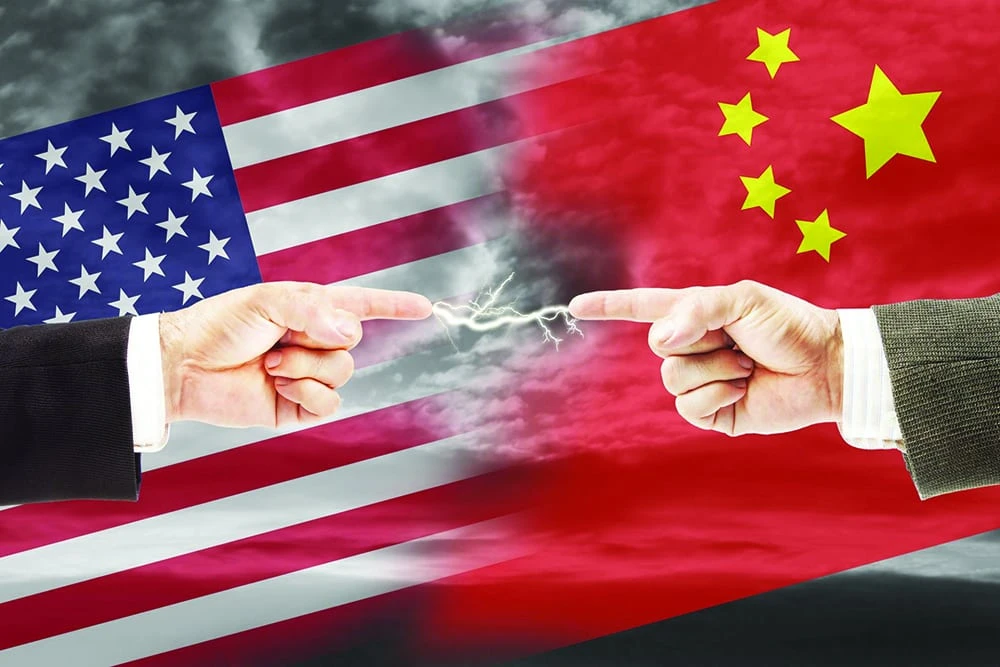
6.1 The Nature of the Understanding: A “Truce of the Great Powers”
The Trump-Xi summit in September 2026 did not produce a strategic
partnership, but rather what can be described as a “truce of the great powers.”
The agreements were limited and technical:
· A crisis communication channel.
· Dialogue on artificial intelligence.
· Reduction of tariffs on non-sensitive goods.
· A pledge not to impose fees on international waterways.
China agreed to “encourage” Iran to return to negotiations, but
did not pledge to pressure it, and continued purchasing Iranian oil. Beijing
prefers a contained crisis that exhausts Washington and increases Tehran’s
dependence on China.
6.2 The Impact of the Understanding on Egyptian-Turkish
Rapprochement
The rapprochement has turned into a strategic military-industrial
partnership:
· Joint exercises: “Golden Punishment” in 2026, “Anatolian Eagle”
in June 2026, and naval and air exercises.
· Joint manufacturing: A $350 million deal in February 2026.
· Trade target: $15 billion.
Washington is concerned: It asked its embassies in Cairo and
Ankara for assessments of the nature of the contacts, while the U.S. State
Department describes it as a “diplomatic victory” that calms the Eastern
Mediterranean.
Seventh: Israel After the Elections – The Eisenkot Scenario
7.1 Eisenkot’s Strategy: “Security Realism” Instead of “Permanent
Confrontation”
Eisenkot relies on his background as former Chief of Staff,
2015–2019, and presents a vision based on “limited military objectives” and
refusing to be drawn into endless wars of attrition:
· Reducing direct friction: Eisenkot is likely to reduce
provocative operations in Syria and Lebanon, removing one of the largest
sources of tension with Turkey.
· Containing settlers: He has pledged to impose greater control
over extremist settlers in the West Bank, a step that may improve Israel’s
international image, although it will not lead to a two-state solution, which
he publicly opposes.
7.2 The Impact of an Eisenkot Victory on Egyptian-Turkish
Rapprochement
The Egyptian-Turkish relationship will enter a new phase with
Eisenkot:
· A shift from “inciting enemy” to “pragmatic partner”:
Netanyahu’s policies were used as a pretext to justify the Egyptian-Turkish
alliance. With Eisenkot, this alliance will lose some of its defensive momentum,
but it will not collapse.
· The possibility of a “tripartite understanding”: Eisenkot shares
a common language with Cairo and Ankara—military mindset and political realism.
· Betting on “energy security”: Israel will use economic relations
as a card to attract Egypt and Turkey, presenting itself as a “trustworthy
partner” in regional energy projects.
7.3 Washington’s Role: “The Pressuring Mediator”
Eisenkot, with his centrist orientation, will be more prepared to
comply with American pressure to calm the fronts:
· Pressure to restore the diplomatic channel: The Trump
administration, trying to contain China and stabilize the region, will pressure
an Eisenkot government to stop escalation with Turkey and Egypt.
· Loss of “unconditional cover”: Israel will be forced to make
concessions, even if tactical, to its partners.
Eighth: Conclusion and Findings
8.1 The New Regional Balance of Power
The U.S.-China understanding creates a more flexible regional
space in which Egypt and Turkey move with greater confidence, supported by
non-oppositional Chinese support. This places Israel before two options:
· Integration into a new regional structure in which it shares
security burdens with partners who can no longer be ignored.
· Confrontation, which is a costly option given the decline of
unconditional American cover.
8.2 Possible Scenarios
Scenario Probability Implications
Eisenkot/moderate camp victory Medium Gradual change in security
strategy, an “armed truce” with Egypt and Turkey
Netanyahu remains with a weak coalition Medium Continued
escalation, risks of crises with Egypt and Turkey
Fragile coalition Low Political deadlock, continuation of the
status quo
8.3 The Final Equation
Israel is no longer the sole “biggest winner”; it is a party in a
triangle of power—Egypt, Turkey, and Israel—whose contours are taking shape
under the great-power truce between the United States and China. In light of
these transformations:
· Egypt is consolidating itself as a major energy and port hub,
with its rapprochement with Turkey as a pressure tool.
· Turkey is seeking to build an alternative influence through
alliances, with its security doctrine shifting toward considering Israel the
“central threat.”
· Israel faces the risk of strategic isolation despite its
military superiority, with the possibility of turning from the “biggest winner”
into a party searching for a new position.
References
1. James Jeffrey, “Israel and the Near Neighborhood after the
Elections: The Coalition Changes, the Security Perspective Remains,” Al Majalla,
September 26, 2026.
2. Haaretz poll, September 14, 2026.
3. UN Security Council Resolution 2803.
4. The Syrian-Israeli Disengagement Agreement, 1974.
5. Reports on the “Golden Punishment” and “Anatolian Eagle”
exercises, 2026.
6. The Trump-Xi Summit, September 2026.
আরও পড়ুন -