














Editor & Publisher: Rabb Majumder
House # 05 (2nd Floor, 2-C), Road# 04, Banani DOHS, Dhaka - 1206
Phone: +8801715822782
Phone (Advertisement): +8801712863234
Email: rabb.h.majumder@gmail.com, info@securityworldbd.com

Without Home Rule, Local Elections in Bangladesh are Just Bread and Circuses
John Charles Dalton
02:34, 14 October, 2026
is an International Development Leader with 50+ global assignments across Asia, Africa, the Caribbean, and Europe Chief of Party / Team Leader for 14 major projects, driving results in governance, public finance, results monitoring, and service delivery Resident Advisor to Presidents, Prime Ministers, and Cabinet Officers
Live Free or Die!!!
Give Us Liberty or
Give Us Death!!!
Yanqui Go Home!!!
Home Rule !!!!
These are powerful, evocative words steeped in historical meaning.
The cry for “home rule” was both a demand for freedom and a call by citizens
for the end of oppression from distant rulers or centralized despots.
Individual citizens who demanded home rule often: (1) wanted the Constitutional
and legal right to govern themselves; 2) sought to end resource exploitation
and unfair taxation; 3) demanded an equitable share of national tax revenues;
and, 4) wanted recognition as an independent entity capable of giving them some
dignity (Braveheart). When citizen demands for home rule grew loud and then
louder and violent, colonial powers were forced to confront the immorality of
their dominance. Similarly, as oppressed minorities become highly successful in
the demand for home rule within a nation state, democracy and freedom improved
proportionate to the grant of authority (it’s still a work in progress in many
countries).
And in less dramatic fashion, communities in numerous countries
were granted greater authority by enlightened central governments that
responded, peacefully, to legitimate power sharing demands (South Africa).
The heroes of various home rule movements are well known. Paul
Revere setting off to warn the patriots that “the British are coming”, Mao
leading a peasants’ revolt, Nelson Mandela fighting apartheid in South Africa,
Annie Besant in India, Charles Stewart Parnell in Ireland, Lech Walesa, Ho Chi
Minh, Gandhi, and Robert Mugabe. You don’t have to like someone’s politics to
admire their effort and the results they achieved. Although it may not be in
fashion, Sheikh Mujibur Rahman also deserves high praise and recognition for
leading the battle for Bangladesh’s own independence in 1971. There are
literally scores of other home rule heroes.
Home Rule for Bangladesh Local Governments?
Let’s focus on home rule within a nation State. Let’s look at the
possibilities for creating a home rule movement in Bangladesh. What are the
avenues to bring it about and why would the powers-that-be resist a movement
that would empower cities, municipalities and unions (the only “local’
governments in Bangladesh) to develop their own local economies, support and
supplement central government initiatives, which is vital to national economic
growth and FDI and, as importantly, will give voice and visibility to local
aspirations.
Justice Louis Brandeis of the United States Supreme Court coined
the term, “laboratories of democracy” when he noted in his opinion on a New
York State case, “A single courageous (government) may, if its citizens choose,
serve as a laboratory and try novel social and economic experiments without
risks to the country”. This is the underlying principle of home rule. Or we can
cite Jane Jacobs on the principle of subsidiarity, “Subsidiarity is the
principle that government works best –
most responsibly and responsively – when it is closest to the people it serves
and the needs it addresses”. Let’s ask LBJ, “Government is best which is closest
to the people.” Finally, one might also
say that the principle of local control, dignity, social justice and personal
agency are fundamental principles of humanism, as reflected in the Preamble to
the Bangladesh Constitution.
What will these local government home rule laboratories of
democracy produce for Bangladesh? Is the juice worth the squeeze? For all local
governments that select the home rule path they will benefit from:
l Local citizen
engagement in planning and budgeting
l The right to
contract for services
l The authority
to recruit and hire staff who know their needs
l Continuous
administrative performance improvement
l Partnership –
not peonship – with central government
l Innovation,
especially in the use of technology
Most importantly:
l Giving citizens
a voice and a choice
l Instilling a
true patriotic spirit among local youth
l Improving
security by increasing ownership
Bangladesh “Local Elections”
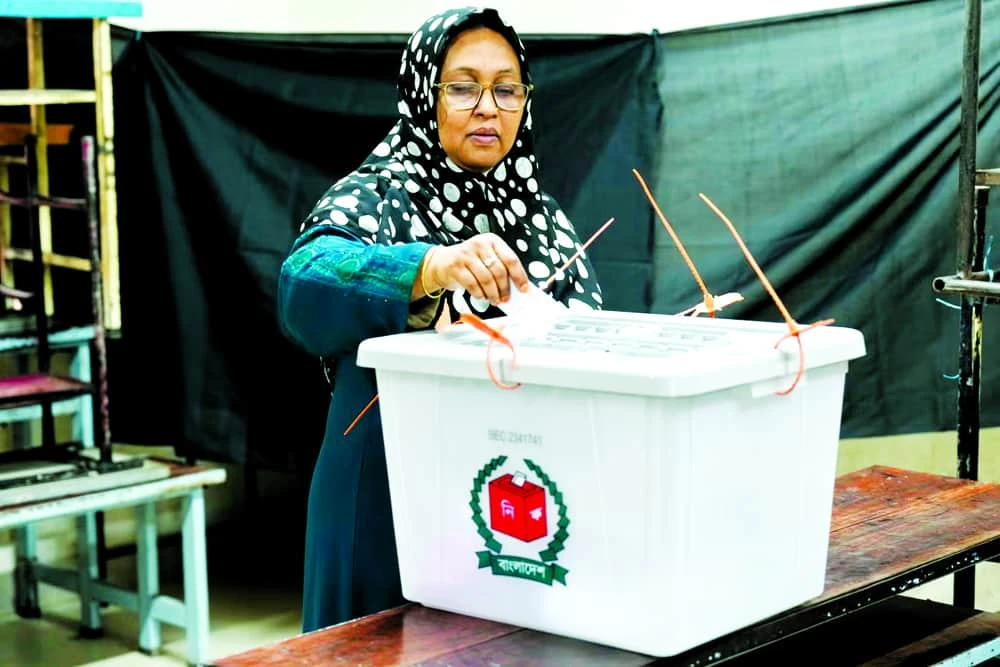
Soon elections will he held in two subnational administrative units: zilas (61) and upazilas (500) as well as in three legitimate types of local governments: city corporations (13), municipalities (330)) and unions (4579). Let’s hope this is the last so-called local government election in Bangladesh that is 90% political eyewash. By calling zilas and upazilas local governments, it creates the impression that real local governments (i.e., cities, municipalities and unions) should also be under the same authority and control of some higher central government power and be manipulated by MPs. Unfortunately, to sustain the political interference of the national government in the affairs of local governments, central government bureaucrats – fearing for their own survival – allow creeping authoritarianism to spill over into their relationship with real local governments. Consequently, the three legitimate local jurisdictions (i.e., cities, municipalities and unions) are essentially wards of the State, not servants of their own citizens.

This disrespect for the voters manifests itself in the fact that
local governments have no power, no money and no ability to decide on any
purely local matter (e.g., where to locate the slaughterhouse) without running
off to MoLGRDC to get approval. Usually (not occasionally) the infrastructure
development budget of a local government is diverted to cover the interests of
powerful legislative elites. “Plus ca
change, plus c’est la meme chose”: the more things change the more they remain
the same.
The debate and discussion about decentralization usually consists
of technical and mostly academic choices related to whether to recommend
delegation, deconcentration, or devolution as the means of empowering local
jurisdictions. The academics then add three further descriptors (it seems their
curiosity ends at three) under the selected option to provide a bit more
granularity about the shared powers between central vs local government. These three dimensions are political (who has
authority), administrative (who does what and in what situations) and fiscal
(where the money comes from). This is
depicted in Figure 1, below:
Figure 1:
Illustrative Typology of Decentralization1
It should be noted that this is illustrative, but nevertheless the
way that powers duties and responsibilities are distributed can affect economic
performance, which explains why rural Bangladesh is weak. It should also be
noted that many potential economic engines for rural transformation (EZs and
EPZs, for example) are under centralized control.
Nevertheless, many public administration experts agree that this
is a useful framework for assessing the type of decentralization that a country
might adopt for its local governments. However, this “one size fits all”
approach, i.e., where the Parliament passes a law and ever local government
then looks the same, has the same powers and is expected to do everything
alike, is so unlikely to be achieved that the decentralization baby dies in the
cradle. This approach has several flaws – not the least of which is that local
government are not all endowed the same. This failure to account for the
diversity of government institutions becomes evident when recentralization of
functions is necessary to maintain some semblance of equitable service
delivery. Clearly expectations were high that all local governments within the
country would have the same capacity, capabilities and competence. This was
misguided. In Nepal and other all-or-nothing decentralization pioneers the
recentralization of functions is evident.
A Better
Way
So, let’s get back to Home Rule and Bangladesh. How can a true
citizen-centric system of local government contribute to national development
in the four corners of Bangladesh not just in a few politically favored
locations? It is possible and doable, but before I get into the details…,the
strategy if you will …I need to provide some bona fides: My position is not
grounded in academic research…rather…what I will propose is based on lived
experience.
l Chief
Researcher, Special Commission on Municipal Home Rule, Massachusetts
l Technical
Advisor (On-site) to 15-20 elected Home Rule Local Charter Commissions
l Elected Charter
Commission member
l Director,
Office of Local Government (OLG), Massachusetts
0 On-site advisor
to 10 additional elected Home Rul Charter Commissions
0 Established OLG
as the HR knowledge management center
0 Commissioned the
development of model charters
0 Actively
promoted the professionalization of local governments
l Project
Director, Fiscal Decentralization for Pakistan (ADB)
l Governance
Advisor to the President of Liberia
l Management
Advisor to the Prime Minister of Zimbabwe
l Consultant on
Bangladesh’s PFM Reform Program (WB)
Based on this experience, I know that a home rule approach, rather
than a general policy on decentralization, has the best chance to uplift local
communities in Bangladesh and create an effective advocacy for economic growth
and development originating from the grassroots.
HOW???
Unlike a centrally mandated
law that defines the uniform rights, duties and obligations of all local
governments – a sweeping, theoretical approach – a Home Rule Enabling Law of
2027 would specify the terms and conditions that would a) empower local
governments (cities, municipalities, and unions the only local governments in
Bangladesh) to take authority and
control over a larger portion of their local affairs and carry out specific
steps that will enable them to implement a purposeful assessment of their
institutional and financial situation. Partisan politics is not a feature of a
Home Rule approach.
As an example, below are key provisions of the 89th Amendment to
the Massachusetts State Constitution:
Article 89 – the Home Rule Amendment
Section 1. Right of Local Self Government
It is the intention of this article to reaffirm the customary and
traditional liberties of the people with respect to the conduct of their local
government, and to grant and confirm to the people of every city and town the
right of self-government in local matters, subject to the provisions of this
article and to such standards and requirements as the general court may
establish by law in accordance with the provisions of this article.
Section 2. Local Powers to adopt, revise or amend charters
Any city or town shall have the power to adopt or revise a charter
or to amend its existing charter through the procedures set forth in sections
three and four. The provi ions of any adopted or revised charter or any charter
amendment shall not be inconsistent with the constitution or any laws enacted
by the general court in conformity with the powers reserved to the general
court.
The Legislature (called the General Court in Massachusetts) in
anticipation of the passage of the Amendment, adopted the Home Rule Procedures
Act which created the administrative processes needed to swear in the elected
nine-member commission. All the details were spelled out in the law.
2. Citizens were
elected to prepare a “local constitution”
3. Hearings,
Meetings, Seminars were held
4. A Home Rule
Charter was presented to the voters
5. Implementation
was a specified (immediate, next election, phased)
In only one year, twelve months between annual elections, the
local citizens approved a referendum, elected citizens to study the local
government structure and operations, and frame a charter to empower and enable
local control. A local government was transformed into a quasi-independent
administrative, political and fiscally empowered entity under the tutelage and
control of local citizens.
The same could be done in Bangladesh, so that by 2031 several
large local government units could have the power to plan their own
development, administer their own cadres, assess and collect property taxes,
contract for services where necessary and advance their own destiny.
Citizen-centric, self-government in Bangladesh.
WHY ?
States that have adopted a Home Rule approach, also show better results, especially in fiscal matters. Research shows that in the best of the best home rule States; Massachusetts, Maryland, New Jersey, Ohio, Michigan, Minnesota, and Colorado, local governments have a high degree of fiscal autonomy as measured by the % share of own source revenue (OSR) compared to total revenue collected.

Now compare these OSR statistics to local governments in
Bangladesh: City Corporations (35-45%), Municipalities/Pourashavas (20-30%),
and Union Parishads (5-15%). Pretty poor performance with political
interference and powerful elites scoffing at the laws and public funds diverted
to MP preferences.
Now, imagine two things at once:
The Bangladesh national government, already teetering on the brink
of Seneca’s fiscal cliff, can be relieved of the obligation of transferring
funds for non-specific general services. Targeted investments in bridges,
roads, schools, river embankments, markets and similar would add real Value for
Money (VfM):
Local governments improve the quality of services, delivered by
local workers who are more likely to favor the local population and be more
visibly accountable in front of their fellow citizens.
It will also mean that the local MP has less control over the
local budget and cannot divert funds to benefit his dula bhai. Another
by-product of empowered localities is that the best and brightest may stay home
and not run off to over-crowded Dhaka.
So, while Bangladeshis may aspire to have more local control, they
are currently only able to aspire. Bangladesh does not perform like a home rule
government, rather Bangladesh is comparable to the one of the poorest
performers in the United States, Mississippi, whose own source revenue – for
all local governments - only comprise 50 % of total revenues.
Let’s now focus on services. I asked ChatGPT to research the
difference between Massachusetts and Mississippi in five random factors:
Education Achievement, Life Expectancy; Average Household Income; Paved Roads,
and Teen Pregnancies?
Here are the results. (I swear)

Overall, the quality of life in a Home Rule State like
Massachusetts is far superior than in a non- Home Rule State like Mississippi.
My sincere hope for Bangladesh : Be like Massachusetts !!!!!!!
The Road to Home Rule
The first step on the road to recovery is acknowledging and
confronting your demons. In Bangladesh that means accepting the fact that a
highly centralized fiscal framework combined with a colonial approach to public
administration sprinkled with a heavy dose of corruption, has failed to deliver
services for the common man, woman and child. Wealth and power, the post-71
prescription for a newly created nation, has run out of steam. The GINI
coefficient measures income inequality. In the year 2000 it registered 0.334,
where 1.000 is perfect equality. Over the past 25 years this measure has barely
moved. For 2025 the GINI coefficient is estimated at 0.340. So, despite all the
hoopla, the breast beating, the sleep-walking into disaster, a huge portion of
the population was poor twenty five years ago and an even larger portion of an
ever-increasing population are still poor.
Throughout the world, policymakers who observe this imbalance of
power often propose a form of decentralization to bring services closer to the
citizens (deconcentration), or, assign some functions to local jurisdictions
(delegation), or, empower local residents to govern themselves (devolution).
But each of these options suffers from a fatal flaw: the presumption of universal
competence. The decisionmakers act as if all jurisdictions are alike. So, governments
pass a law that applies to all local governments, each of them the same
- without exception. These top-down approaches usually fail outright or
under-perform.
The home rule approach takes a different tack…every boat floats on
its own bottom. Individual local governments opt into a process of citizen
empowerment. A locally elected (ideal democracy) or appointed committee meets
over the course of one year to propose to its local voters modifications that
are better, faster, cheaper and more citizen-focused than the current
situation. Because it is meant to be a local solution, it may be assumed that
there could be very significant power shifts between a home rule municipality
and regional and national power bases.
First, we need a champion: which could include the PM or one of
the senior officials who can see the decline in transparency, accountability
and governance. The slow slide that actually started in September 2024 (more or
less) is gaining momentum. This new government needs a legacy, a capstone
legislative initiative that will establish its own identity. Up to now, the PM
is pushing a rope… I believe he has the lived experience to understand what is
happening and could take decisive action to change the marriage of exaggerated
publicity with very limited progress. I think the PM can be the home rule
champion.
Within the citizenry, writ large, there is no muscle memory of
local decision making. A vast public education initiative is needed. Many local
“experts” are already poised to act (but seem to be afraid of being accused of
making waves and upsetting the “order” of things). In other countries good
governance advocates became a force for change once they realized that they are
many and therefore insulated against retribution. The multiplier effect is so
powerful.
Now the PM and his key staff need to “excite” a national
government agency and capacitate a dedicated staff to provide technical
assistance and coaching to a few selected local governments. The logical choice
is to organize a Delivery Unit in the Local Government Division (LGD) of the
Ministry of Local Government, Rural Development, and Cooperatives (MoLGRDC).
Initially perhaps 5 fulltime and 10 halftime staff will be required to fully
develop a concept note and technical position papers to determine the
receptivity of funding agencies to provide support for a two-year program.
If LGD cannot spare that number of staff (there must be a few,
however, as LGD will be the owners of
the reform initiative over its entire duration), many development workers would
jump at the chance to get back in the game, even at short money.
In the past, both ADB and the World Bank have shown interest in
decentralization and local government development, both in Bangladesh and
globally. However, the excellent work being done by GTZ in Zambia could provide
a real opportunity for Bangladesh to become the “next man up”. Zambia public
administration, including PFM, is being transformed. I am sure GTZ will be
receptive to the principle and practice of a home rule test bed in Bangladesh
and maybe the German Government might fund the Delivery Unit and the products,
institutional capacity and staff capabilities at LGD. Other possibilities include
Japan, Canada and the Netherlands.
The sample size for testing the proof of concept that home
rule would work in Bangladesh should be
twenty local governments. A suggested mix would consist of two (2) cities,
twelve (12) municipalities, and six (6) unions. The twelve municipalities
should be selected so that Classes A, B, and C are represented. This is merely
an indicative mix and the final selection would be made by LGD and a funding
agency. Two years only!!! Development projects with longer tenures have tended
to wither in Bangladesh.
Each of the twenty LG Home Rule test beds would be given six
months to complete their analysis and prepare a local home rule charter. Once
the legal framework has been established a longer time frame may be required.
Since MoLGRDC also has some influence over the local government election cycle,
a special election on the specific question of adopting a home rule charter
could be conducted OR scheduled with the next regular election.
Incentives will probably be needed to compensate the members of
the local home rule charter committee. Not a lot, but I fear that years of
being the donor darling has corrupted the civic spirit of many citizens. This
is the current reality. We can live with it and still achieve success.
আরও পড়ুন -