












Editor & Publisher: Rabb Majumder
House # 05 (2nd Floor, 2-C), Road# 04, Banani DOHS, Dhaka - 1206
Phone: +8801715822782
Phone (Advertisement): +8801712863234
Email: rabb.h.majumder@gmail.com, info@securityworldbd.com

THE CHITTAGONG HILL TRACTS:
INSURGENCY, PEACE ACCORD AND THE QUEST FOR LASTING PEACE- REFLECTIONS OF A FORMER GENERAL OFFICER COMMANDING
Rabb Majumder
01:57, 14 October, 2026

An interview with Major General Mohammad Ashab Uddin, ndc, psc( Retd) who served as GOC of the Bangladesh Army in South Eastern Region and Chittagong Hill Tracts in particular.
In an interview with Security World magazine, former Major General Mohammad Ashab Uddin offered his reflections on insurgency, counter-insurgency, the peace accord, and the quest for lasting peace in the Chittagong Hill Tracts. The discussion traced the roots of the decades-long conflict to ethnic, political, and land-related grievances among the region's indigenous communities, and examined the armed struggle involving groups such as the Shanti Bahini and their demands for greater autonomy within Bangladesh's post-independence security landscape. Reflecting on counter-insurgency operations, General Ashab Uddin spoke about the delicate balance between military force and winning local trust, the operational difficulties posed by rugged terrain and cross-border dynamics, and the human and strategic costs of prolonged engagement. He described the 1997 Chittagong Hill Tracts Peace Accord as a landmark yet incomplete step toward resolution, touching on the political negotiations, the roles of various stakeholders, and the compromises that shaped provisions concerning land rights, regional autonomy, and the withdrawal of military camps. Ultimately, he stressed that lasting peace demands far more than a signed document, requiring genuine implementation, reconciliation, and sustained political will to address persistent issues such as land disputes, displacement, and slow institutional reforms, alongside inclusive development and meaningful community engagement.
The Security World: For better understanding of the readers, would
you give a brief overview of background history, insurgency, counter insurgency
and path to peace accord?
Major General M Ashab (Retd): The Chittagong Hill Tracts (CHT) is a unique region due to its diverse culture, heritage, ethnicities, distinct economic lifestyle and politico-administrative system. Thirteen tribal communities and the Bengali population constitute the demographic makeup of the CHT. According to recorded history, tribes belonging to the Kuki group first migrated to the area from Tibet and China during the sixteenth century. They were followed by the Tripura, Mro, Riang and Tanchangya from the present-day Indian states of Tripura and Mizoram. During the sixteenth and seventeenth centuries, the Chakma and Mogh (present-day Marma) also migrated from the Arakan region of Myanmar. For centuries, the CHT remained an integral part of the Chittagong district, and therefore the ancestors of the Bengali population also settled there through the natural process. However, during the early 1980s, a considerable number of Bengalis were resettled in the CHT in search of better livelihood.

Major General Mohammad Ashab Uddin, ndc, psc (Retd)
To safeguard the unique characteristics of the region, the British
colonial administration enacted the Chittagong Hill Tracts Regulation, 1900,
granting the area a special administrative status. In 1962, the construction of
the Kaptai Hydroelectric Project submerged a large area of cultivable land and
displaced many tribal families. As claimed by the affected people, many were
not adequately compensated, resulting in a sense of deprivation. In 1964, the
Government repealed certain provisions of the CHT Manual of 1900, facilitating
the movement of people into the region for business, agriculture and livelihood.
Capitalising on the growing resentment among sections of the
tribal population, a group of tribal youth formed the Rangamati Communist Party
in 1970. Following the Liberation War of Bangladesh in 1971, Mr. M. N. Larma, a
former Member of Parliament, established the Parbatya Chattagram Jana Samhati
Samiti (PCJSS) in 1972 to pursue the political aspirations of the hill people.
In 1973, the PCJSS formed its armed wing, Shanti Bahini, to
achieve its political objectives through armed means. Following the political
changes of 1975, Mr. M. N. Larma and his associates went underground, and
insurgency spread across the Chittagong Hill Tracts from 1976 onwards. In 1983,
after the assassination of Mr. M. N. Larma by a faction within the PCJSS, his
younger brother, Mr. Jyotirindra Bodhipriya (J. B.) Larma, assumed the
leadership of the organisation.
The insurgency reached its peak during the period from 1976 to 1984. Due to attacks by Shanti Bahini and retaliatory incidents, many tribal families sought refuge in the neighbouring Indian states between 1985 and 1992. In response, the Government adopted sustained politico-military measures to restore peace and stability. As a result of these efforts, the insurgents declared a unilateral ceasefire in August 1992. During the prolonged conflict, both the insurgents and the Security Forces suffered casualties, while lives and property of civilians were also affected. Incidents of abduction, killing and destruction of property further aggravated the situation.

Chittagong Hill Tracts Peace Agreement
The ceasefire created an environment conducive to dialogue between the Government and the PCJSS. After several rounds of negotiations, the Chittagong Hill Tracts Peace Accord was signed on 2 December 1997, formally ending more than two decades of armed insurgency and opening a new chapter towards peace, stability and development in the Chittagong Hill Tracts.
The Security World: You served in the Chittagong Hill Tracts
during some of its most sensitive periods. Looking back, how would you describe
your personal journey there, and what were the defining moments that shaped
your understanding of the conflict?
Major General Ashab: The Chittagong Hill Tracts has been one of
the defining chapters of my professional life. I first served there immediately
after my commissioning in December 1979 and subsequently returned in various
command and staff appointments. Over the years, I witnessed the insurgency, the
counterinsurgency campaign, the Peace Accord, the surrender of the Shanti
Bahini, and the post-Accord period.
My understanding evolved with experience. Initially, I viewed the
conflict primarily through a security lens. As I assumed higher
responsibilities, I came to appreciate that the challenges of the CHT were
equally rooted in history, identity, governance, land, development, and trust.
I learned that while military operations can establish the security environment
necessary for peace and compel insurgents to come to the negotiating table,
they alone cannot deliver lasting peace. Sustainable peace ultimately depends on
political accommodation, justice, inclusive development, and mutual confidence
among all communities living in the Chittagong Hill Tracts.
For me, the mission was never about winning a war; it was about helping to establish enduring peace, stability, and harmony in the region.
The Security World: You have observed Santu Larma both as the
leader of the PCJSS and as Chairman of the Chittagong Hill Tracts Regional
Council. From your perspective, how has his leadership evolved over the
decades, and what legacy has he ultimately left behind?
Major General Ashab: Jotirindra Bodhipriyo Larma, widely known as
Santu Larma, assumed the leadership of the Parbatya Chattagram Jana Samhati
Samiti (PCJSS) and its armed wing, the Shanti Bahini, after his elder brother,
Manabendra Narayan Larma, the founder of the PCJSS, was killed in 1983 by a
dissident faction of the party known as the Priti Group. He subsequently led
the movement through its most critical phase, culminating in the signing of the
1997 Chittagong Hill Tracts Peace Accord.
Following the Accord, Santu Larma transitioned from the leader of
an armed insurgency to the Chairman of the Chittagong Hill Tracts Regional
Council. That transformation was historically significant. His supporters
regard him as a steadfast defender of the political rights, identity, and
cultural heritage of the indigenous peoples of the CHT. His
critics—particularly those who opposed the Peace Accord—argue that many of its
key provisions remain unimplemented and that political divisions have deepened
under his leadership. The fragmentation of the PCJSS and the emergence of rival
organisations such as the United People’s Democratic Front (UPDF) and reformist
factions have undoubtedly weakened unified political representation in the
region.
His legacy is therefore likely to remain a mixed one. He will be remembered both for his pivotal role in negotiating peace and ending decades of armed conflict, and for presiding over a post-Accord period in which many political and institutional challenges have remained unresolved.

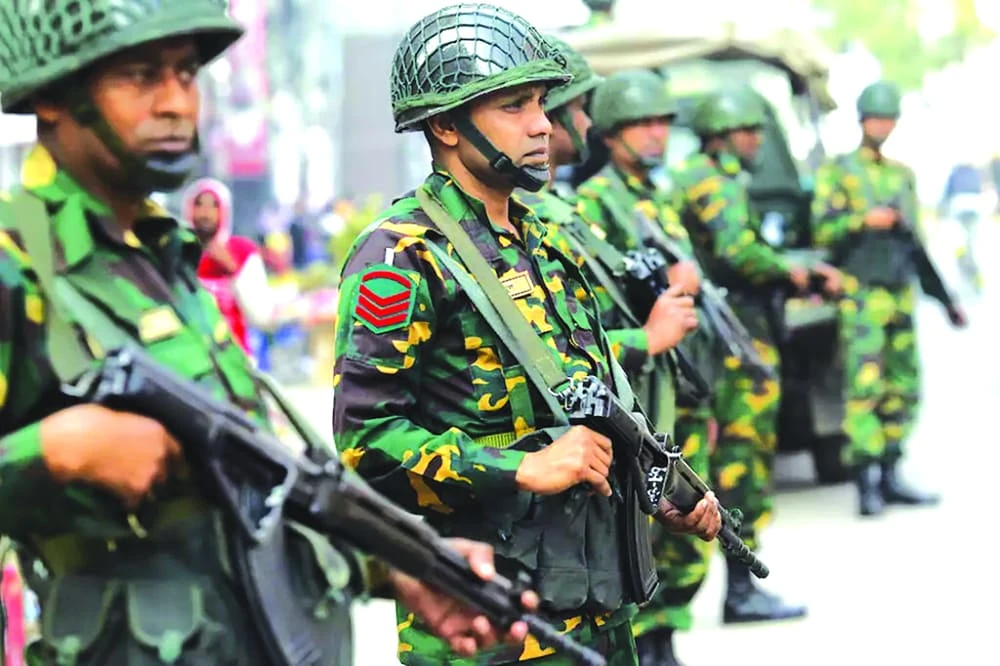
Border Patrol by the Bangladesh Army
As the General Officer Commanding (GOC) responsible for the
security of the Chittagong Hill Tracts, I had the opportunity to meet and
interact with Santu Larma on many occasions in both formal and informal
settings. From those interactions, I found him to be a determined and
principled leader with a deep sense of commitment to the Chittagong Hill Tracts
and its people. At the same time, I felt that his leadership style was somewhat
authoritarian and inflexible, and that he did not always succeed in projecting
himself as a leader representing the aspirations of all ethnic communities in
the region.
The Security World: Critics argue that the prolonged absence of elections to the Chittagong Hill Tracts Regional Council has weakened democratic legitimacy in the region. How do you assess the implications of this for governance, public trust and long-term stability?
Maj General Ashab: Regular elections are fundamental to democratic
legitimacy and institutional credibility. The prolonged absence of elections to
the Chittagong Hill Tracts Regional Council and the three Hill District
Councils has inevitably weakened public confidence in these institutions and
reduced their accountability to the people they are meant to serve.
The election of the Regional Council and the Hill District
Councils has long been overdue. One of the principal obstacles has been
disagreement over the electoral roll, particularly regarding the composition of
the voter list. Pending judicial proceedings and objections to the latest
National Voter List have further delayed the process. Unless these issues are
resolved through broad political consensus, democratic institutions cannot
function as intended.
As the General Officer Commanding (GOC) responsible for the security
of the Chittagong Hill Tracts, I had several opportunities to discuss these
issues with Mr.Santu Larma. On one occasion, during an informal meeting, I
suggested that he consider accepting the proposal put forward by the United
Nations Development Programme (UNDP) as an interim arrangement to facilitate
elections. The proposal was designed to ensure that the Chairmanship of both
the Regional Council and the Hill District Councils would remain with his
party, while allowing the democratic process to move forward before further
fragmentation of the political landscape and the emergence of additional
reformist factions.
From my discussions with him, I found that he remained
apprehensive about the possible impact of using the National Voter List,
believing it could eventually lead to Bengali political dominance. However,
under the UNDP proposal, only about 9 to 11 members from the Bengali community
were expected to be elected to councils comprising 25 and 34 members
respectively, while the positions of Chairman of both the Regional Council and
the Hill District Councils were reserved for members of the hill communities.
In my view, this formula could have served as a practical interim solution
until a broader political consensus on the electoral process was achieved.
After the completion of the pending judicial proceedings and due
consideration of the objections to the voter list, elections to the Regional
Council and the Hill District Councils should be held on a priority basis.
Ultimately, elected institutions enjoy far greater legitimacy than prolonged
interim arrangements. Timely, credible, and inclusive elections would
strengthen democratic governance, restore public confidence, and contribute
significantly to the long-term implementation of the Peace Accord.
The Security World: During your time in the Hill Tracts, what do you believe were the biggest misconceptions held by policymakers in Dhaka about the realities on the ground, and have those misconceptions changed today?
Maj General Ashab: A few misconceptions may have existed among
policymakers in Dhaka over the years. The foremost was the tendency to view the
Chittagong Hill Tracts primarily through a security lens rather than as a
complex political, historical, social, economic, and administrative issue.
While security was undoubtedly an important dimension, it was never the whole
picture.
Successive governments have taken significant initiatives to
promote peace and development in the CHT, including the establishment of the
Ministry of Chittagong Hill Tracts Affairs, appointing a representative from
the hill communities to lead the ministry, conducting negotiations that
culminated in the Peace Accord, and undertaking various development programmes.
These initiatives deserve recognition. However, greater emphasis should have
been placed on the inclusive integration of all stakeholders in the region.
One important reality that cannot be overlooked is the presence of the Bengali population, which now constitutes nearly half of the total population of the Chittagong Hill Tracts. Any sustainable political framework must take into account the legitimate rights, concerns, and aspirations of both the hill communities and the Bengali residents. Lasting peace cannot be achieved by excluding any major stakeholder.

Chittagong Hi l Tracts (CHT).
Another shortcoming has been the limited growth of mainstream
national political participation in the region, while politics has remained
largely confined to regional organisations. A stronger presence of mainstream
democratic institutions could contribute to broader political integration and
national cohesion.
There has also been an excessive reliance on the security forces,
particularly the Bangladesh Army, to manage issues that increasingly require
political, administrative, legal, and developmental solutions. While the armed
forces have made an invaluable contribution in maintaining peace, stability,
and creating the security environment necessary for development, civil
administration and other government and semi-government institutions should
gradually strengthen their capacity to address the region’s challenges from a
civilian governance perspective.
Likewise, various commissions and committees established to
oversee implementation of the Peace Accord should function more proactively and
effectively. The practice of selecting the top leadership of the Regional
Council and the Hill District Councils from Dhaka should also be discontinued,
allowing local democratic processes to determine their leadership.
In my view, the way forward lies in an integrated approach one
that combines security, political dialogue, democratic governance, development,
justice, and the meaningful participation of all communities. Only such an
inclusive approach can ensure durable peace, stability, and harmony in the
Chittagong Hill Tracts.
The Security World: The security situation in the Hill Tracts has
evolved considerably, with the emergence of new armed groups alongside
longstanding political actors. How has this changed the dynamics of the region,
and what challenges does it pose for lasting peace?
Major General Ashab: The security environment in the Chittagong
Hill Tracts today is fundamentally different from that of the 1980s and 1990s.
During the insurgency, the government confronted essentially one principal
armed organisation—the Parbatya Chattagram Jana Samhati Samiti (PCJSS) and its
armed wing, the Shanti Bahini. Following the 1997 Peace Accord, the United
People’s Democratic Front (UPDF) emerged in opposition to the Accord, rejecting
the negotiated settlement.
As the implementation of the Peace Accord progressed slowly and
political differences widened, both the PCJSS and the UPDF experienced internal
divisions, leading to the emergence of reformist and splinter factions. More
recently, the appearance of new armed groups such as the Kuki-Chin National
Front (KNF) and the Marma Liberation Front (MLF) has added further complexity
to the security landscape. The presence of multiple armed organisations with
differing political objectives, competing territorial interests, and local
rivalries has significantly complicated the situation.
Unlike the past, when there was a single principal negotiating
counterpart, the current fragmentation has fuelled inter-group competition,
extortion, kidnappings, targeted killings, and violent clashes, with ordinary
residents often becoming the primary victims rather than the state itself. This
has made conflict management and peacebuilding considerably more difficult.
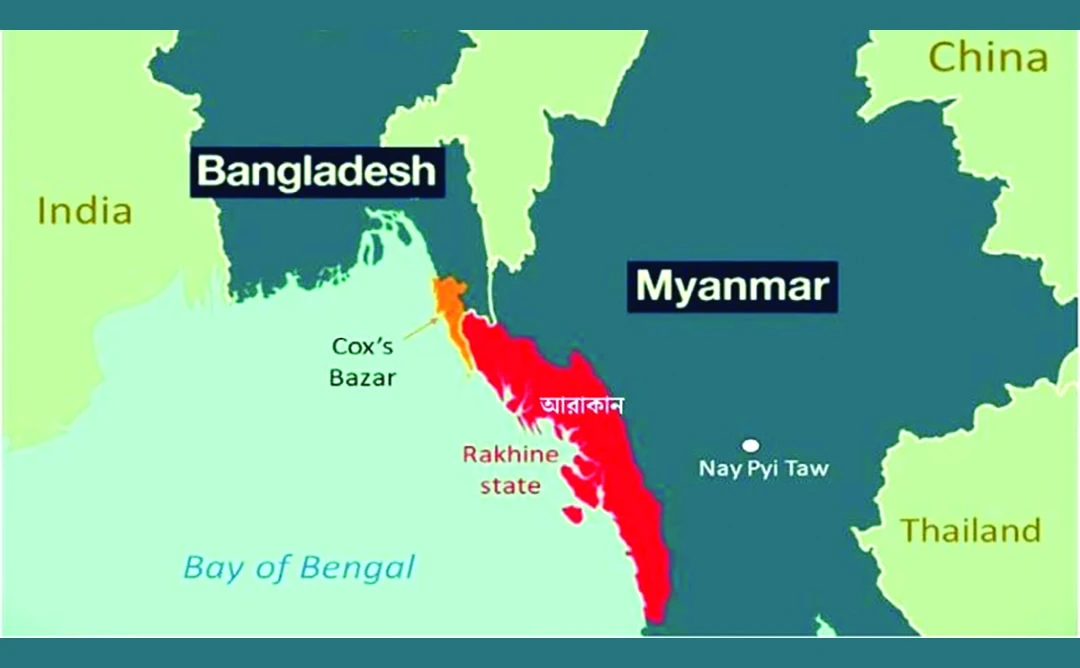
The security environment in the CHT is also influenced by wider
regional dynamics. Developments along the Bangladesh–Myanmar border,
particularly the activities of the Arakan Army in Myanmar, together with
instability in the adjoining Indian states of Mizoram and Nagaland, have direct
implications for the security of the Chittagong Hill Tracts. In addition, the
prolonged presence of a large number of Rohingya refugees in southeastern
Bangladesh has added another layer of security complexity by increasing
pressures on law enforcement, border management, and regional stability. These
interconnected challenges require close regional cooperation, effective border
management, and sustained intelligence coordination.
The Security World: If Santu Larma were no longer part of the political landscape, what do you think would happen next? Would his absence create an opportunity for a new political settlement, or could it lead to greater uncertainty and fragmentation?
Major General Ashab: No individual is indispensable in politics.
However, leadership transitions can create both opportunities and uncertainties.
Mr.Santu Larma, now in his eighties and facing age-related health challenges,
remains the central political figure with whom the Government negotiated and
signed the historic Chittagong Hill Tracts Peace Accord. His stature and
symbolic importance in the peace process cannot be overlooked.
Despite nearly three decades since the signing of the Accord, the
level of peace, political stability, and institutional progress that many had
hoped for has yet to be fully realized. During one of my conversations with
him, I remarked, “You are serving as the Chairman of the Regional Council with
the status of a state minister. If a permanent solution is not achieved during
your lifetime, it may become even more difficult in the future.” His response
was brief, but his expression conveyed a profound sense of the complexity and
burden of the challenge. That moment left a lasting impression on me.
His eventual departure from active politics could create
opportunities for a new generation of leaders to emerge with fresh ideas and
greater flexibility. Equally, it could intensify competition among existing
political and armed factions if an orderly and widely accepted leadership
transition does not occur. Based on my personal interactions with him over the
years, I found him to be a determined and committed leader, though at times
somewhat authoritative, inflexible, and not always sufficiently farsighted in
adapting to changing political realities. His absence could therefore create a
leadership vacuum, making an already fragmented political and security
environment even more volatile and complex.
Ultimately, the long-term peace and stability of the Chittagong
Hill Tracts should depend not on any single individual but on strong democratic
institutions, inclusive political dialogue, effective governance, and the
confidence of all communities in the peace process.
The Security World: Many young people living in the Chittagong Hill Tracts have grown up after the signing of the Peace Accord and have experienced a very different political reality from previous generations. What aspirations and frustrations do you see among this generation, and how should the state respond?
Maj General Ashab: Most young people in the Chittagong Hill Tracts
have no personal memory of the insurgency. Their priorities are education,
employment, skills development, connectivity, business opportunities, and equal
participation in national life. At the same time, many remain concerned about
identity, land rights, and political representation. Government policies should
therefore focus on creating opportunities while respecting the unique cultures,
traditions, and heritage of the diverse ethnic communities.
Although the Chittagong Hill Tracts constitutes nearly one-tenth
of Bangladesh’s land area, its population is only about one-hundredth of the
country’s total population. The region possesses enormous, untapped potential.
Its breath-taking natural beauty, hills, forests, rivers, lakes, and rich
cultural diversity offer tremendous opportunities for eco-tourism, adventure
tourism, and cultural tourism.
If the younger generation is equipped with appropriate education,
vocational training, and entrepreneurial support and is meaningfully integrated
into the tourism and hospitality sectors, the dividends could be substantial.
Such an approach would generate employment, reduce poverty, and create
sustainable livelihoods. Equally important, greater economic opportunity would
reduce the attraction of joining armed groups and contribute to lowering extortion,
kidnappings, human trafficking, drug trafficking, and other forms of criminal
activity.
In my view, investing in the youth is one of the most effective
long-term strategies for securing lasting peace and prosperity in the
Chittagong Hill Tracts. When young people see a future through education,
employment, and entrepreneurship rather than conflict, they become the
strongest stakeholders in peace and development.
Major General Ashab: The Government’s three immediate priorities
should be pursued simultaneously rather than sequentially, as they are closely
interconnected.
First, resolve the land issue. Land remains the most sensitive and
complex issue in the Chittagong Hill Tracts. In accordance with the Peace
Accord, a Land Commission headed by a Judge of the High Court was established
to resolve land disputes. However, during my three-year tenure as the General
Officer Commanding (GOC), I witnessed very little tangible progress. I still
recall one meeting in my office when the Chairman of the Land Commission
expressed his frustration that meetings often could not proceed because several
members failed to attend despite being formally notified. That experience
reflected the institutional challenges confronting the Commission.
The land system in the CHT is fundamentally different from that of
the plains, encompassing several distinct categories of land under both
customary and statutory arrangements. A comprehensive, scientific, and
transparent land survey is therefore essential to identify the different
categories of land and establish an accurate record. Unfortunately, such a
survey has faced resistance from various quarters, often because of vested
interests. I also formed the impression that some traditional
institutions—including Circle Chiefs, Headmen, and Karbaris—were reluctant to
support a comprehensive survey, fearing that it might reduce their traditional
influence over land administration, although their customary authority applies
only to specific categories of land. At the same time, the settlement of
Bengali residents and the issuance of Kabuliyat (registered land titles) have
further complicated the question of land ownership. A stronger, more effective,
and adequately empowered Land Commission is therefore indispensable for
resolving these longstanding disputes in a fair and credible manner.
Second, strengthen democratic governance. Elections to the
Regional Council and the Hill District Councils should be held as early as
practicable after resolving the outstanding legal and electoral issues. Regular
elections are essential to ensure accountability, transparency, public
confidence, and effective local governance.
Third, promote inclusive and sustainable economic development.
Greater investment in infrastructure, education, healthcare, tourism,
agriculture, information technology, and employment generation should be
pursued while preserving the region’s unique environment and cultural heritage.
The Chittagong Hill Tracts possesses enormous, untapped potential, and
development should benefit all communities equitably.
In addition to these three immediate priorities, I would also
recommend several complementary measures:
* Strengthen the capacity of the civil administration, law
enforcement agencies, and paramilitary forces through appropriate training and
resources so that they can progressively assume greater responsibility for
governance and security, reducing excessive dependence on the military.
* Enforce the rule of law firmly against all armed groups involved
in extortion, kidnapping, illegal arms, narcotics, human trafficking, and other
anti-state or criminal activities.
* Encourage greater participation of mainstream national political
parties and promote regular visits by national political leaders and other
eminent personalities to engage directly with the people of the Chittagong Hill
Tracts.
* To accelerate balanced and coordinated development, the
Chittagong Hill Tracts may be designated as an Exclusive Development Zone of
Bangladesh. A high-level regulatory and coordinating body comprising
experienced administrators, development experts, and representatives of
relevant stakeholders could oversee and harmonise all major development
initiatives, including those undertaken by government agencies, the United
Nations Development Programme (UNDP), other international development partners,
and non-governmental organisations.
Only through an integrated approach—combining effective
governance, equitable land management, democratic participation, security, and
inclusive development—can the Chittagong Hill Tracts achieve lasting peace,
stability, and prosperity.
The Security World: How far India has helped the PCJSS terrorists when they were killing civilians and extorting from the ordinary people of the Chittagong Hill Tracts?
Maj General Ashab: Historically, it is well documented that during
different phases of the insurgency, members of the Shanti Bahini operated from
sanctuaries across the Bangladesh–India border. Bangladesh consistently
maintained that the insurgents received varying degrees of logistical support,
training, shelter, and freedom of movement from Indian territory.
The porous international border, coupled with the difficult
terrain of the Chittagong Hill Tracts and India’s north-eastern states, enabled
insurgent movement and posed significant operational challenges for the
Bangladesh security forces throughout much of the insurgency.
By the mid-1990s, however, India’s strategic outlook had evolved.
Stability in the Chittagong Hill Tracts increasingly aligned with India’s own
security interests, particularly in relation to insurgencies in its
north-eastern states. This convergence of interests created a more favourable
environment for dialogue and contributed to the successful conclusion of the
1997 Chittagong Hill Tracts Peace Accord.
The experience demonstrates that lasting peace in the Chittagong
Hill Tracts depends not only on sound domestic policies but also on
constructive cooperation and mutual trust between Bangladesh and its
neighbours.
The Security World: Do you think the CHT peace treaty is actually
unconstitutional? Do we need a new settlement in the hills to properly
integrate the hill people in the mainstream?
Major General Ashab: The constitutionality of certain provisions
of the Chittagong Hill Tracts Peace Accord has been debated since it was
signed. Some provisions have faced legal challenges, while others have been
fully or few are partially implemented because of constitutional, legal, or
administrative considerations.
The Peace Accord was signed almost three decades ago in the
context of the prevailing political, security, and socio-economic realities of
that time. It represented a major breakthrough and a significant national
achievement, bringing an end to a prolonged armed conflict that had caused
immense loss of life, insecurity, and uncertainty in the Chittagong Hill
Tracts. One of its greatest strengths was that it was negotiated and signed
between the Government of Bangladesh and the PCJSS without the involvement of
any third party, demonstrating Bangladesh’s ability to resolve a complex
internal conflict through political dialogue.
Rather than debating, I believe the more constructive approach to
review it objectively in the light of nearly three decades of implementation
and the realities that have since emerged. The social, cultural, demographic,
political, and security landscape of the Chittagong Hill Tracts has changed
considerably during this period.
Any future framework should therefore remain faithful to the
spirit and philosophy of the Peace Accord while taking into account these
evolving realities. It must uphold the Constitution of Bangladesh, preserve
national sovereignty and territorial integrity, protect the legitimate rights
and cultural identity of the indigenous communities, ensure equal rights and
security for Bengali residents, strengthen democratic governance, and create
conditions for lasting peace.
The objective should not necessarily be to negotiate an entirely
new settlement, but rather to revisit, refine, and update the existing
framework through broad consultation and national consensus so that it reflects
present-day realities and commands the confidence of all stakeholders.
Major General Ashab: My association with the Chittagong Hill
Tracts (CHT) began immediately after my commissioning from the Bangladesh
Military Academy in December 1979. Over the course of my military career, I had
the privilege of serving in the CHT in various command and staff
appointments—from a young platoon commander to Commanding Officer of an
infantry battalion during the height of the insurgency, and later as the
General Officer Commanding (GOC) of the operational division in the
post-conflict period.
As GOC, I commanded nearly 50,000+ personnel drawn from the Army,
paramilitary forces, and other security agencies. From the outset, I
articulated my Command Philosophy, founded on three guiding principles: Peace,
Harmony and Development. I made it clear that while maintaining security and
safeguarding national sovereignty remained our primary responsibility, enduring
peace could only be achieved through professionalism, respect for the rule of
law, and the confidence of the people.
I consistently reminded my commanders that peace—not victory—was
our ultimate objective. We were serving our own nation and our own people.
Every citizen, irrespective of ethnicity, deserved equal dignity, security, and
protection under the Constitution. I therefore placed particular emphasis on
building trust with all communities and fostering communal harmony.
I am grateful that my tenure was marked by relative stability,
improved civil-military relations, and significant development initiatives.
Following a detailed briefing to the Head of the Govt, I also integrated the
activities of all intelligence agencies under a unified operational framework,
which enhanced coordination and operational effectiveness.
Looking back, I consider my command in the Chittagong Hill Tracts along with the entire south eastern part of Bangladesh is one of the most challenging and fulfilling assignments of my military career. It reaffirmed my conviction that while military capability is indispensable for ensuring national security and sovereignty, lasting peace can only be secured through justice, trust, inclusive development, and good governance.
Interview was taken by Rabb Majumder,
Editor, The Security World.
আরও পড়ুন -