










Editor & Publisher: Rabb Majumder
House # 05 (2nd Floor, 2-C), Road# 04, Banani DOHS, Dhaka - 1206
Phone: +8801715822782
Phone (Advertisement): +8801712863234
Email: rabb.h.majumder@gmail.com, info@securityworldbd.com

US-China Rivalry and Japan’s Strategic Role
Yukio Hatoyama
08:19, 14 October, 2026
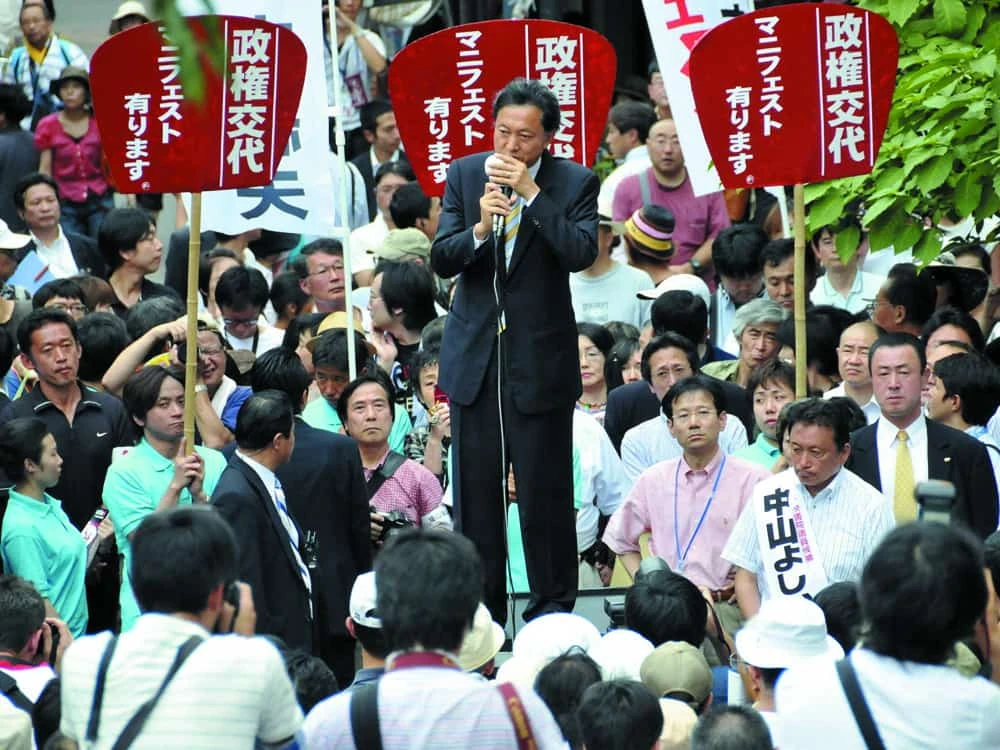
is a leader of Japan’s Democratic Party and a former Prime Minister of Japan. Born into a prominent political family, Hatoyama was first elected to parliament in 1986. He studied engineering at the University of Tokyo and earned a PhD from Stanford University. Under his leadership, the Democratic Party won the 2009 election, ending the long-standing rule of the Liberal Democratic Party (LDP). He served as Prime Minister of Japan from 2009 to 2010.
President Donald Trump was the first US president to bring
the US-China conflict into the open. His successor, President Joe Biden, has
consistently indicated that the rift between the two countries can no longer be
closed. The tone of the Biden administration’s Interim National Security
Strategic Guidance, released on March 3, 2021, suggests that, differences in
rhetoric aside, little distinguishes the new administration’s position on China
from that of the Trump administration. Footnote1 Meanwhile, there has been no
change in behavior on the part of China since the Biden administration took
office. As the US-China rift is essentially the result of a “Thucydides trap,”
the lack of dramatic change in US-China relations with the incoming
administration comes as no surprise. However, even if the conflict between the
United States and China is inevitable, we cannot sit back and watch as tensions
escalate, for there is no doubt that any zero-sum competition between the two
global powers would undermine peace and prosperity in East Asia and throughout
the world.
On April 16, 2021, Japanese Prime Minister Yoshihide Suga
held meetings with President Biden in Washington DC and issued the US-Japan
Joint Leaders’ Statement: “U.S.-Japan Global Partnership for a New Era.”
Footnote2 I would like to take this opportunity to suggest a series of
proposals aimed at reining in tensions between the United States and China,
along with my personal view on the role that Japan should play.
Avoid the Democratic
Values Trap in Foreign Affairs
I will begin this discussion with three requests to the
Biden administration. First, the Biden administration should not over-assert
values, including democracy, in foreign affairs. To be sure, I am truly hopeful
that President Biden can rebuild American democracy, and I offer my support
toward that. The Biden administration stated, “Free societies have been
challenged from within by corruption, inequality, polarization, populism, and
illiberal threats to the rule of law.”Footnote3 To some extent, this also
applies to Japan. The situation in the United States is not a problem that has
nothing to do with us. Having said that, the Biden administration ought to
proceed with great caution when deliberately connecting its effort to rebuild
democracy at home with the struggle between democracy and autocracy taking
place on a global scale.
The Biden administration
should not over-assert democracy in foreign affairs
The greatest concern today, not only for the United States
but for diplomats the world over, is how to manage US-China relations. Yet, by
seeking to remain faithful to values such as democracy and human rights, we run
the risk of condemning and excluding those who do not share these values. The
other side also responds in the same way. Ultimately, the more the United
States emphasizes value-oriented diplomacy, the more acute the US-China
conflict becomes. For example, if the United States emphasizes only policies
that seek to ostracize China on the basis of values, such as the Quadrilateral
Security Dialogue (Quad) and the Free and Open Indo–Pacific (FOIP), China will
view its actions as coercive. Valuing face, the Chinese are more likely to dig
in their heels than acquiesce to such demands.
If the United States excessively emphasizes democracy and human rights, it runs the risk of alienating not just China and Russia but also other non-democratic countries. The Interim National Security Strategic Guidance appeared to divide the world into two camps: “those who argue that, given all the challenges we face, autocracy is the best way forward” and “those who understand that democracy is essential to meeting all the challenges of our changing world.”Footnote4 According to the Varieties of Democracy (V-Dem) project, headquartered at the University of Gothenburg, Sweden, as of 2019, there were a total of 92 countries between “closed autocracies” and “electoral autocracies” in the world.Footnote5 This amounts to 51 percent of the world’s countries and 54 percent of the global population. If these countries were to strengthen their ties with China and Russia, the Biden administration would find it difficult to achieve the diplomatic goals it intends to pursue. The signs are already apparent. On March 27, China and Iran concluded a 25-year comprehensive strategic partnership agreement on economic and security cooperation. Chinese Foreign Minister Wang Yi has also visited countries such as Saudi Arabia, Turkey, and the United Arab Emirates.

Japanese Prime Minister Yukio Hatoyama with US President Barack Obama in Tokyo, November 2009. Photo: Net
The essence of diplomacy, I believe, is to explore how well
countries with different values can get along. If the Biden administration
insists on competing with China, it may do so. I am not saying that the Biden
administration should refrain from criticizing China regarding the various
problems it faces. However, before it does so, the US government ought to
inform China that peaceful coexistence between the two countries is a basic
premise on which competition operates and that the Chinese Communist Party is
the US government’s only equal counterpart in China. At the very least, the US
government should declare its acceptance of the “one-China” policy as
traditionally defined, so as to avoid any misunderstanding. The US-Japan Joint
Leaders’ Statement on April 16, 2021 mentioned “Taiwan” for the first time
since 1969.Footnote6 Despite its mild reference, I am afraid the fact that the
word “Taiwan” appeared in the document is sending a counterproductive message
to Beijing.
Better Understand
Dilemmas of Interdependence Faced by Allies
Second, the Biden administration should not impose its own
agenda on US allies and partners when pursuing its strategy on China. The Biden
administration has declared its intention to mobilize allies and partners to
oppose authoritarian countries such as China and Russia. In doing so, it
appears to be seeking to differentiate itself from the Trump administration,
which pursued an “America First” approach (although it is my understanding
that, by the latter years of the Trump administration, the US government had
already begun lobbying Japan as well as other allies and partners to support
the effort to oppose China). In any case, with the return of a “familiar face”
to the diplomatic stage, the US government under the Biden administration will
be even keener to form a united front against China with its allies.
It may well be true that allies of the United States face
considerable problems in their relations with a newly ascendant China. In the
basic sense, allies of the United States have much to gain from strengthening
their hand against China by acting in concert with the United States. Yet at
the same time, to ensure their own existence, these allies and partners cannot
simply choose between the United States and China while abandoning the other.
The context is very different from the Cold War.
Allies and partners
cannot simply choose between the United States and China
Take the case of Japan, for example: in 1985, trade with the
United States accounted for 29.8 percent of total trade, while trade with the
Soviet Union and Central and Eastern Europe accounted for only 1.6 percent. In
2020, trade with the United States accounted for 14.7 percent, while trade with
China (including Hong Kong) reached 26.5 percent.Footnote7 In 2019, before the
COVID-19 pandemic, just 1.72 million people from the United States visited
Japan, compared to almost 11.89 million Chinese people (including
Hongkongers).Footnote8
The situation is also far from simple in the security
domain, where it is often taken for granted that the interests of Japan and the
United States coincide. Many people in Japan believe that US military bases are
stationed here to defend our country, not least in the event of an emergency
involving the Senkaku Islands. In fact, however, the most probable scenario for
a military clash between the United States and China is in the event of an
emergency involving Taiwan. Almost all Japanese would not entertain the notion
that US bases in Japan might be used in the service of Taiwanese independence
or that Japan might fight for Taiwan in such a contingency. Quite the opposite
is true: in recent years, the US government appears to have implicitly
encouraged Taiwan to take steps toward independence. Despite its democratic
credentials, most in Japan would definitely be unwilling to lend its support to
such a move.
On November 15, 2020, 15 countries in East Asia and the West
Pacific signed the Regional Comprehensive Economic Partnership (RCEP), and on
December 30, the European Union and China agreed in principle to conclude a
comprehensive agreement on investment (the CAI). It would be a fatal error for
either the United States or China to interpret such developments as indications
that the countries involved have “chosen” China and “abandoned” the United
States. It is, however, a clear indication that these countries do intend to
coexist with China in mutual prosperity. If both the United States and China
listened to their allies and partners, many of whom are unsure of how to manage
the complex array of interests that span the US-China rift, this would also
play a positive role in reining in the conflict.
Re-Engage China on
Shared Challenges
Third, the United States ought to pursue cooperation with China across a wider range of fields. In the recent US-China talks in Alaska, US Secretary of State Antony Blinken stated, “The United States relationship with China will be competitive where it should be, collaborative where it can be, adversarial where it must be.”Footnote9 The remark itself may seem to be stating the obvious. The problem here is that the US government is now seeking to narrow down the range of fields in which collaboration is possible while also further emphasizing competition with China. The areas where collaboration is possible are probably those such as global warming and pandemic countermeasures. Yet, when one hears many provocative comments by high-level US government officials, one cannot help but feel that the administration is offering a handshake in one hand while brandishing a stick in the other. When the overall atmosphere is unpleasant, achieving cooperation in certain discrete fields is no easy task. If it intends to appropriately control the conflict with China, the US government should call on its counterpart to collaborate across a wider range of fields. It should only declare a transition to the dimension of competition if China does not respond. Such an approach would also make it easier for allies to act in unison with the United States.

The Prime Minister Meets with Vice President Xi Jinping of the People's Republic of China (The Prime Minister in action). Prime Minister of Japan and his Cabinet. Photo: Japan.kantei.go
The Trump administration was highly critical of the
strategic engagement policies pursued by previous administrations vis-à-vis
China. This helped spur a global wave that equated engagement with being
“weak-kneed” toward China. Past engagement policies may not have resulted in
the kind of changes, at the kind of pace, that were expected of Beijing.
However, it would also be simplistic and incorrect to argue that China has
completely rejected the ways of international order. The most obvious proof of
this is the change in China’s position on climate change issues. The US
government should not give up on its engagement strategy; it should focus its
efforts on reforming it.
The Biden administration’s move to underplay “collaboration”
and “engagement” and emphasize “competition” in its policy on China also seems
to camouflage a sense of frustration with the perception that the United States
may be caught and overtaken by China as a great power. The United States should
calm down. It is improbable that China’s national power will completely
outstrip the United States, allowing China to run away with the race. In 2019,
the United States spent almost US$719 billion on its military, whereas China’s
military spending stood at around US$266 billion.Footnote10 As of January 2020,
the United States has 5,800 nuclear warheads compared to China’s 320.Footnote11
Moreover, the United States has a network of allies that stretches around the
globe. In the future, China’s population is set to age much faster than that of
the United States, and the country will have to work on overcoming the
so-called “middle-income trap.” The United States has considerable advantages
over China in the medium to long term with regard to population dynamics and
economic growth potential. As long as China remains autocratic, the renminbi is
unlikely to replace the US dollar as the dominant global currency.
My thesis is that the current state of China “catching-up”
with the United States will continue in the long term, until the middle of this
century. In other words, the United States has enough time and space to
re-engage with China and explore possibilities for collaboration under a
reformed policy of engagement. This discussion will return to two specific themes,
apart from global warming and the pandemic, around which the United States and
China ought to collaborate.
China Must Exercise
Responsibility as a Great Power
In a telephone conversation on February 10, 2021, President
Xi Jinping noted that “confrontation between China and the U.S. would certainly
be a disaster for both countries,” offering cooperation to President
Biden.Footnote12 What Xi Jinping said is quite correct. Yet, few in America are
willing to take Xi’s words at face value. At least half of the responsibility
for this lies with China. An effective resolution to the US-China conflict
would also require change on the part of China.
Over the past 30–40 years, China has achieved tremendous
growth to become a great power that now vies for the top spot globally. Yet, it
may be China itself that least understands how great its stature has become.
China does not understand the anxieties and frustrations of the United States,
nor does it attempt to do so. Its transformation into a major power has benefited
greatly from the global system established by the United States since World War
II. China has taken this as a given and seemingly intends to continue to reap
these benefits, at no cost to itself, in the future. This does not bode well.
China must accept, in a more visible way, much greater responsibilities than it
currently does. The most effective way for China to promote itself would be to
voluntarily forgo the special and differential treatment (S&DT) dispensed
by the World Trade Organization (WTO). China is the now the world’s
second-largest economy and has successfully invested effort in eradicating
poverty under the leadership of President Xi Jinping. Brazil, whose Gross
Domestic Product per capita is lower than China’s, has already begun to forego
S&DT at the WTO. If China decides to do so, the international community
will unquestionably see this as China having finally expressed its commitment
to becoming a responsible great power.
China must accept
much greater responsibilities than it currently does
The United States is right to assert that competition with
China, now a major power, should take place under equal conditions. While
correctly evaluating the fact that the Chinese government has made steady
efforts with regards to the protection of intellectual property and cracking
down on cyberattacks, I wish it to further strengthen and accelerate measures
in these domains. Moreover, in fields where the United States wishes to
collaborate with China, China should dial back its political maneuvering and endeavor
to prioritize deals with the United States. The only viable way to rebuild the
lost trust between the two countries and replace competition and conflict with
cooperation as the cornerstone of bilateral relations is to move toward
collaboration, one step at a time.
The “wolf warrior diplomacy” that drew attention in 2020
greatly undermined China’s soft power in the international community. Whether
China had a valid point, the use of this rhetoric and posting of tweets that
make one question the character of its leaders is unpleasant to see. On
balance, China lost far more by creating additional enemies around the world
than it gained from boosting national prestige at home. If China continues to
flaunt its newly acquired power with further contemptuous public diplomacy,
public opinion in the United States and elsewhere could easily turn against it.
This would draw China into a succession of unnecessary confrontations with many
countries, including the United States, thereby damaging its own position.
Beyond Climate and
Pandemics: Priorities for US-China Engagement
Beyond cooperation in commonly cited global issues such as
climate change and pandemics, the United States and China should engage each
other in two strategically critical areas: controlling decoupling in
information and communications technology and managing a new arms race in East
Asia, including the deployment of land-based intermediate-range missiles.
Create Global
Standards for Information and Communications Technology
In today’s world, the idea that the fate of competition
among countries hangs on advanced technology is already common sense. In the
field of information and communications technology (ICT), the Trump
administration introduced the new method of barring Chinese firms from the US
market as a security measure. However, this move may also have been motivated
by critical concerns that the United States had fallen behind in the field.
Similarly, the Biden administration appears to be trying to collaborate with
other like-minded democracies to bar Chinese businesses from their markets.
However, this is a risky path to tread. In the ICT domain, the United States
and China should aim for coexistence.
If the US government’s approach succeeds, China may find
itself in trouble, in the short term at least. However, just as the United
States is unwilling to allow China a technical edge in this field, China is
also intent on refusing the United States a technology monopoly. In May 2020,
Xi Jinping’s leadership announced its new “dual circulation” economic strategy.
The new model aims to internalize production in high-tech industries to hedge
against further decoupling from the United States. With a population of around
1.4 billion, the Chinese economy is sufficiently large. China also controls
large swaths of markets in parts of Africa, Southeast Asia, Eastern Europe, and
Latin America. There is a distinct possibility that in the future, separate
Chinese and American technology standards will exist side by side in the ICT
field, and Chinese businesses will be able to procure parts through supply
chains within China or with pro-China countries. Needless to say, if such a
bloc formation occurs, both consumers and businesses will suffer economically.
The formation of blocs in the ICT field would also have repercussions for other
fields, greatly destabilizing the world in which we live. Even if China failed
to establish its own technology standards and supply chains in the digital
domain, if it were to push back in domains of trade or investment other than
the digital economy, the impact suffered by the United States and its allies,
Japan included, would be severe. I, for one, would be unwilling to accept such
risks and uncertainty.
There is a distinct
possibility that separate technology standards will exist in the ICT field
It is an undeniable fact that Chinese firms have a
competitive edge in both price and performance in the field of data economy. If
the United States wishes to exclude Chinese businesses and force its allies to
toe the line, the US government would need to provide clear explanations, but
in actual practice, its reasons are ambiguous and inadequate. Problems that
could potentially occur in the realm of national security would not be limited
in scope to one specific country. It would be fairer to create technology
standards for high-tech communication equipment as well as unified global
standards for cybersecurity, and to develop mechanisms that would not prevent
the use of any country’s products and services, provided those standards were
met. It is also essential to develop a global system to monitor whether
agreed-upon standards are being complied with. If such mechanisms could be
created, developing countries that do not have the leeway or necessary
technology to invest resources in cybersecurity would also be able to reap the
benefits of digitalization with peace of mind.
On September 8, 2020, China launched a Global Initiative on
Data Security, calling on countries to coexist and co-prosper in the high-tech
economy. China considers the ideas proposed in the initiative as only abstract
principles, leaving sufficient room for China’s arbitrary interpretation. It
would be difficult to adopt these as international norms without considerable
amendments. It is worth noting, however, that Chinese Foreign Minister Wang Yi
called on countries to “develop a set of international rules on data security
that reflect the will and respect the interests of all countries through
broad-based participation.” Footnote13 It would be unwise to ignore this bid.
Rather than prioritizing joint rulemaking among democratic
countries, the Biden administration should call upon China to participate, from
an early stage, in the task of developing shared norms and standards for
cutting-edge technology. Needless to say, China must demonstrate the highest
possible degree of flexibility. Otherwise, its participation in negotiations
might be seen as a delaying tactic, potentially moving the world toward the
worst-case scenario of an excluded China. In any case, the negotiations will
not be easy. Middle powers such as Japan, South Korea, and Europe, which have
significant technological and production capabilities in the ICT domain, will
be required to usher both the United States and China in the direction of an
international agreement.
Pursue Missile
Disarmament in East Asia
The United States and China carry the greatest share of
responsibility for the future of security in East Asia. They, together with
Japan, must make concerted efforts to develop a missile disarmament or arms
control system in the region.
In East Asia and the West Pacific, China has outstripped the
United States in its deployment of ground-launched missiles in the 500–5,500 km
range.Footnote14 Because the United States was party to the Intermediate-Range
Nuclear Forces (INF) Treaty that prohibited ground-launched missiles with a
range of 500 to 5,500 km, it could not deploy missiles of that range in the
region. Since withdrawing from the INF Treaty in August 2019, the United States
seeks to deploy ground-launched missiles that had been banned under the INF
Treaty in East Asia beginning in the mid-2020s in a bid to close the regional
missile gap with China.Footnote15 There is no justification for the fact that
China (and North Korea) already has an overwhelming number of missiles with a
range that covers neighboring countries such as Japan. However, if the United
States were to deploy multiple ground-based, intermediate-range (500–5,500 km)
missiles in the East Asia and West Pacific regions, China could be expected to
deploy additional missiles to match or exceed those of the United States, in
order to maintain its advantage. Russia is also preparing to respond to a
deployment of missiles in the region by the United States.
A chain reaction of security dilemmas would drive not only
North Korea, which is developing missiles for its own reasons, but the entire
East Asian region, including Japan and South Korea, in the direction of missile
expansion. As the events of World War I demonstrate, where weapons are concerned,
equilibrium of quantity does not always lead to strategic stability. I am
deeply afraid of a nightmare in which East Asia, in the future, becomes the
powder keg of the world.
There is a most pressing need, at least for the United
States, China, and Russia, to conclude an anti-missile treaty akin to the INF
Treaty in the East Asia and Western Pacific regions. However, frankly speaking,
even if the United States today adopted a similar policy to the “Double-Track
Decision” of the North Atlantic Treaty Organization (NATO) in December 1979—in
which NATO both threatened to deploy and offered negotiations to eliminate
intermediate-range missiles—the possibility of concluding an INF-style treaty
in Asia is extremely unlikely. Today’s China is not the exhausted Soviet Union
we saw toward the end of the Cold War. Although the Cold War saw parity
achieved between the United States and Soviet Union on the military front, the
United States is far ahead of China, at least with regard to strategic nuclear
weapons. Although the hurdles preventing the use of nuclear weapons are
significantly higher today than in the past, reducing China’s arsenal of
intermediate-range missiles amid growing tensions over Taiwan would pose an
existential problem for the Communist Party leadership.
The only way to make inroads is for Japan to play the role
of a mediator between the United States and China. Though the United States can
develop intermediate-range, ground-launched missiles, it would need to deploy
these missiles along the first island chain to use them effectively against the
Chinese Navy or inland missile squadrons. As the United States does not possess
territory in that area, the only option is to deploy missiles in the
territories of its allies and partners. Yet, the countries of East Asia are
generally unwilling to accept US missiles for fear of harming their relations
with China. The US government seems to have placed its hopes for deployment on
Japan, which is well-positioned geographically and whose government is vocal
about its intention to strengthen the alliance.
The only way to make inroads is for Japan to play the role
of mediator between the US and China
The reality, however, is that Tokyo is less than
enthusiastic about accepting US missiles. The Japan-US Security Treaty permits
the stationing of US forces in Japan, but if the Japanese government expressed
clear opposition to the deployment of US missiles and requested talks on the
matter, the United States would be unable to ignore its wishes. Japan can leverage
this position to pressure the United States and China to conclude an Asian INF
treaty. The Japanese government can suspend its decision about the deployment
of intermediate-range ground-launched missiles at US military facilities in
Japan for a certain period in the hope that negotiations between the United
States and China will take place. If China continues to reject the offer of
negotiations, the probability of missiles being deployed under its nose will
increase.
Still, if negotiations are left entirely in the hands of the
United States and China, they are likely to accomplish nothing. The Japanese
government should adopt the style of diplomacy employed by former Chancellor of
West Germany Helmut Schmidt to apply pressure to the United States and China—and,
where necessary, to Russia—and clear away obstacles to achieving disarmament or
an arms control system.Footnote16 If Japan took the lead in cooperation with
South Korea and the countries of Association of Southeast Asian Nations
(ASEAN), leverage on the United States and China would be significantly
increased. To this end, Japan must maintain a humble stance with regard to its
history of invasions and colonial rule.Footnote17 Missile expansion in East
Asia is also likely to have adverse effects in Europe, through developments in
Russia. Therefore, collaboration between Japan and European middle powers is
also extremely significant.
Place the Senkaku
Islands Off-Limits to Both Japan and China
Finally, I propose that the Japanese and Chinese governments
conclude a new agreement to manage the territorial dispute. This is not a
request to the United States. However, I will introduce it here as it may also
help nip in the bud potential military conflict between the United States and
China.
In response to requests by the Japanese government, the US
government has repeatedly expressed the view that Article 5 of the Japan-US
Security Treaty applies to the Senkaku Islands. Yet, this does not mean that
the US military would fight against the Chinese army in the event of a struggle
in the Senkakus under any circumstances. Moreover, despite the declarations of
President Obama and Trump that the treaty “applies to the Senkaku Islands,”
there has been no obvious sign of decrease in the number of intrusions by the
China Coast Guard into territorial waters around the Senkaku islands.Footnote18
Although Japan’s and China’s coast guards are, at this moment, taking a
judicious approach to the situation at sea, the threat of a clash if some
accidents were to occur is constant and immediate. Meanwhile, there are growing
calls within Japan to build structures on the Senkaku Islands, emboldened by
the Biden administration’s move to clarify its adversarial stance against
China. If Japan did try to build structures on the islands, the prospect of a
physical clash would be highly likely. Such a foolish outcome would also be an
unwelcome development for the United States. To prevent an emergency in the
Senkaku Islands and eliminate the possibility of conflict between the United
States and China as a result, we must find a fundamental solution that removes
the possible causes of conflict between Japan and China.
My proposal is that the Japanese government officially
recognize the existence of a territorial dispute with China over the Senkaku
Islands and both countries shelve the territorial dispute and agree not to
enter the territorial seas and contiguous zones around the Senkakus. To date,
the Japanese government has maintained its position that there has never been a
territorial dispute in the Senkakus that needs to be resolved. Yet globally,
the Japanese government is alone in this opinion. Despite claiming that Japan
has de facto control over the islands, the Japanese government has refrained
from even landing on the islands for many years. Japan has nothing substantial
to lose from acknowledging the territorial dispute. If it recognized the
Senkakus as a contentious zone, there would be sufficient reason for both Japan
and China to declare the area off limits. The Japanese government currently
allows Japanese fishing boats into the waters on a limited basis, but this too
would be deauthorized without exception. Meanwhile, the China Coast Guard often
enters the waters around the Senkakus, citing incursions by Japanese fishing
boats. If Japan did not enter the area, China would also be unable to do so. A
deal that prevents both Japan and China from entering the waters around the
islands would also be beneficial to the United States.
Tokyo should
officially recognize a territorial dispute with China over the Senkaku Islands
Richard von Coudenhove-Kalergi, an advocate for
Pan-Europeanism and pioneer of European integration, stated, “Every great
historical happening began as a utopia and ended as a reality.”Footnote19 To
all observers, the intensifying rift between the United States and China has
the air of a great, unstoppable current. Yet, if someone somewhere speaks of an
ideal and translates it into action, without giving up, it is not impossible to
change the course of history.
আরও পড়ুন -